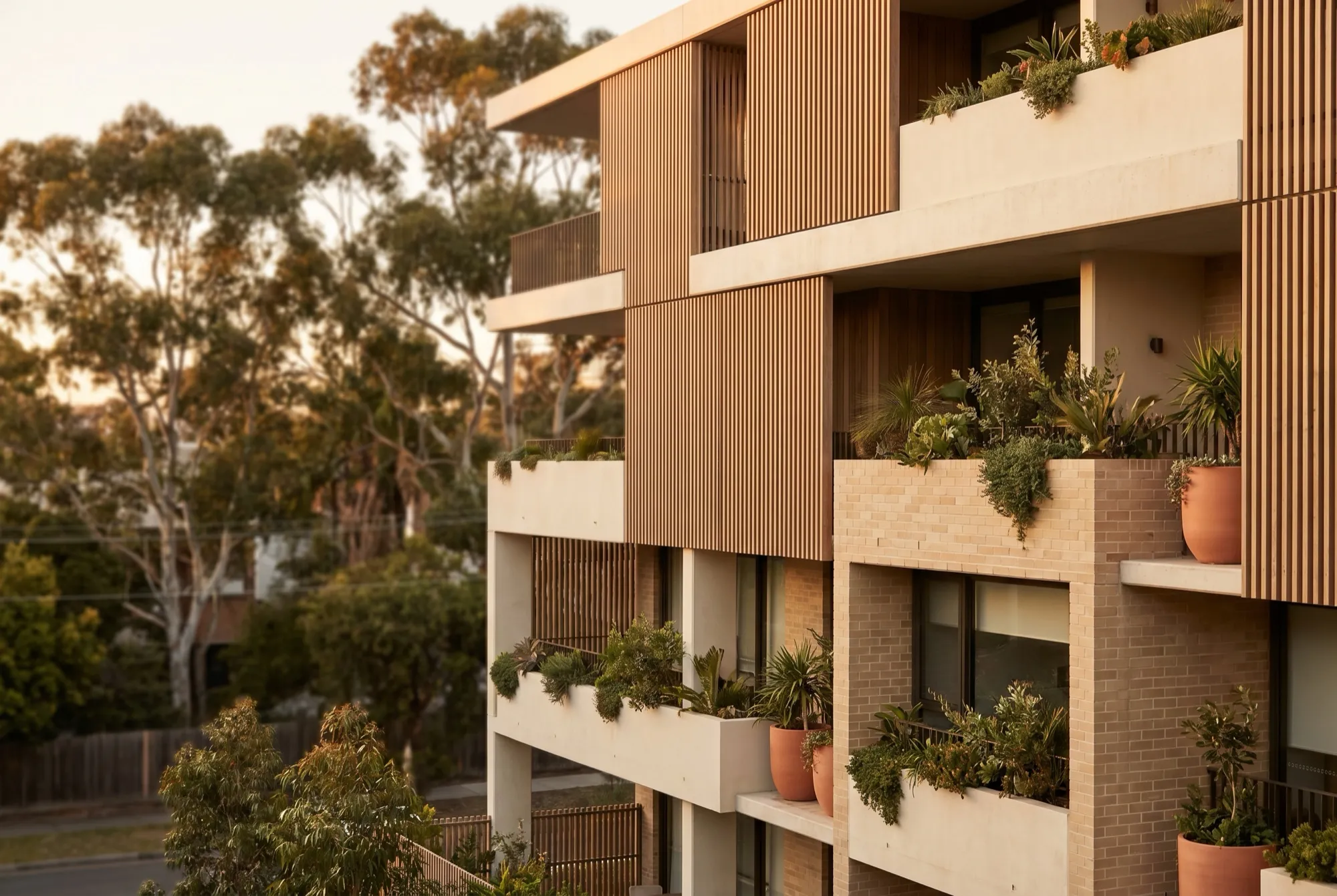
Buying off the plan means signing a contract to buy a property, usually an apartment or townhouse, before it is built, based on plans and a display suite rather than a finished home you can walk through. It is not inherently risky, but it carries a specific set of risks that buying an existing home does not, and whether it suits you comes down to your finances, your timeline and how carefully you read the contract.
That last point is the one most people underweight. The brochure is designed to sell. The contract actually binds you, and it is where the real story lives.
How buying off the plan works
The mechanics are straightforward enough. You choose a property from architectural plans, floor layouts and a display suite, then sign a contract and pay a deposit, commonly around 10% of the price, though this varies by developer and project.
You pay that deposit now and the balance at completion: the moment the building is finished, the title is registered and the property is ready to settle. That gap can be anywhere from one to three years away, sometimes longer for larger developments.
So the defining feature of an off the plan purchase is time. You commit today at today’s price, and settle on a property that does not yet exist. Everything good and everything risky about the arrangement flows from that single fact.
The pros
The reasons buyers choose this path are genuine, not just marketing.
A long runway to save. Because settlement can be years out, you have an extended period to build up the balance, sort your finance and strengthen your deposit. For a buyer who is close but not quite ready, that runway can be the difference between buying now and waiting.
Possible stamp duty concessions. In some states, duty on an off the plan purchase is assessed on a lower base early in construction, which can reduce the stamp duty you pay compared with a completed property. It varies significantly by state, changes with state budgets and often comes with eligibility conditions, so treat it as a possibility to confirm, not a guarantee to bank on.
A brand-new property. You get a home nobody has lived in, built to current standards, typically with builder warranties. No inherited maintenance backlog, no tired kitchen from 2009.
Possible capital growth before you settle. If the market rises between signing and completion, the property may be worth more than you agreed to pay, and that gain is yours. The catch, a real one, is that markets move both ways.
The risks
This is the part the display suite will not dwell on, so we will.
The build can differ from the render. Renders are aspirational. The finished apartment can vary in finishes, fittings, sizing and outlook from what you were shown, and contracts usually permit some variation. That is exactly why the variation clause matters.
The valuation shortfall. This is the big one, and it catches people out. You agreed a price at signing. At settlement, your lender orders its own valuation, and if the market has fallen it may value the property below the contract price and lend against that lower figure. You are still bound to the agreed price, so you cover the gap yourself. When a valuation lands tens of thousands below contract, that shortfall comes out of your savings.
Sign at today’s price, settle at tomorrow’s valuation. Make sure your finance survives the difference.
Construction delays. Completion dates slip. Approvals, weather, supply chains and labour all push timelines, and a one to three year estimate can stretch.
Developer or builder insolvency. If the developer or builder goes under mid-construction, the project can stall or collapse. Recovering your deposit then depends on how it was held and protected, another contract question worth asking up front.
Sunset clauses. A sunset clause sets a date by which the project must be completed, and if it is not finished by then the contract can be cancelled. The trap is that this can sometimes let a developer walk away from your contract, potentially to resell at a higher price in a risen market. Several states have tightened the rules to curb that, but the protections vary, so read the clause and understand who can trigger it and when.
Pros and cons at a glance
| Pros | Cons and risks |
|---|---|
| Long runway to save the balance | Valuation shortfall if the market falls before settlement |
| Possible stamp duty concessions in some states | Construction delays, plus the build differing from the render |
| Brand-new property with builder warranties | Developer or builder insolvency |
| Possible capital growth, locking in today’s price | Sunset clauses that may let a developer cancel |
Doing your due diligence
A few steps materially reduce the risk.
Check the track record. Look into the developer and the builder. Have they delivered before, on time? A strong history is not a guarantee, but a thin or troubled one is a warning.
Read the contract with a solicitor. This is not optional. Have a solicitor or conveyancer go through the contract before you sign, paying particular attention to the sunset and variation clauses. Conveyancing, explained covers what that legal review involves and why it matters here more than almost anywhere else in property.
Stress-test your finance. Ask your lender or broker what happens if the property values below the contract price at settlement, and work out whether you could cover the shortfall. Building that buffer in now is far easier than scrambling for it later.
Research comparable prices. Before you accept the agreed price as fair, research comparable prices in the area for similar completed properties. An off the plan price should make sense against what finished stock sells for.
It is also worth understanding how the broader purchase process works, because off the plan sits inside it rather than replacing it. Our guide to how to buy a house covers the steps that still apply, from finance to settlement.
Done properly, off the plan suits buyers with a stable income and a real savings runway. It suits less well anyone stretched to their borrowing limit or who needs to move in by a fixed date.
This article is general information only and not personal financial or legal advice. Rules, concessions and protections vary by state and change over time. Speak to a licensed professional about your own situation before you sign anything.
The bottom line
Buying off the plan is a legitimate way into the market, with real advantages: time to save, possible stamp duty savings, a new build and the chance of growth before you settle. It is not risk-free, and the risks are specific. The market can fall and leave you covering a valuation shortfall, builds can be delayed, developers can fail and sunset clauses can occasionally be used against you. The buyers who do well treat the contract as the main event, get a solicitor across it, and stress-test their finance for a settlement that lands a year or three away in a market nobody can predict. Do that, and it becomes a calculated decision rather than a leap of faith.