Business phone systems in Australia: VoIP and what to choose
Almost every business phone system in Australia is now cloud-based VoIP. Here is how it works, what it costs per user, and the three things to weigh before you sign up.
Category
Running and growing a business in Australia. Operations, software, finance, hiring, and the policy and economy that shape small business decisions.
Almost every business phone system in Australia is now cloud-based VoIP. Here is how it works, what it costs per user, and the three things to weigh before you sign up.
Construction has needs general ERP does not handle well: job costing, progress claims, retentions, variations and subcontractors. Here is what construction-fit ERP does, and how to choose without getting burned.
ERP for manufacturers does one big job: it ties production to inventory and the ledger so you get one view from order to dispatch, with real costs per product. Here is what a manufacturing ERP must handle, the mid-market options on the table, and why the implementation matters more than the brand.
The software licence is rarely the big number on an ERP project. We unpack what an ERP implementation cost actually covers in Australia, the main drivers, and how to keep the budget honest.
Business intelligence software turns scattered data into dashboards you can actually act on. Here is what BI does, the common tools, and how to start without drowning in charts.
What a document management system actually does, why the structure matters more than the software, and how Australian businesses can stop losing the current version.
Field service management software runs the day-to-day of any business that sends people out to jobs: scheduling, dispatch, a mobile app for techs, quoting, invoicing and job history. Here is what it does, the real wins, and how to choose one that fits your workflow.
Microsoft 365 business comes in three main tiers. Here is what each one includes, which one most small teams land on, and why setting it up well matters more than the plan you pick.
Most small-business breaches trace back to five preventable basics. Here is what actually moves the needle, from MFA to tested backups, in plain Australian English.
The software that quietly runs a business is where a lot of time and money leaks. This guide maps the main categories, accounting, payroll, CRM, inventory, and ERP, and the signals that you have outgrown what you have.
The Essential Eight is the ACSC's set of eight baseline cyber-security strategies. Here is what each control does, how maturity is rated, and why tenders increasingly ask for proof.
Xero and MYOB are excellent accounting tools, but they are not full ERP systems. Here are the signs you have outgrown your accounting software, why moving to ERP is a project rather than a switch, and how to get independent advice before you spend a cent.
Yes, a small business can run an ERP, and modern cloud systems are built for it. Whether you should is a different question, and the honest answer is that it depends on complexity and growth, not size. A vendor-neutral look at when ERP earns its keep and when it does not.
An ERP implementation is the hard, expensive, risky part, not the licence you buy. Here are the phases a project runs through, the predictable reasons so many fail, and the practices that keep them on the rails.

A balanced, vendor-neutral look at Salesforce vs HubSpot for Australian businesses. Where each platform wins, what it costs to run, and why clean data and adoption matter more than the logo on the login screen.

Australian businesses should pick payroll software that handles STP and super correctly and matches the complexity of their awards. Here is what to weigh up before you commit.
CRM stands for Customer Relationship Management. The software keeps your contacts, leads, pipeline and customer interactions in one place. Here is what that means, the main options by tier, the criteria that actually matter, and why adoption is the hard part.

Inventory management software tracks stock, orders, suppliers and movements across your locations and sales channels. Here is what it does, how standalone tools compare to the inventory module inside an ERP, and how to choose.
There is no single best accounting software in Australia. The right one depends on your size, payroll, inventory, integrations, budget, and your accountant. Here is a simple framework, the main options compared by business type, and the signal that it is time to think bigger.
Xero or MYOB? Both are Australia's leading accounting platforms, and both do the job. The right pick depends on your interface preference, the apps you need, payroll depth, and where your business is heading. Here is the honest head to head.
There is no single best accounting software for a small business in Australia, but there is a best one for yours. A vendor-neutral guide to Xero, MYOB, QuickBooks Online and Reckon, the criteria that actually decide it, and the moment you outgrow the category entirely.
The main ERP software options for Australian businesses run from Business Central, NetSuite and MYOB Acumatica at the smaller end up to SAP and Oracle at the top. Here is how the tiers, the costs and the partner choice actually work.
ERP stands for Enterprise Resource Planning. It pulls finance, inventory, purchasing, sales and more into one system with a shared database. Here is what that means, the main tiers, when businesses move to it, and why the implementation matters more than the licence.
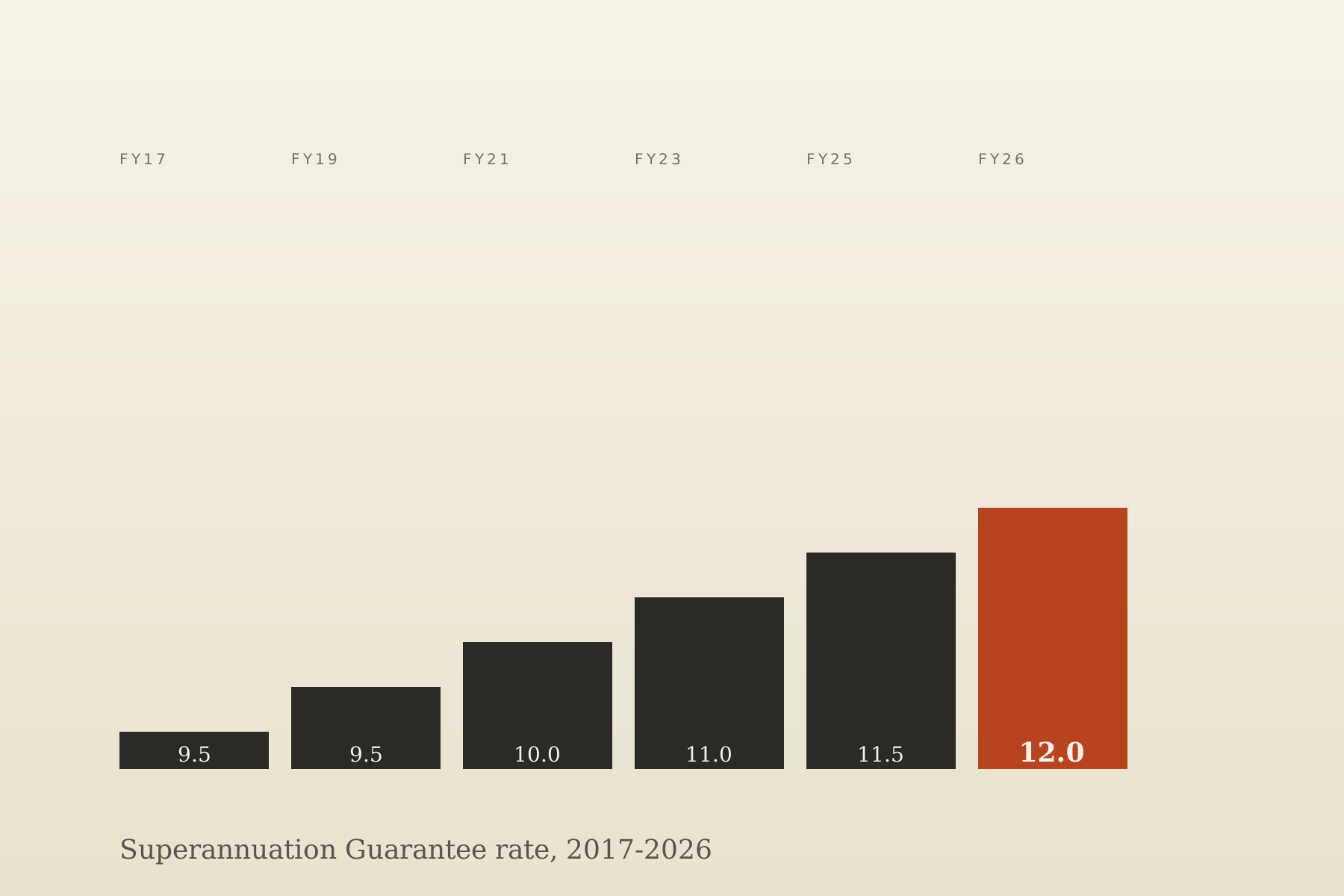
Quarterly super payments disappear on 1 July. Most small employers have not set up the weekly cash discipline the new regime requires. Ten weeks of preparation, properly done, is enough.
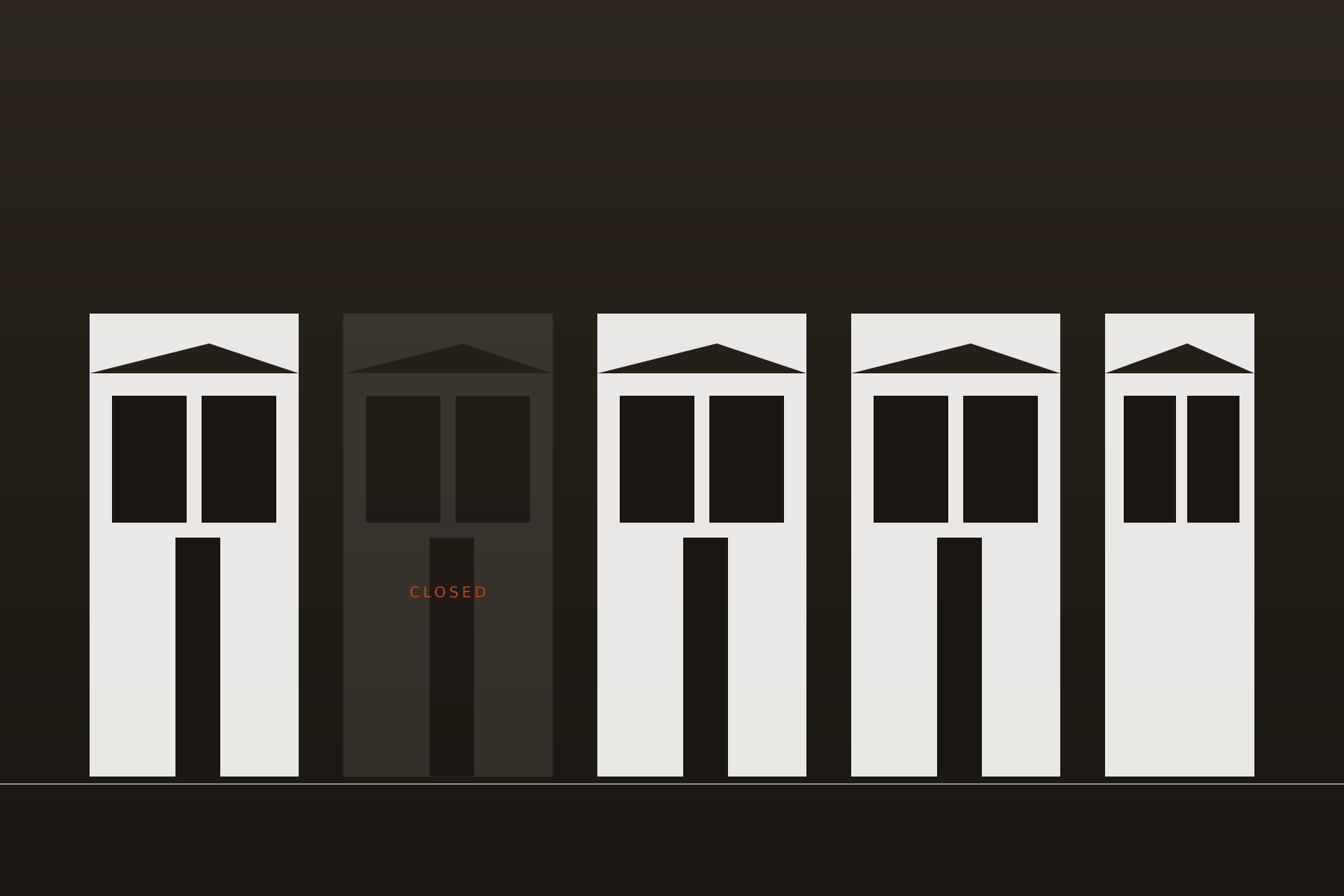
Over the twelve months to November 2025, one in ten Australian cafes, restaurants, and takeaways shut their doors. Three operators on why the aggregate number doesn't capture the mechanism.
Feature Business
Patient capital, unglamorous supply chains, and a generational bet on craft. Three founders explain why they're choosing to grow slowly, and what they've learned the hard way.
Last week, three founders told us why they had stopped growing. This week, one of them walks us through the spreadsheet. A conversation with Ellen Foley, three weeks after the deadline pressure has lifted.
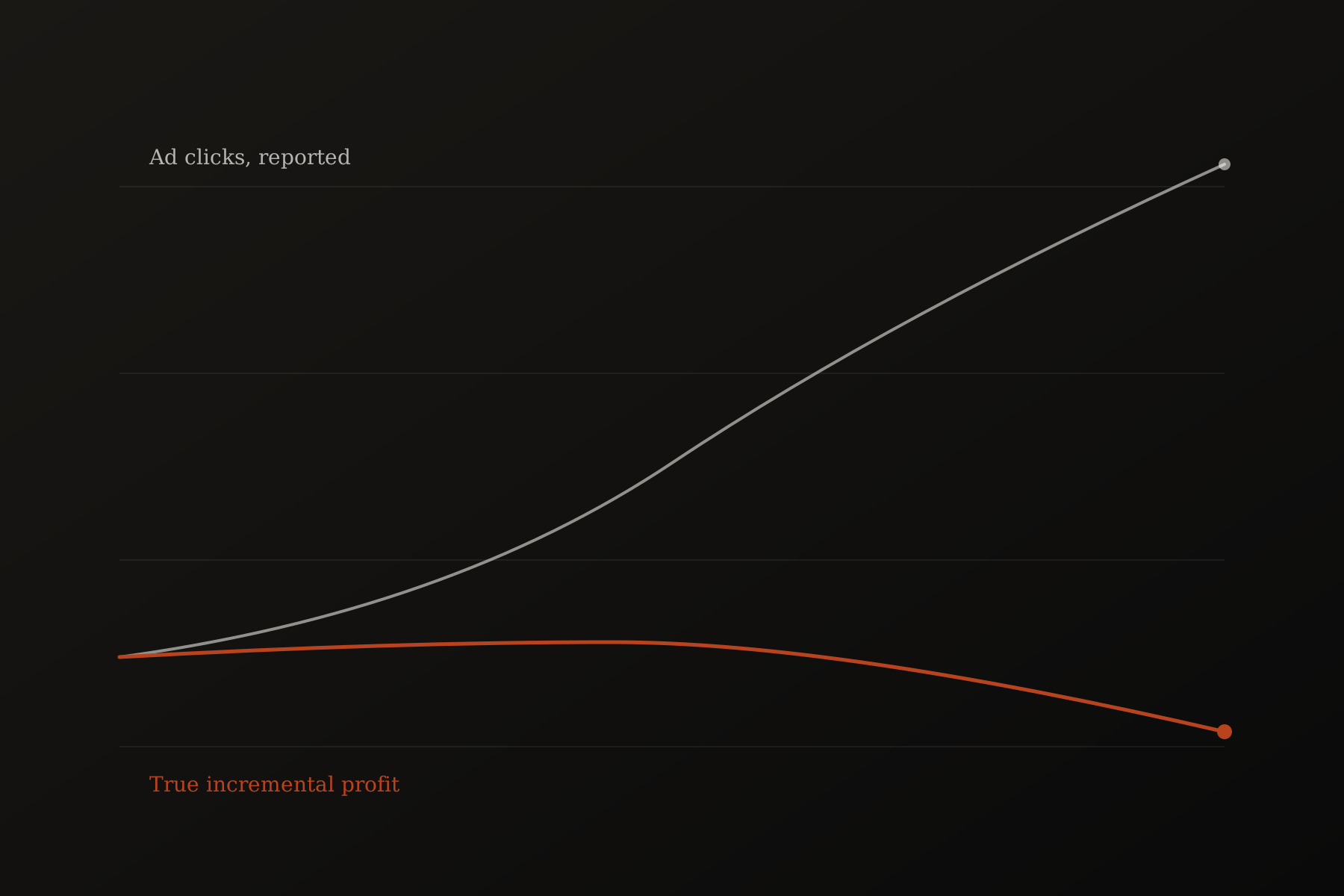
In a market where ad-platform dashboards still overstate incremental revenue by 20 to 60 per cent, one Sydney consultancy has built a business on refusing to look at them.
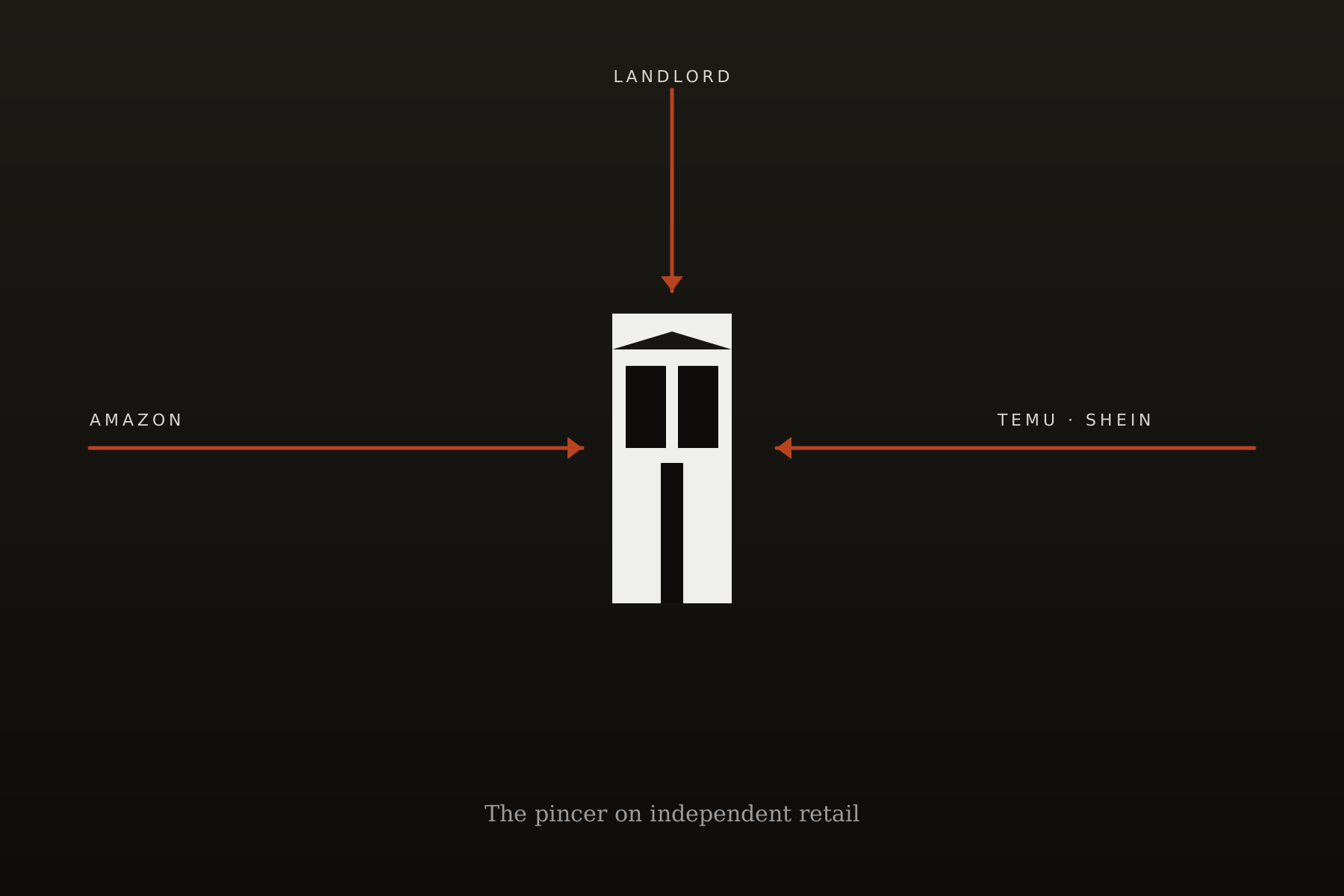
Independent retailers have been losing the same dollar, three ways, for eighteen months. The cross-border sellers take the price ceiling. Amazon takes the category share. The landlord takes the rent off the top. The insolvency data says the rest.
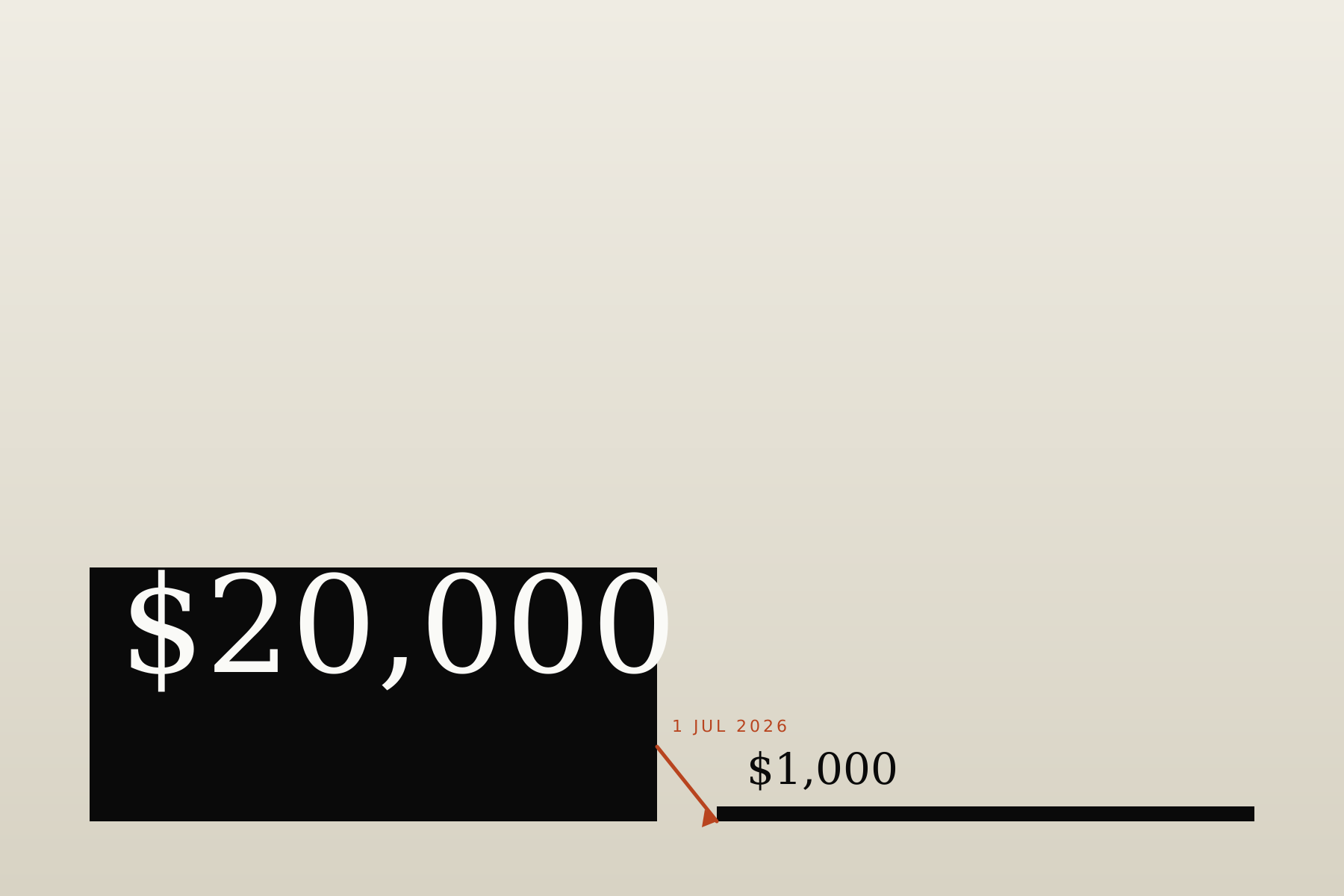
The $20,000 instant asset write-off sunsets on 30 June. With no legislation to make it permanent, small-business operators have ten weeks to decide on capex they would otherwise plan over years.
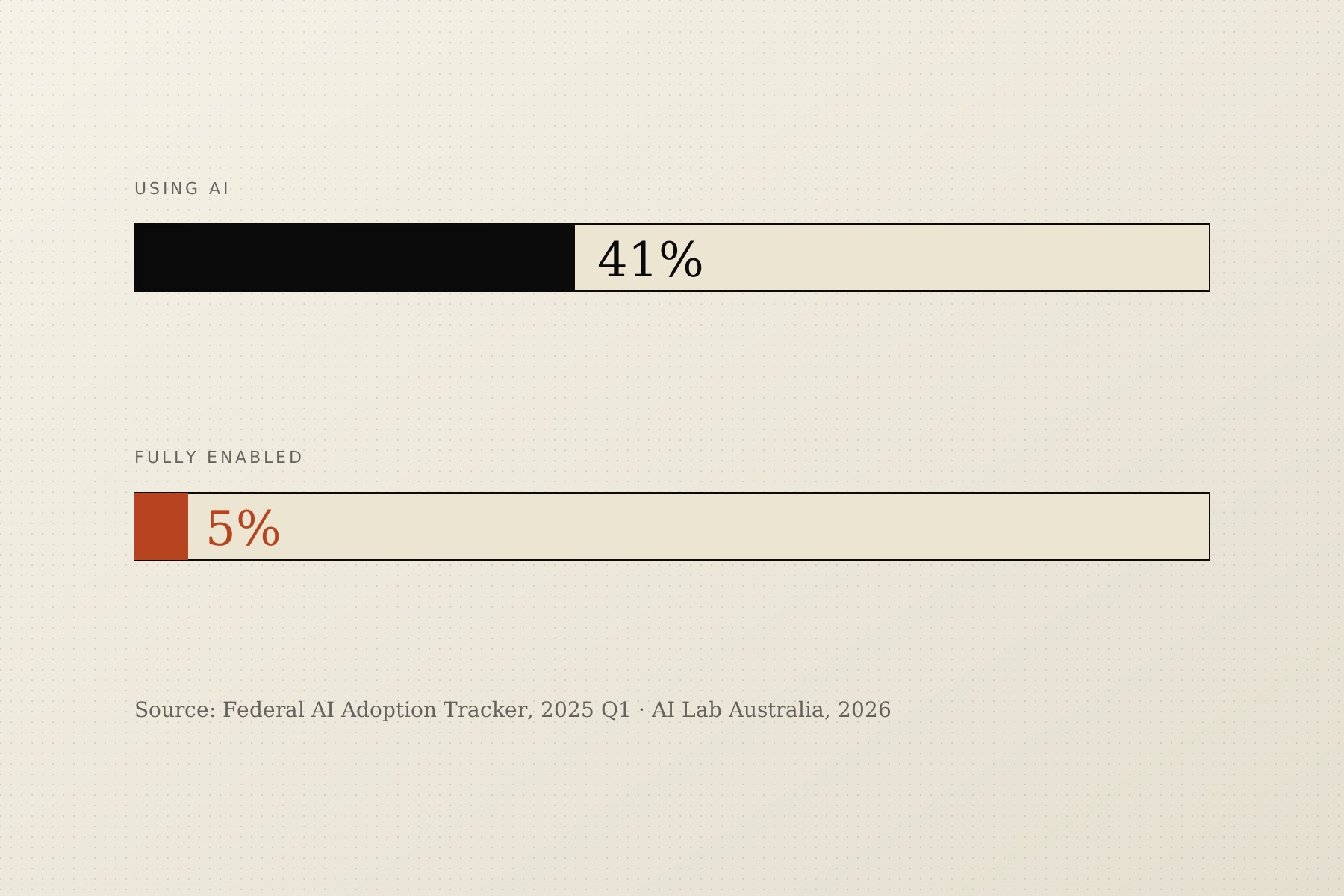
Adoption is the easy part. What happens between trying a tool and getting it into the P&L is the part nobody writes about, because there is not much to write yet.
Your first five hires set the shape of everything after. Six operators on what they got right, what they got wrong, and the single question they wish someone had asked them earlier.
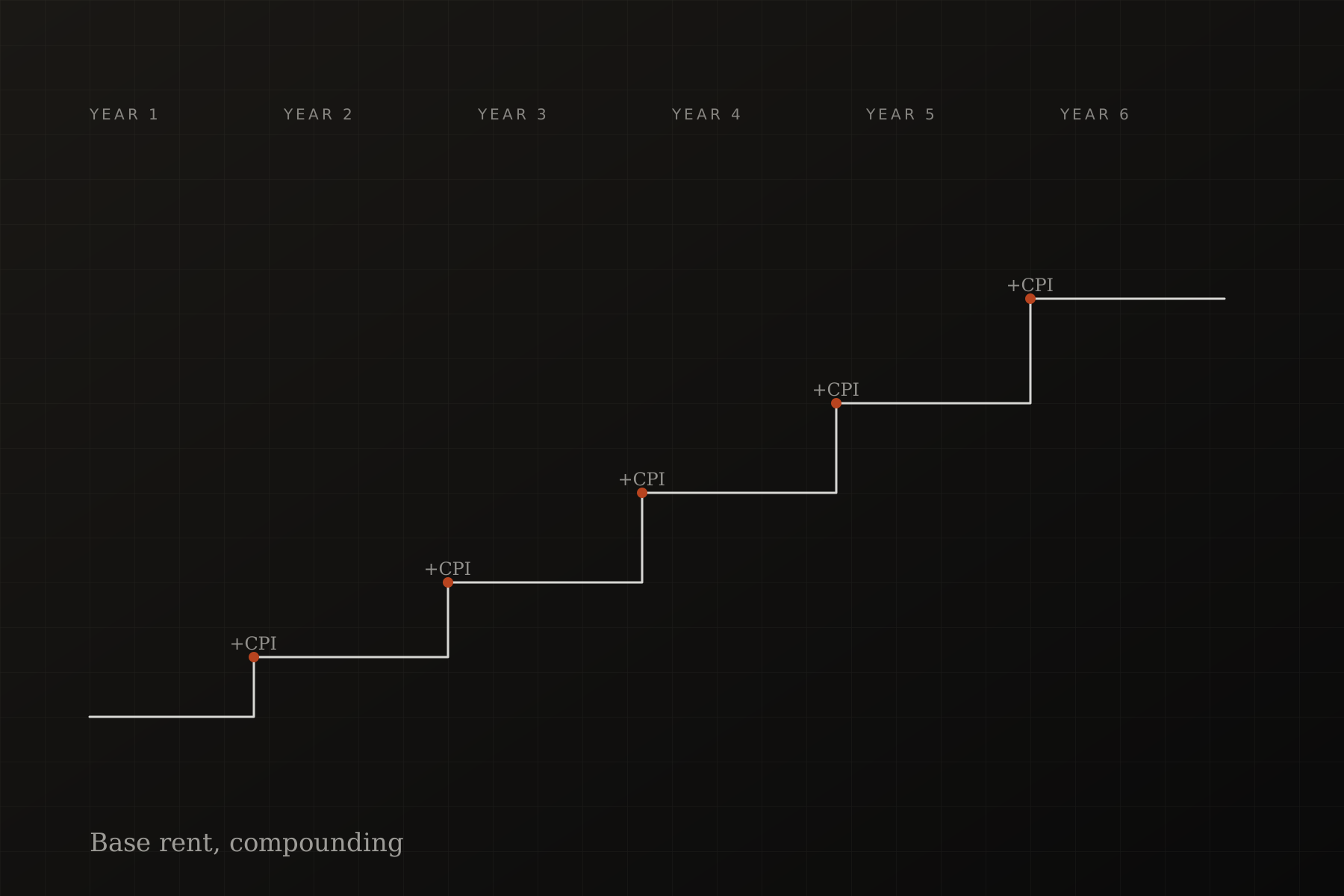
The indexation clause is the least-discussed line in a small retailer's lease, and arguably the most consequential. Five years after inflation broke out of the RBA's band, the compounding is showing up in landlord revenue and tenant margin.
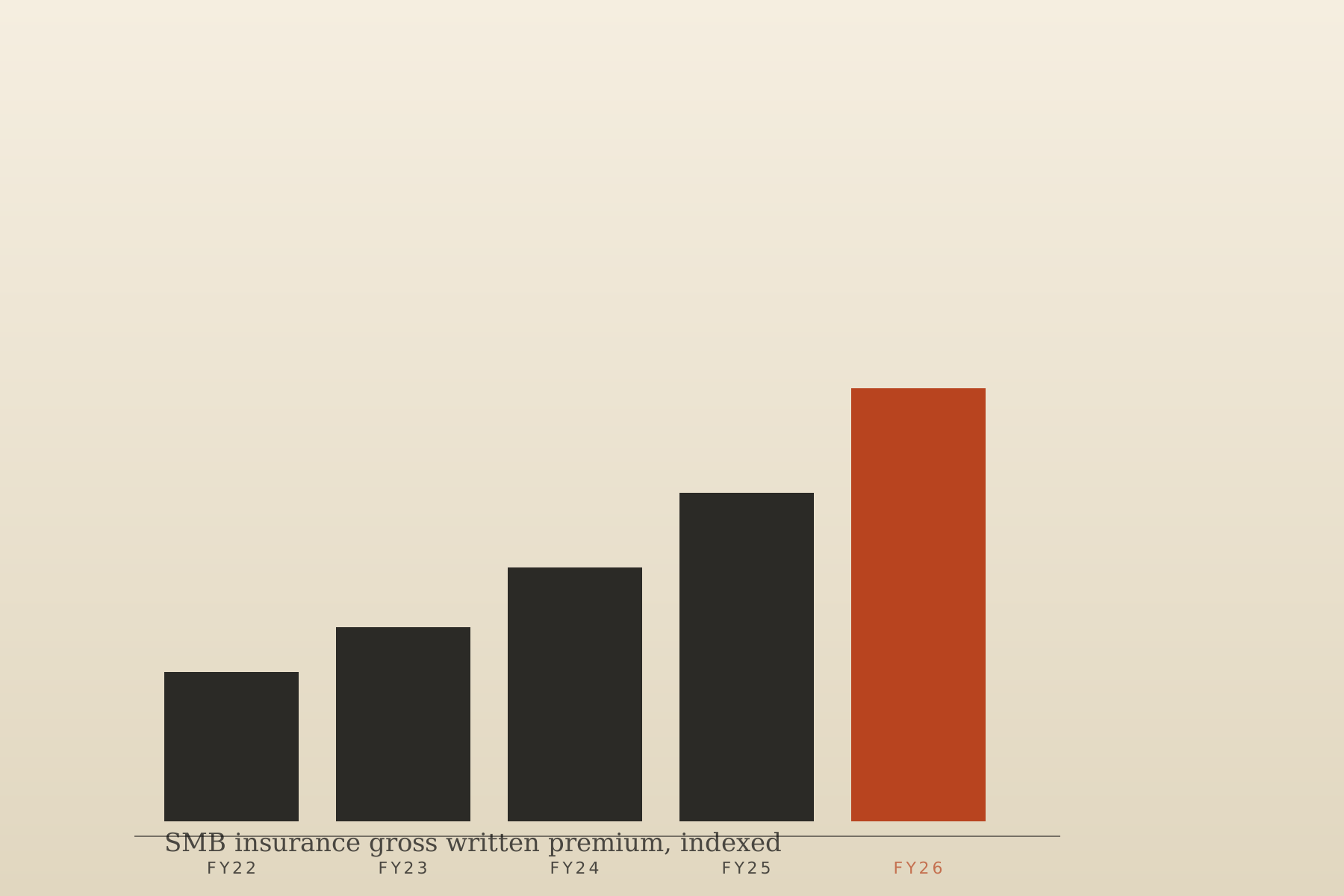
Insurance used to be a line item small businesses did not think about. In 2026 it has become a go-or-no-go decision. The mechanism sits partly in the global reinsurance layer and partly in categories no insurer wants to write.
Australia's small-business exemption from the Privacy Act has been a quirk for a quarter of a century. Tranche 2 reforms remove it. The operational shift is larger than most small business owners think.
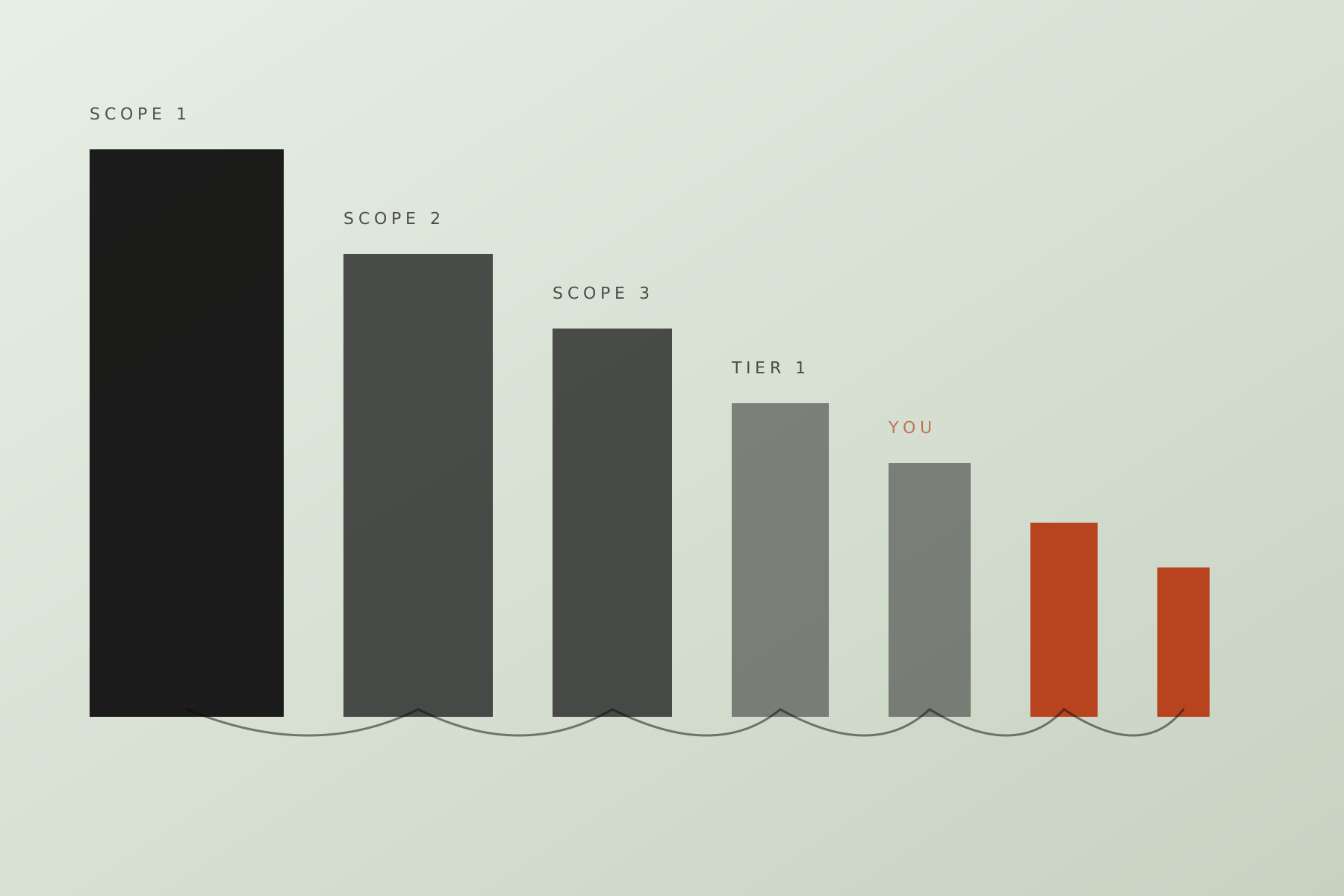
Australia's mandatory climate disclosure regime was written for large companies. In 2026, it is small suppliers who are being asked to fill the spreadsheets.
Being a company director in Australia used to be ceremonial for many SMB spouses and silent partners. 2026 is the year every small-company director should audit their own exposure.
Unfair contract terms in standard-form small-business contracts have been illegal, and subject to civil penalties, since late 2023. Two years in, AU SMB procurement is discovering what that actually means.
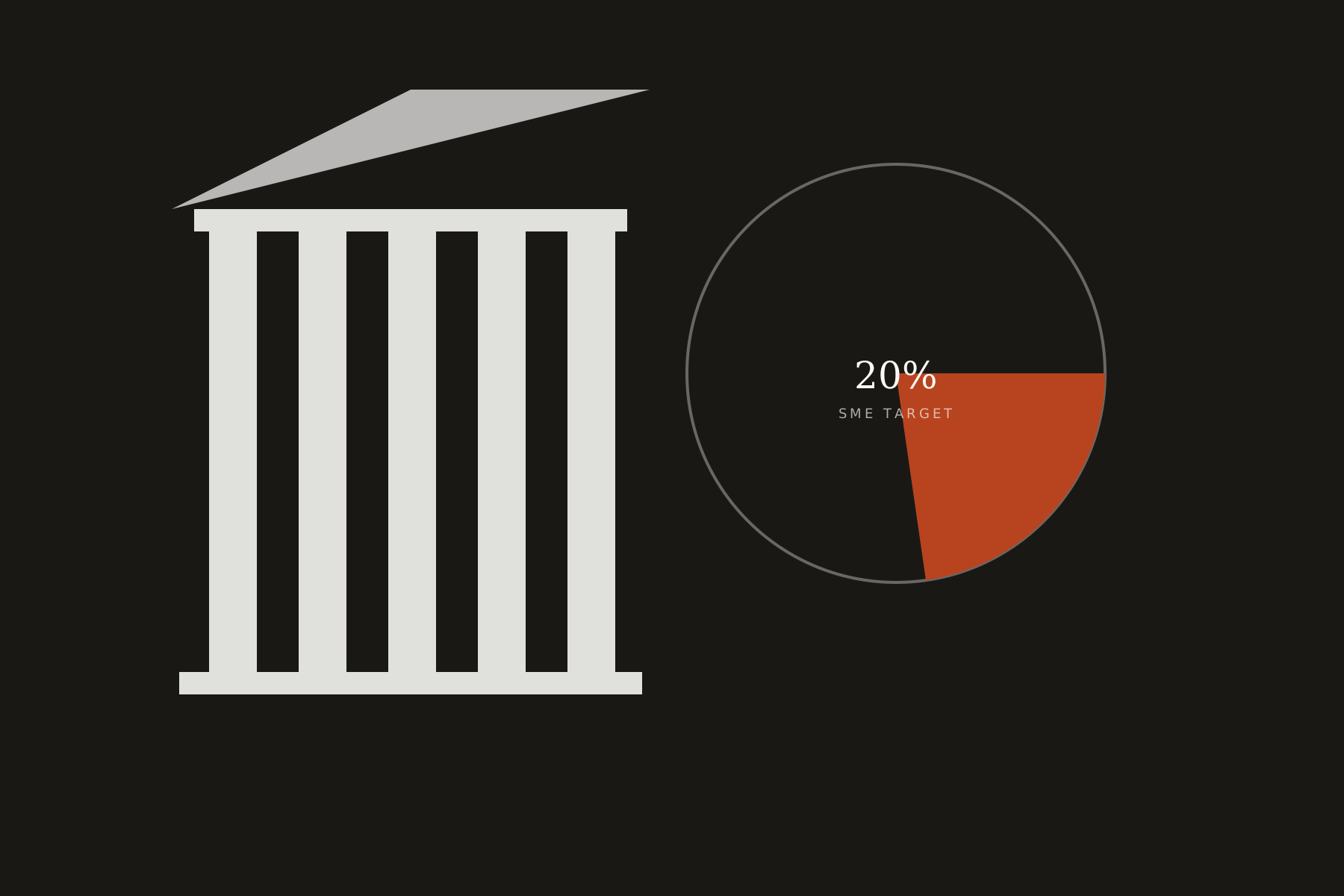
Winning government work is never a matter of lodging the lowest tender. For small firms in 2026, the mechanics of panels, standing offers and sub-threshold engagements decide more of the outcome than the bid itself.
The Australian craft beer failure rate in 2026 is not about bad beer. It is about a structural margin that no amount of taproom traffic can close.

Warm-inland shiraz still clears below $300 a tonne. The premium recovery is real, but it has not reached the Riverland, and the WET rebate cap has not moved in eight years.
Everymind's Ahead for Business national work is specific. Australian small-business owners typically recognise mental-health symptoms within weeks and seek help within years.
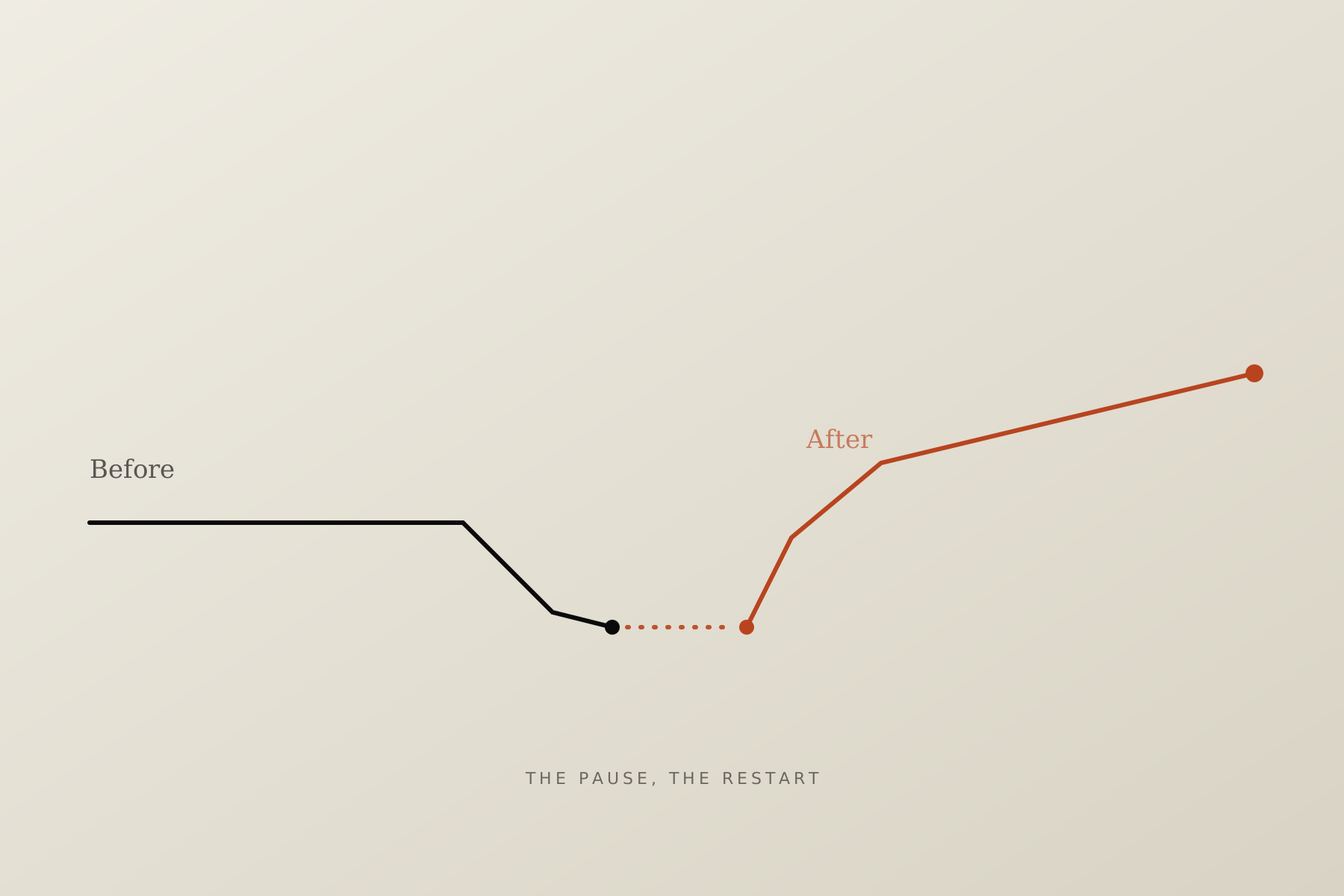
The restart playbook has converged on a few moves: shed the lease, shrink the footprint, keep the brand and the team, move from dine-in to hybrid. The best-run owners are back.
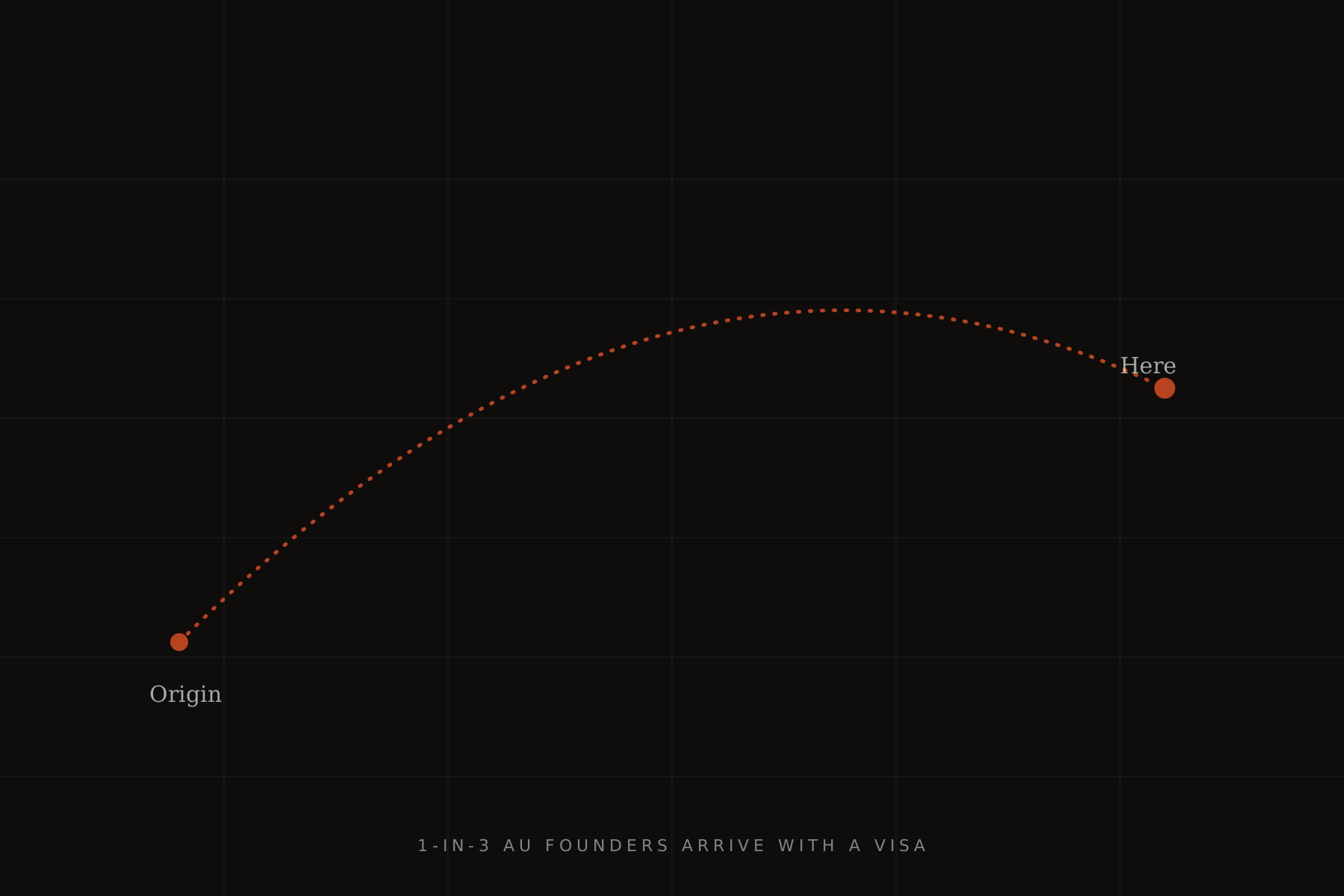
Migrants start businesses at higher rates than the Australian-born. In 2026 the more interesting pattern is what the second generation of Vietnamese-Australian, Chinese-Australian and Indian-Australian founders are doing with the result.