A Melbourne electrician typically charges around $90 to $150 an hour, or a call-out fee plus a fixed price for the job. Beyond the rate, the thing that actually protects you is the licence: in Victoria, electrical work must be done by a licensed electrician, and the job should come with a Certificate of Electrical Safety. Get that right and the price almost looks after itself.
What electricians in Melbourne charge
Most local sparkies price one of two ways. Either they bill by the hour, usually in the $90 to $150 range, or they quote a fixed price for the whole job, often with a call-out fee baked in. Smaller, fiddly tasks tend to attract a minimum charge, because the half hour driving to your place and finding parking in inner Melbourne is half hour they cannot bill anyone else for.
Rates climb for after-hours and emergency work. A blown circuit at 9pm on a Sunday will cost more than the same fault at 10am on a Tuesday, sometimes a lot more. If it is not genuinely dangerous, booking a normal weekday slot is the cheapest fix going.
Prices vary by suburb, by how established the business is, and by how much competition there is for tradies that month. Treat the numbers here as a guide, not a quote, and always get the work priced in writing before anyone picks up a screwdriver.
What common jobs cost
Here is a rough picture of what Melbourne households tend to pay for the usual suspects. These are indicative ranges, last checked June 2026, and the final figure depends on access, wiring age, and how many surprises lurk behind your walls.
| Job | Typical cost (indicative) |
|---|---|
| New power point or light fitting | $120 to $300 |
| Switchboard upgrade | $1,200 to $3,000 |
| Full house rewire | $8,000 to $15,000-plus |
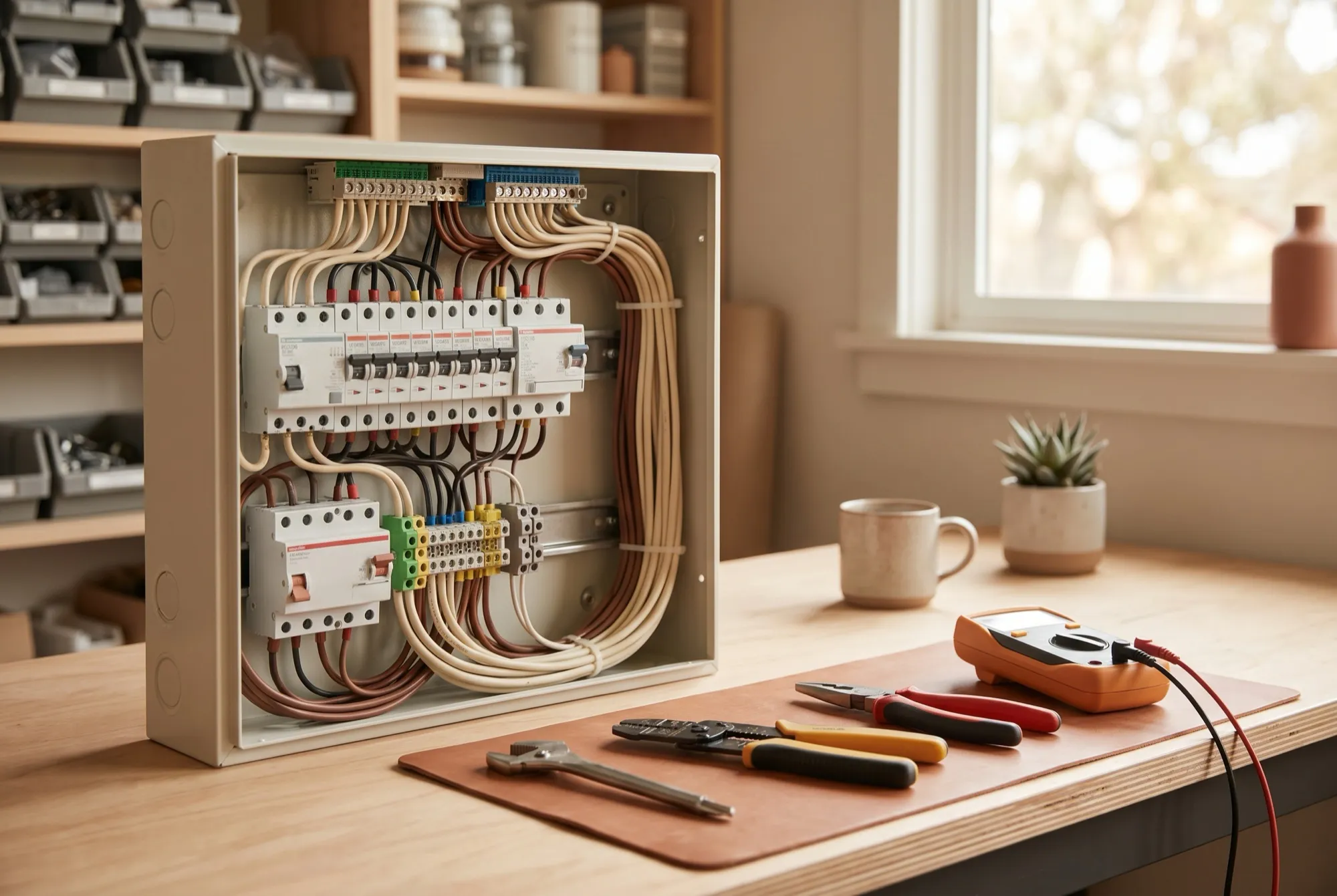
A single power point sounds trivial, and the part is cheap, but you are paying for a licensed person, their travel, and the safety certificate, not the plastic socket. Switchboard upgrades, which swap old fuses for modern safety switches, sit in the middle and are worth doing if your board still has ceramic fuses or no RCDs. A full rewire is the big one, usually triggered by a period-home renovation or wiring that has aged past its use-by date.
For a deeper breakdown of how trades price their work and where the money actually goes, our guide on how much an electrician costs walks through the line items. If your job is really an air-con install in disguise, the ducted air conditioning cost guide covers the electrical side of that too.
The licence is not optional
This is the part Victorians sometimes skim, and it is the part that matters most. In Victoria, electrical work must be carried out by a licensed electrician, and the rules are enforced by Energy Safe Victoria. When the work is done, the electrician issues a Certificate of Electrical Safety. That certificate is your proof the job was done by someone qualified and, for prescribed work, independently inspected.
If a job has no certificate and no licence, it has no business being in your home.
Why does this matter beyond box-ticking? Unlicensed electrical work can void your home insurance, fail at sale or rental compliance, and, in the worst case, start a fire. The savings from a cash-in-hand mate are not worth a claim being knocked back. Before work starts, ask for the electrician’s licence number and check it. It takes two minutes and it is the single best filter you have.
How to choose a good one
Choosing well is less about finding the cheapest hourly rate and more about avoiding the headache jobs. A few habits do most of the heavy lifting:
- Confirm the licence first. Ask for the number and verify it before anything else. No licence, no further conversation.
- Get it in writing. A written quote that itemises labour, parts, and the call-out fee protects both sides. Verbal estimates have a way of growing.
- Get more than one quote. Two or three quotes for anything bigger than a power point tells you whether a price is fair or fanciful.
- Ask about the certificate. A good electrician mentions the Certificate of Electrical Safety without prompting. If you have to ask twice, keep looking.
- Check reviews and recency. A sparky who did great work in 2019 may have a six-week waitlist now. Look for recent, local feedback.
If you would rather compare a few options at once, you can get quotes from licensed Melbourne electricians and line them up side by side. Our broader guide on how to find a good tradie covers the same instincts across plumbing, building, and the rest.
A quick word on emergencies
Some faults genuinely cannot wait. A burning smell from the switchboard, sparks from a socket, or a power point that is hot to the touch are all reasons to switch off at the mains and call someone now. For those, the premium for emergency call-out is money well spent. For a flickering light or a dead outlet that is not getting warm, a normal weekday booking will save you a meaningful chunk.
This article is general information only, not personal advice about your specific property or situation. Prices and rules change, so check current figures and licensing requirements with Energy Safe Victoria or your chosen electrician before committing.
The bottom line
A Melbourne electrician will usually run you around $90 to $150 an hour, with a power point or light around $120 to $300, a switchboard upgrade roughly $1,200 to $3,000, and a full rewire from $8,000 to $15,000 and up. The figures matter, but the licence matters more: insist on a registered electrician and a Certificate of Electrical Safety every time, get the job quoted in writing, and the rest tends to fall into place. Ranges are indicative and last checked June 2026, so confirm before you book.