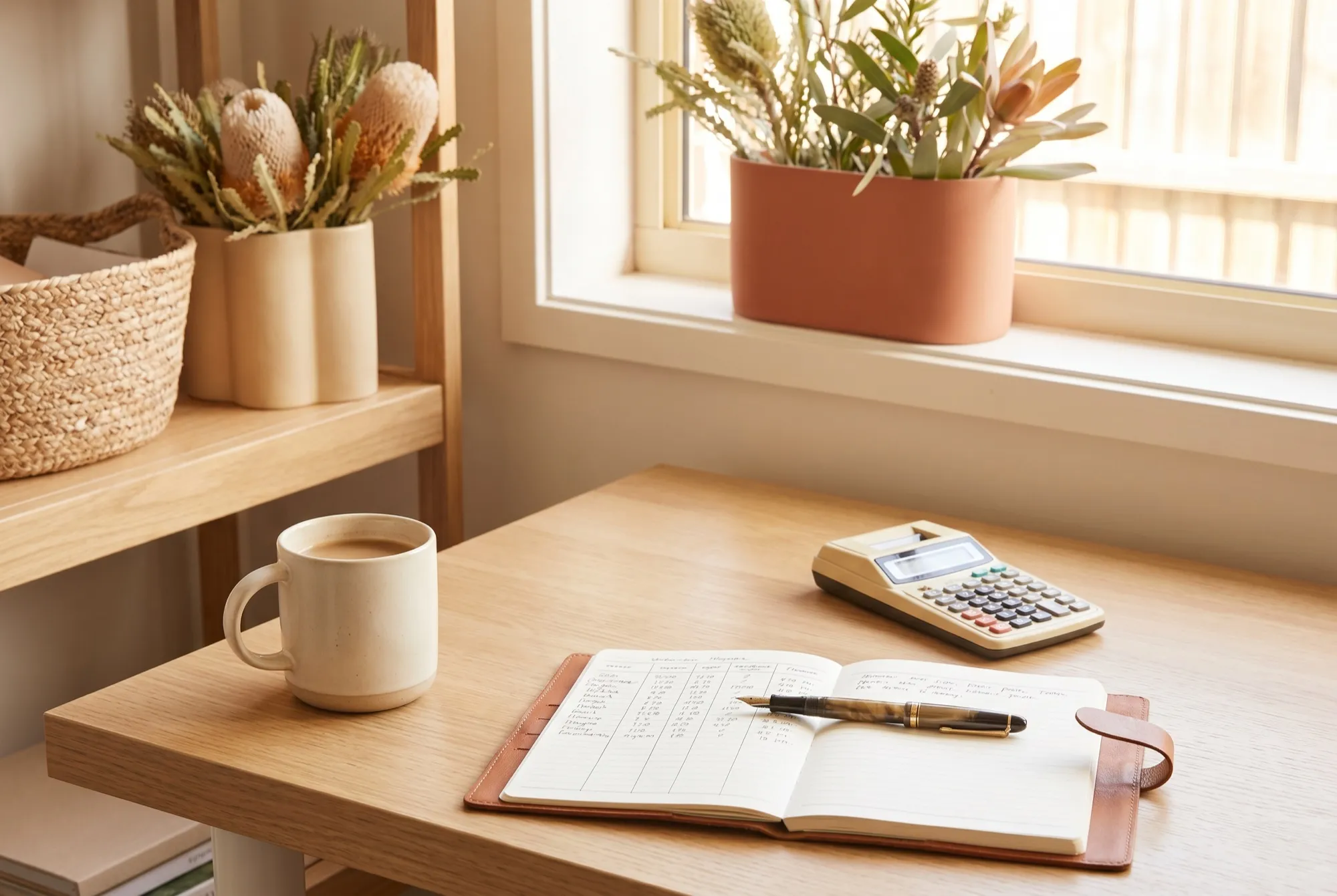
If you genuinely work from home, the ATO lets you claim a work from home tax deduction using one of two methods: the fixed-rate method, which pays a set number of cents for every hour you work at home, or the actual-cost method, where you claim the work-related slice of each real expense. You pick whichever leaves you better off, then keep the records to back it up.
That is the whole game in one sentence. The detail, as usual with tax, is in what each method covers, what it does not, and the paperwork that turns a reasonable claim into one that survives a second look. Let us walk through it.
The two methods, side by side
Both methods are aimed at the same thing: the extra running costs you take on by doing paid work from your kitchen table or spare room rather than an office someone else pays to heat. Where they differ is how you turn those costs into a number on your return.
The fixed-rate method gives you a set amount per hour worked from home, recently in the order of 70 cents an hour (rate last checked June 2026, and it does change, so confirm the current figure with the ATO). That single rate bundles together several everyday running costs, so you do not itemise them separately. In exchange for the simplicity, you need a genuine record of the hours you actually worked from home across the year.
The actual-cost method is the opposite trade. You claim the real, work-related portion of each expense, which can add up to more if your costs are high, but it asks for considerably more record-keeping: bills, a way of working out the work-related percentage, and a sensible basis for that percentage.
| Feature | Fixed-rate method | Actual-cost method |
|---|---|---|
| How you claim | Set cents per hour worked from home | Work-related portion of each real expense |
| Bundled in | Energy, internet, phone and stationery | Nothing is bundled; you itemise |
| Record of hours | Required for the whole year | Needed to apportion usage |
| Paperwork | Lighter | Heavier (bills and calculations) |
| Best when | Costs are modest or you value simplicity | Running costs are high and well documented |
What the fixed rate already covers
This is where people trip up. The fixed rate is designed to roll several running costs into one hourly figure, and the ATO’s view is that energy (electricity and gas), home internet, phone usage and stationery sit inside that rate. That matters because of the cardinal rule: you cannot double-dip.
If a cost is already baked into the fixed rate, you do not get to claim it a second time on top.
So if you use the fixed-rate method, you do not then add a separate line for your internet plan or your mobile bill, because those are considered paid for by the cents-per-hour figure. What can still be claimed separately, broadly speaking, are bigger-ticket items the rate was never meant to cover, such as the decline in value of office furniture and equipment. The exact boundaries shift over time, so treat the ATO’s current page as the source of truth rather than last year’s memory of it. For a wider view of how this sits among everything else you might claim, our guide to tax deductions in Australia is a useful companion.
When the actual-cost method wins
The actual-cost method earns its keep when your genuine work-related running costs are high and you have the receipts to prove it. Think a dedicated home office running the air conditioner all day, a serious power bill, and equipment that is clearly used mostly for work.
To use it well, you generally need to:
- Keep every relevant bill and receipt for the year (energy, internet, phone, consumables, depreciating assets).
- Work out a defensible work-related percentage for each expense, rather than guessing a round number.
- Apportion shared costs honestly, because a laptop used for both work and weekend streaming is not 100 per cent deductible.
- Hold records long enough to satisfy the ATO if they ever ask, which is usually several years.
The upside is a potentially larger claim. The downside is that the method rewards the organised and quietly punishes the shoebox-of-receipts approach. If your admin is already tidy, this is where it pays off; if it is not, the fixed rate exists precisely so you do not have to become a part-time bookkeeper. Either way, getting into the habit of keeping clean records is the single best move you can make, and it helps to keep your money admin in order throughout the year rather than scrambling in July.
The hours record everyone forgets
Whichever method you choose, hours matter, and the fixed-rate method in particular now expects a record of the actual hours you worked from home across the whole year, not a tidy estimate scribbled the night before lodging.
A simple timesheet, diary, roster or app log will usually do, as long as it reflects reality. The point the ATO keeps making is that a representative four-week sample is no longer enough for the fixed rate: it wants the full year. Build the habit early and the record writes itself; leave it to the end and you are reconstructing your working life from calendar invites and vague recollection.
What actually counts as working from home
A genuine work-from-home arrangement is the gatekeeper for the whole deduction. Checking a few emails on the couch on a Sunday, or taking the odd call after hours, does not turn your home into a deductible workplace. The ATO is looking for substantive work carried out from home as part of how you earn your income, with the associated running costs to match.
You also cannot claim costs your employer reimburses, and you cannot claim the private portion of anything. Occupancy costs such as rent, mortgage interest, rates and home insurance are generally off the table for most employees, and trying to claim them can carry capital gains tax consequences down the track. If property tax is on your mind for separate reasons, that is a different conversation entirely.
When it comes time to lodge, the work-from-home figure is just one line among many. Our walkthrough of how to file is in the Australia tax return guide, which puts this deduction in context with the rest of your return.
The bottom line
A work from home tax deduction is worth claiming if your arrangement is genuine, but the method you choose should follow your records, not the other way around. Pick the fixed rate for simplicity and keep a full-year log of hours, or go actual-cost if your running costs are high and your receipts are in order, and never claim the same cost under both. Rates, thresholds and the fine print all change, so confirm the current figures and rules with the ATO or your registered tax agent before you lodge.
This article is general information only, not personal financial, tax or legal advice, and figures are last checked June 2026. Your circumstances are your own, so check with the ATO or a registered tax agent before acting.