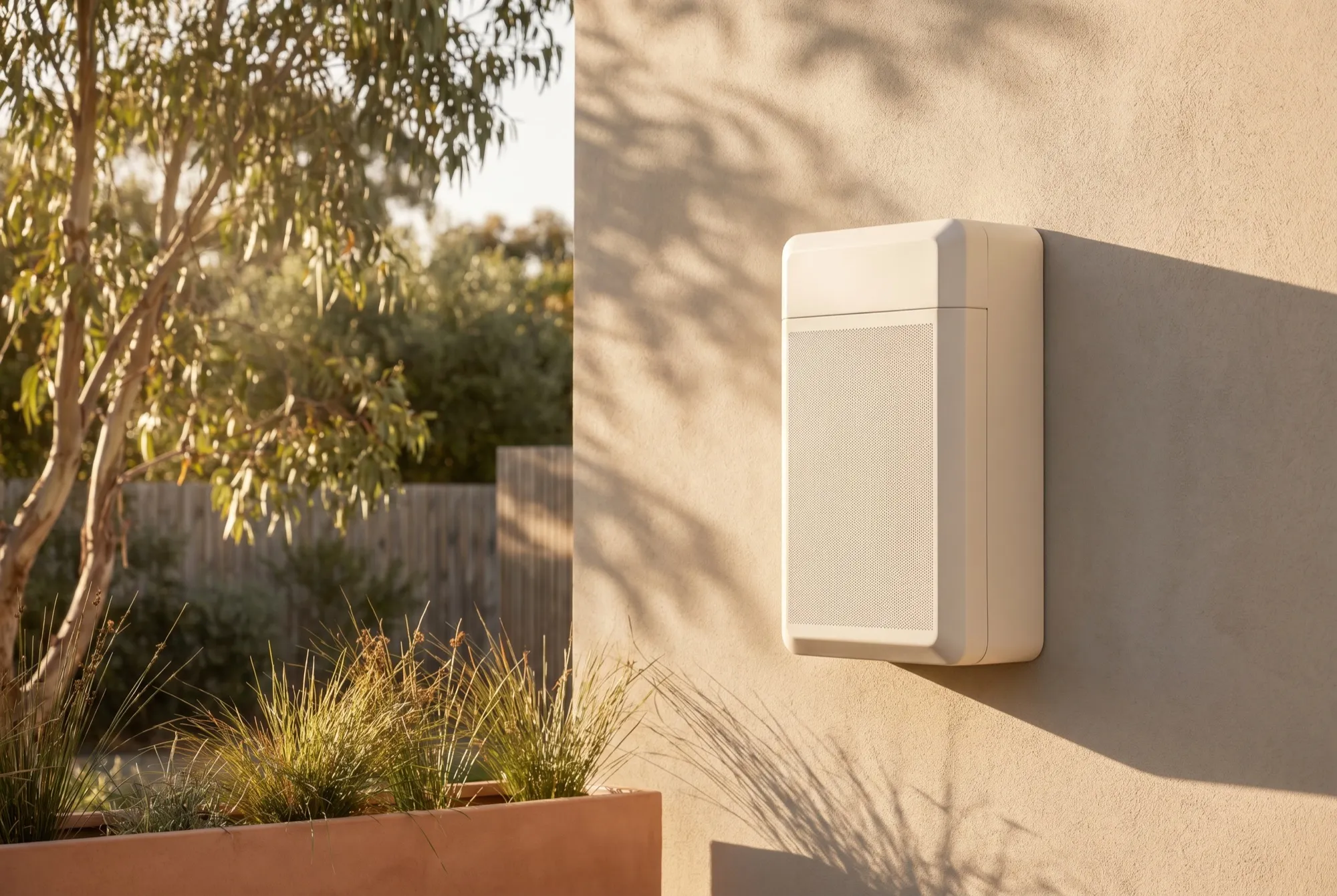
The honest answer to “what is the best home battery in Australia” is that there is no single winner, because the best battery depends on your home: how much power you burn after sunset, whether you need the lights on in a blackout, and whether you are adding to fresh solar or retrofitting an old system. Tesla Powerwall, BYD, Sungrow, Sigenergy, GoodWe, Alpha ESS and Enphase are all capable units, and the gap between a good buy and a regret has far more to do with sizing and your installer than with the badge on the box.
So instead of a fake ranking, here is the framework a sensible buyer uses, in roughly the order that matters.
Start with usable capacity, not the brand
The first number to nail down is usable capacity, in kilowatt-hours, sized to your evening and overnight use rather than to whatever the salesperson is keenest to move. Most of your solar is generated in the middle of the day, when many households are out. A battery’s job is to store that midday surplus and hand it back when you are home, cooking, heating, cooling and running the dryer.
For a typical Australian home that lands around 10 to 13.5 kWh of usable storage (last checked June 2026). Pull a few recent bills, see how many kilowatt-hours you draw between roughly 4pm and 8am, and size to that. Going much bigger buys capacity you rarely empty, money parked in the garage. Going much smaller means you are still buying grid power every evening once the battery taps out.
One wrinkle: “usable” and “nominal” capacity are not the same thing. A battery’s headline size is often a little larger than what you can actually draw, because emptying a cell completely shortens its life. Ask for the usable figure, and treat any capacity quoted to you as approximate until you have seen the current spec sheet for that exact model.
Do you actually need blackout backup?
This question quietly decides a chunk of your budget. A surprising number of home batteries do not keep your house running in a power cut unless they are specifically wired to. Plenty of buyers assume a battery automatically means blackout protection, then discover during the next outage that it shut down along with the grid.
True backup means extra hardware, extra wiring, and usually a dedicated backup circuit so the system can safely island itself from the grid. That adds cost, commonly one to two thousand dollars depending on the setup, and not every brand or configuration supports it. If you are on a flaky rural line or run a home office, it is often worth it. If your grid is rock solid and you mostly want to shift solar to the evening, you may happily skip it. Decide early, because it changes both the shortlist and the quote.
AC or DC coupling: match it to your situation
Coupling sounds technical, but the practical version is simple. It describes how the battery connects to your solar.
- DC coupling keeps the energy as direct current from panel to battery and tends to be a little more efficient. It generally suits a new install, where the solar and battery are designed together.
- AC coupling gives the battery its own inverter and bolts onto existing solar more easily. It is usually the friendlier path for a retrofit.
Neither is universally better. A new build leans DC, a retrofit often leans AC, and the right answer falls out of what is already on your roof. A good installer will steer you here.
Chemistry and warranty: the boring bits that age well
Two less glamorous factors separate a battery that ages gracefully from one that disappoints.
The first is chemistry. The safe default in 2026 is lithium iron phosphate, usually written LFP. It runs cooler and tolerates heat better, the sensible pick for a unit bolted to an Australian wall through a few summers. Most reputable brands have moved this way.
The second is the warranty, where the detail matters more than the headline number of years. Look for the throughput figure, often expressed as total energy or a number of cycles, alongside the time period, plus the percentage of capacity the manufacturer guarantees you will still have at the end. A ten-year warranty that guarantees a healthy chunk of remaining capacity beats a longer number with weaker terms. Confirm the current wording for any model before you sign, because terms change and marketing rounds things up.
The main brands, at a high level
Here is the shortlist most Australian quotes draw from, kept deliberately approximate. Treat every capacity as a rough guide and confirm live specs before you buy.
| Battery | Rough positioning | Coupling style | Notes (confirm current specs, June 2026) |
|---|---|---|---|
| Tesla Powerwall | Whole-home, popular, the 3 is around 13.5 kWh usable | Typically AC, integrated | Strong brand and app; check installer availability in your area |
| BYD Battery-Box | Modular and stackable, size to taste | Works with various inverters | Flexible capacity; pairs with third-party inverters |
| Sungrow | Established inverter and storage maker | DC or AC options | Common in new installs |
| Sigenergy | Newer, feature-led all-in-one systems | Integrated | Rising presence; verify local support |
| GoodWe | Widely installed value option | DC or AC options | Often quoted on price-sensitive jobs |
| Alpha ESS | Modular home systems | Integrated | Confirm warranty and support footprint |
| Enphase | Modular AC battery, microinverter ecosystem | AC, modular | Suits staged expansion and AC retrofits |
The pattern to notice is that these are mostly differences of format and ecosystem, not a clean ladder from worst to best. A modular BYD or Enphase system lets you start small and add capacity later; an integrated Powerwall or Sigenergy unit trades flexibility for a tidier package. None of it decides the outcome on its own.
The factor that outranks the badge: your installer
Here is the part most “best battery” lists skip, and it is the one that decides whether you are happy in 2033. A home battery is a ten-year-plus relationship, and the company that installs it needs to still exist when something goes wrong.
This is not hypothetical. More than 700 solar retailers have left the Australian market since 2011, and roughly one in six systems now carries what the industry calls an orphaned warranty: the paperwork is valid, but the business that signed it has folded. When an inverter faults in year six, an orphaned warranty is worth precisely the PDF it is printed on.
The battery brand matters less than whether the company installing it will still answer the phone in seven years.
So vet the installer at least as hard as the hardware. Ask how long they have traded, whether the warranty is backed by the manufacturer or only by them, and who you call if they vanish. The cleanest way to start is to get matched with an accredited battery installer, then take that quote to one or two others so you are comparing both price and the company behind it. A cheap unit fitted by a backyard operator is the most expensive battery you can buy if it strands you.
What it costs, briefly
For context: an installed home battery runs in the rough order of $900 to $1,300 per usable kWh before any rebate (last checked June 2026), which puts a 10 kWh battery somewhere around $6,500 to $9,500 after the federal discount. The Cheaper Home Batteries Program, running since 1 July 2025, knocks roughly 30 per cent off and tapers to 2030, so the value is larger the earlier you act. For the full breakdown see our guide to solar battery cost in Australia, and for how the discount works read up on the Cheaper Home Batteries Program. All figures here are approximate and move with each budget, so confirm the current numbers before you commit.
The bottom line
There is no single best home battery in Australia, and any list that crowns one is selling you something. The best battery is the one sized to your evening usage, set up for blackout backup only if you genuinely need it, coupled to suit a new install or a retrofit, built on LFP chemistry, and covered by a warranty whose throughput and capacity terms you have actually read. Tesla Powerwall, BYD, Sungrow, Sigenergy, GoodWe, Alpha ESS and Enphase can all do the job, so do not agonise over the badge.
What you should agonise over is the installer. Pick a company likely to outlive the warranty, get two or three quotes that show the price before and after the rebate, and confirm the live specs and pricing before you sign, because the figures here were last checked June 2026 and will keep shifting.