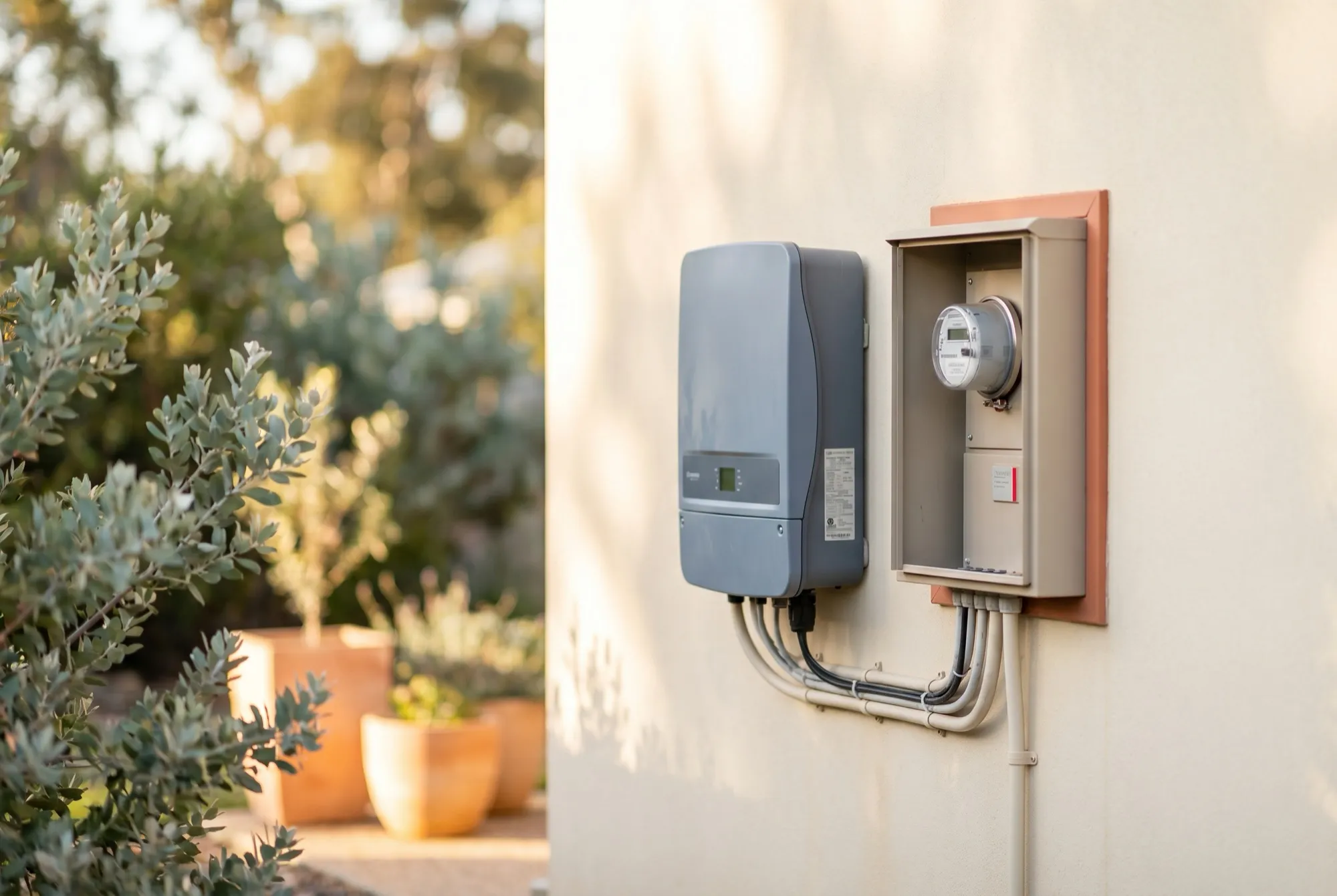
The Cheaper Home Batteries Program is a federal scheme that took effect on 1 July 2025 and cuts roughly 30% off the installed cost of a home battery, worth about $330 per usable kWh in 2025 (last checked June 2026). In practice that is around $2,500 to $3,500 off a typical 10kWh battery, applied straight to the installer’s invoice rather than paid back to you later.
It is the closest thing Australia has had to a national battery rebate, and it rides on machinery that has been quietly subsidising rooftop solar for years. Here is what it is, what it is genuinely worth, and why the clock matters.
What the program actually is
The program extends the Small-scale Renewable Energy Scheme (SRES), the same system that delivers the rooftop solar STC rebate, to cover home batteries. You do not fill in a form, wait, and hope. The accredited installer claims the certificates and passes the value through as a point-of-sale discount on your quote. You see a lower number before you ever pay.
That distinction matters more than it sounds. A discount on the invoice means you are not out of pocket for the full amount while you chase a rebate through a government portal. The headline price you are quoted should already have it baked in, so always ask an installer to show you the figure before and after.
What it is worth in dollars
The honest answer is a range, because battery pricing varies by brand, size, and how messy your switchboard is. As a rule of thumb for 2026, here is where the numbers tend to land.
| Item | Before rebate | After rebate |
|---|---|---|
| Installed cost per usable kWh | ~$900 to $1,300 | roughly 30% less |
| Typical 10kWh battery, installed | ~$9,000 to $13,000 | ~$6,500 to $9,500 |
| Backup or blackout capability | adds ~$1,000 to $2,000 | not discounted |
So a mid-sized battery that might have cost you eleven or twelve grand a couple of years ago now lands closer to seven or eight after the rebate. That is a meaningful dent, though batteries are still not cheap, and the maths only works if you actually use the stored energy. For a longer look at whether the sums add up for your household, see our guides on solar battery cost in Australia and whether solar is worth it.
One catch worth flagging: there is a usable-capacity cap on the rebate. Oversize your battery well beyond the cap and the extra kilowatt-hours are yours to pay for at full freight. Most household systems sit comfortably under it, but very large installs will not get the subsidy on every last kWh.
Who qualifies
The eligibility rules are refreshingly short, which is rare for anything involving the words “federal scheme”.
- You need solar. The battery has to be paired with a rooftop solar system, either one you already own or one installed at the same time. A battery on its own does not qualify.
- You need an accredited installer. The discount only flows through installers accredited to create the certificates. This is not the moment to save a few dollars on a backyard operator.
- The battery has to be on the approved list. Like solar panels, batteries must meet the program’s product standards to be eligible.
That second point is doing quiet but important work, which brings us to the part most articles skip.
Pick an installer that will outlive the warranty
A battery is a ten-year-plus relationship. The company that installs it needs to still be around when something goes wrong.
This is not idle caution. More than 700 solar retailers have disappeared from the Australian market since 2011, and roughly one in six systems now carries what the industry politely calls an orphaned warranty: the paperwork is valid, but the business that signed it no longer exists. When the inverter throws a fault in year six, an orphaned warranty is worth exactly the PDF it is printed on.
A rebate you claim today is only as good as the installer who has to honour the warranty in 2032.
So weigh longevity alongside price. Ask how long the retailer has traded, who actually manufactures the battery, and whether the warranty is backed by the manufacturer or only the installer. Our roundup of the best home batteries in Australia leans heavily on brands with a real local support presence for exactly this reason.
Why waiting costs you money
Here is the part that turns a “maybe next year” into a decision. The per-kWh value of the rebate scales down every year until the program winds up in 2030. It is designed to taper as battery prices fall, on the theory that the subsidy can shrink as the technology gets cheaper.
What that means for you is simple. The dollar value of installing earlier is real, not a sales tactic. A battery bought in 2026 attracts a larger subsidy than the same battery bought in 2028, and by 2030 the program is gone entirely. If you were going to do it anyway, the cheapest year to do it is the earliest one you can manage. If you were not, a shrinking rebate is not a reason to rush into a purchase that does not suit your household.
How state schemes stack on top
The federal rebate is the floor, not the ceiling. Several states run their own battery incentives that can stack on top of it, which is where the numbers get genuinely interesting depending on your postcode.
- NSW runs the Peak Demand Reduction Scheme, which can add value for batteries that help shave grid peaks.
- Victoria offers an interest-free loan through Solar Victoria, which softens the upfront hit even where it does not cut the sticker price.
- WA has the Residential Battery Scheme.
- South Australia’s scheme has wound down, so SA readers are largely leaning on the federal rebate alone.
These schemes move often, open and close without much warning, and change their terms between budgets. Treat any specific figure you read, including ours, as a starting point rather than gospel. The cleanest way to see what actually applies where you live is to check your battery rebate by postcode and then take that to two or three local installers for real quotes.
For the broader picture of what is on offer across the country, our overview of solar rebates in Australia pulls the federal and state pieces together in one place.
The bottom line
The Cheaper Home Batteries Program is the most useful national support a home battery buyer has had, cutting roughly 30% off the installed cost, worth around $330 per usable kWh in 2025, and delivered as a discount on the invoice rather than a rebate you chase. For a typical 10kWh battery that is the difference between paying eleven or twelve thousand dollars and paying closer to seven or eight.
Two things should shape your timing. First, the value tapers every year and disappears in 2030, so if a battery suits your household, sooner is cheaper. Second, the installer matters as much as the price: a fat rebate is cold comfort if the company behind your warranty has folded by the time you need it. Check what stacks in your postcode, get a few quotes that show the price before and after the discount, and pick a retailer built to still answer the phone in a decade. Figures here were last checked June 2026 and shift with each budget, so confirm the current numbers before you sign.