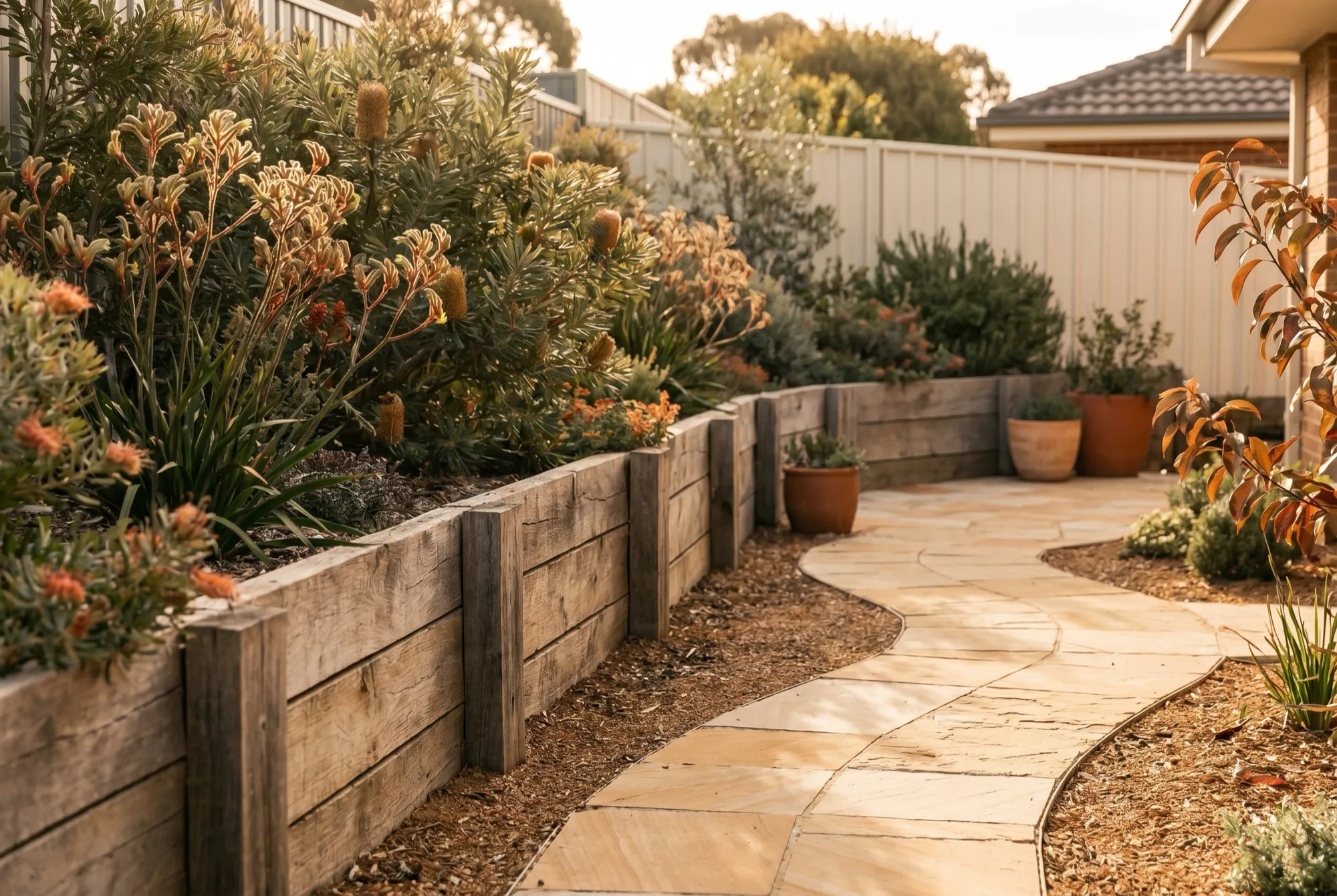
Most fencing in Australia is quoted per linear metre, and the figure swings hard on two things: the material and the height. As a rough guide, treated pine paling sits at the cheap end, Colorbond steel lands in the middle, and aluminium, brushwood or rendered masonry sit at the top. Beyond the panels, gates, sloping ground and ripping out the old fence are what quietly inflate the final bill.
How fencing is priced
Fencers almost always talk in dollars per linear metre, then add line items for the bits that are not just straight runs of panel. So when a neighbour swears their fence cost “fifty bucks a metre”, treat that as a starting point, not gospel. Their block might be dead flat with easy access and no gate, and yours might be on a slope behind a narrow side passage.
The base per-metre rate generally covers posts, rails, infill panels, fixings and labour for a standard height. A standard boundary fence is commonly around 1.8 metres. Push the height higher for privacy or pool compliance and the rate climbs, because there is more material and, often, bigger or deeper posts.
This is general information, not personal financial, tax or legal advice. Every quote depends on your site, so use the ranges below as a sense check rather than a promise.
Indicative fencing cost by material
Here is a broad, indicative sense of where common materials sit, from cheaper to dearer. These are ballpark per-metre ranges for supply and install, last checked June 2026. Prices move with timber and steel markets, your state, access and the fencer’s workload, so always get your own quotes.
| Material | Where it sits | Typical use |
|---|---|---|
| Treated pine paling | Lower end | Standard backyard boundary fences |
| Hardwood paling | Lower to mid | A sturdier timber look |
| Colorbond steel | Middle | Low-maintenance privacy fencing |
| Aluminium slat or tube | Higher end | Modern street frontage, pool surrounds |
| Brushwood | Higher end | Soft, natural privacy screening |
| Rendered masonry or brick | Top end | Solid, permanent front walls |
Timber paling remains the default for a lot of Aussie backyards because it is the cheapest way to get a solid 1.8 metre boundary up. Colorbond is the popular middle ground: no painting, decent privacy and a long life. Once you move into aluminium, brushwood or anything masonry, you are paying for looks, longevity or both, and the number climbs accordingly.
The extras that move the number
The per-metre rate is only half the story. The line items below are where two quotes for the “same” fence end up hundreds or thousands of dollars apart.
- Gates. Every gate is a separate cost, and a wide double or vehicle gate costs a lot more than a single pedestrian one.
- Slope and difficult sites. A sloping block means stepped or raked panels and more labour. Rocky or reactive soil makes digging post holes slower and dearer.
- Removal and disposal of the old fence. Pulling out and tipping the existing fence is rarely free, especially if there is old concrete around the posts.
- Access. A narrow side passage, no rear lane, or a steep driveway all slow the job down.
- Retaining. If the ground levels differ across the boundary, you may need a retaining wall before the fence even goes up. That is a separate job with its own budget, and our retaining wall cost guide walks through it.
If your fence is part of a wider yard refresh rather than a like-for-like replacement, it is worth pricing the whole project together. Our landscaping cost breakdown shows how fencing, paving and planting stack up, so you are not nasty-surprised halfway through.
The fence panels are the easy part. Gates, slopes and old-fence removal are where the budget actually goes.
Boundary fences and your neighbour
Here is the part people forget until the quotes land: a boundary fence is usually shared. If the fence sits on the dividing line between two properties, your neighbour generally has a stake in it, and most states and territories have dividing-fences laws that deal with how the cost is split.
In broad terms, those laws expect a “sufficient” dividing fence to be a shared expense, often split evenly, with a process for serving notice and resolving disputes if you cannot agree. The details differ by state, so do not assume. The cleanest move is the cheapest one: talk to your neighbour before you book anything. A quick chat about height, material and timing can save a genuinely awkward standoff, and it means you both know what you are signing up to pay.
If you want the picture to be impartial, get a few quotes and share them with your neighbour so you are both working off the same numbers. You can get fencing quotes from local tradies and compare like for like, which makes the cost-split conversation far less fraught than two mates guessing.
A couple of practical notes. If you want something fancier than a “sufficient” fence, you may have to fund the upgrade yourself. And the specific rules, notice periods and dispute paths are set by your state or territory legislation, so confirm with the official source for where you live before you commit.
A quick worked example
Say you are replacing 30 linear metres of timber paling boundary fence on a mostly flat block, with one pedestrian gate and the old fence to be removed. Your bill is roughly: the per-metre rate times 30, plus the gate, plus removal and disposal. Slope, tricky access or a switch to Colorbond or aluminium would each nudge it up.
That is also why a fence sits inside the bigger renovation conversation. If you are budgeting a whole-of-home project, our home renovation costs in Australia guide helps you see where a new fence ranks against kitchens, bathrooms and the rest.
The bottom line
Fencing in Australia is priced per linear metre, and your final number is driven by material, height, your site and the extras. Treated pine paling is the budget pick, Colorbond is the low-maintenance middle, and aluminium, brushwood or masonry sit at the top. Before you do anything, talk to your neighbour about the shared boundary, then get a few quotes so you are comparing like for like. Ranges here are indicative and were last checked June 2026, and fencing prices and dividing-fences rules change, so confirm current figures and the law in your state with the official source before you commit.