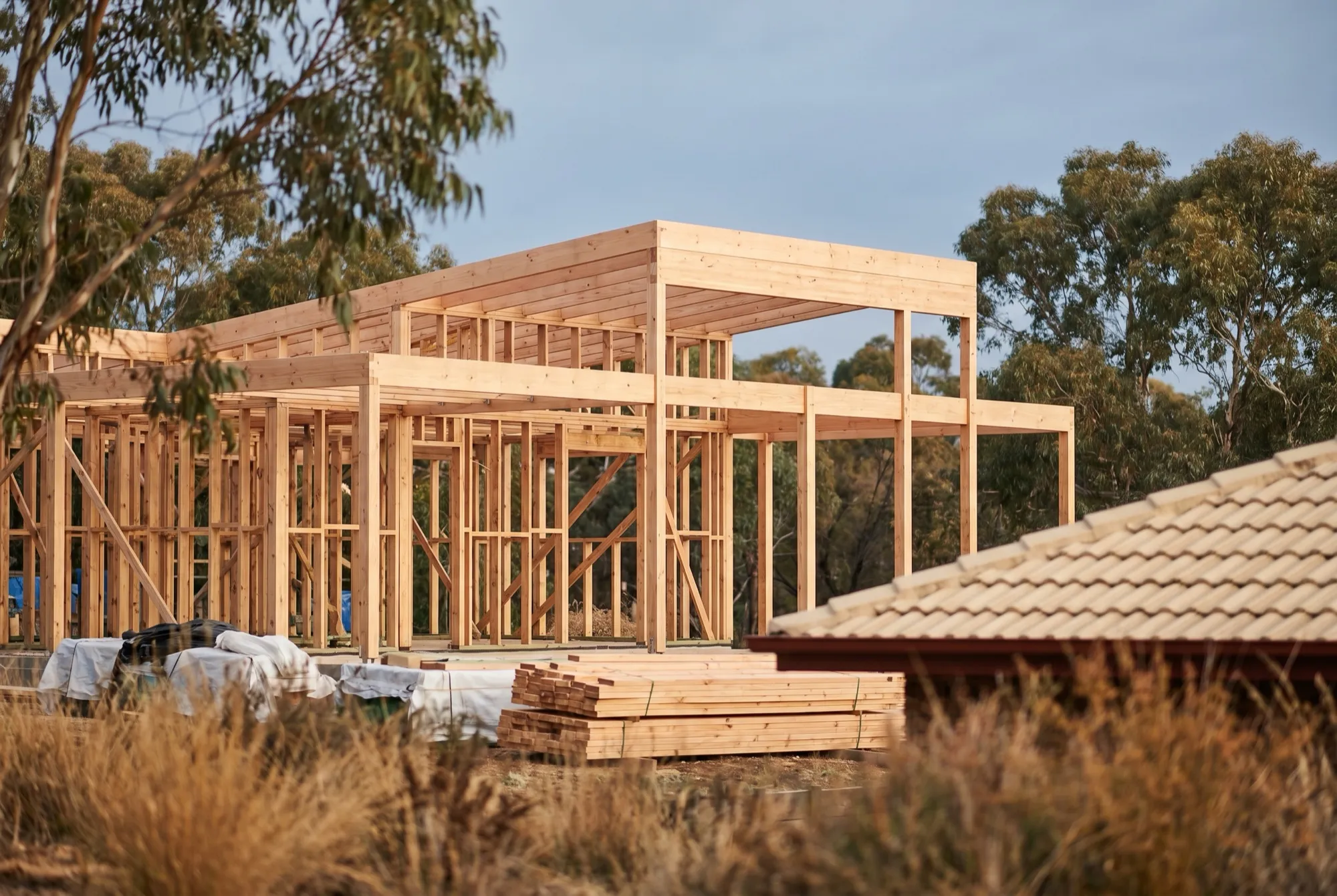
A granny flat in Australia commonly costs roughly $120,000 to $250,000 or more, depending on size, finish, and whether you go for a prefab kit or a custom build on site. A small one or two bedroom kit can land around $120,000 to $160,000, while a larger or custom build runs $180,000 to $250,000 and up.
That is a wide range, and it is wide for a reason. A granny flat is a small building, but it is still a building, with a slab, services, approvals, and trades. The number you actually pay depends on a handful of things you can size up before you ever talk to a builder. Let us walk through them.
These figures were last checked June 2026. They are ballpark ranges drawn from current builder and supplier pricing, not fixed quotes. Prices move with size, finish, and site, so treat them as a starting point. The only number that is real is the one a builder writes down after they have seen your block.
What counts as a granny flat
A granny flat is a self-contained secondary dwelling on the same lot as your main house. Self-contained is the key bit: it has its own kitchen, bathroom, bedroom or two, and a living area, plus its own entrance. That is what separates it from a converted garage, a studio, or a rumpus room with a sink.
Because it is a full dwelling, it gets treated like one. You need approval, you need services connected, and you need it built to the standard a person can actually live in. All of that costs money, which is why a granny flat is closer in price to a small house than to a large shed.
How much a granny flat costs by size and type
Here is the rough lay of the land. The table below is a guide to 2026 ranges, not a quote, and your block will nudge these numbers up or down.
| Size or type | Typical floor area | Indicative cost range (2026) | Notes |
|---|---|---|---|
| Small kit or prefab (1 bed) | 35 to 50 sqm | $120,000 to $150,000 | Faster to deliver, less flexible on layout |
| Standard kit or prefab (2 bed) | 50 to 60 sqm | $140,000 to $170,000 | The common sweet spot for rental or family |
| Custom build (1 to 2 bed) | 50 to 70 sqm | $180,000 to $230,000 | Built on site, more choice on design and finish |
| Larger or premium custom | 70 to 90 sqm | $230,000 to $250,000+ | Bigger footprint, higher spec, trickier sites |
A few things to read into that table. The jump from kit to custom is not just about size. A kit is largely pre-built off site and craned or trucked in, so you are paying for speed and certainty. A custom build is constructed on your block from the slab up, so you are paying for flexibility and a finish that suits the main house. Neither is wrong. They suit different blocks and different budgets.
What actually drives the price
Two granny flats of the same size can be tens of thousands apart. The reasons usually come down to four things.
Site access
Can a truck or a crane get to where the flat is going? A clear backyard with side access is the dream. A narrow block, a tight side gate, or a flat tucked behind the main house means more manual handling, smaller machines, and more hours. Poor access is one of the quiet budget killers.
Slope and ground
A flat, stable block takes a standard slab and not much fuss. A sloping site may need cut and fill, retaining, or a suspended floor, and reactive clay soils can push up the slab cost. You will not always know what is under the surface until someone tests it, so build in a buffer.
Connecting services
Power, water, and sewer have to reach the new dwelling, and that is rarely free. If the connection points are close and easy, you are laughing. If the sewer is on the far side of the block or the switchboard needs an upgrade, the bill climbs. This is a big part of why the same kit costs more on one block than another.
Finish and inclusions
Stone benchtops, tiled floors throughout, a split system in every room, and a proper deck all add up. A standard finish keeps you at the lower end. A finish that matches a renovated main house pushes you toward the top.
The granny flat itself is the easy part. It is the slab, the services, and the site that decide your final number.
If you want a realistic figure for your block rather than a national average, the move is to get quotes from granny flat builders who will come out, look at access and services, and price the job properly. Get two or three so you can compare apples with apples.
Kit and prefab versus custom build
The kit versus custom question is the one most people get stuck on, so here is the short version.
A prefab or kit granny flat is built in a factory and delivered, often craned onto a prepared slab in a day or two. The upside is speed and a fixed, predictable price. The downside is you are choosing from set designs, so there is less room to tweak the layout or match the main house exactly.
A custom build is constructed on site by trades, the same way an extension is. The upside is flexibility: you choose the layout, the orientation, the finish, all of it. The downside is it takes longer and usually costs more, and like any on-site build it is more exposed to weather and site surprises. If you have weighed up a granny flat against simply growing the main house, our guide to house extension cost is worth a read before you commit.
For a sense of where a granny flat sits relative to building fresh, it is well under the cost to build a house from scratch, which is part of the appeal. You are adding a dwelling without buying more land.
The rules differ by state and council
This is the part that catches people out. Granny flat rules are not national. They are set by state planning policy and your local council, and they vary a fair bit.
New South Wales is generally the friendliest. On a suitably sized residential lot, you can often get a granny flat approved through a streamlined process rather than a full development application, which saves time and money. Other states and councils take different approaches: some are relaxed, some have tighter rules on lot size, setbacks, whether you can rent it out separately, and even whether it can be a strata-titled or separately leased dwelling at all.
So before you fall in love with a floor plan, check your local planning rules. A quick call to the council, or to a builder who works in your area, will tell you what is allowed on your block. Skipping this step is how people end up paying for a design that was never going to get approved.
Is a granny flat worth it?
For a lot of households, yes, but it is not free money. The two common reasons people build one stack up well: rental income, and housing family without anyone living on top of each other. A well-built flat can also lift the value and appeal of the property.
Just go in with eyes open. Factor in approval costs, service connections, and the fact that you are giving up a chunk of backyard. Run the rental numbers honestly, including the years it takes to pay back the build. And remember that a cheap quote that skips the site work is not really a cheaper flat, it is just a quote that has not been finished yet. Choosing the right builder matters as much as the design, so it pays to know how to find a good tradie before you sign anything.
The bottom line
Budget roughly $120,000 to $250,000 or more for a granny flat in Australia in 2026. A small kit sits at the lower end, a larger custom build at the top, and your final number is decided less by the flat itself than by your site: access, slope, and the cost of running power, water, and sewer to it. Prefab is faster and more predictable, custom is more flexible. Check your state and council rules early so you are pricing something you can actually build, then get a few real quotes. A national average is a starting point. A builder standing in your backyard is the truth.