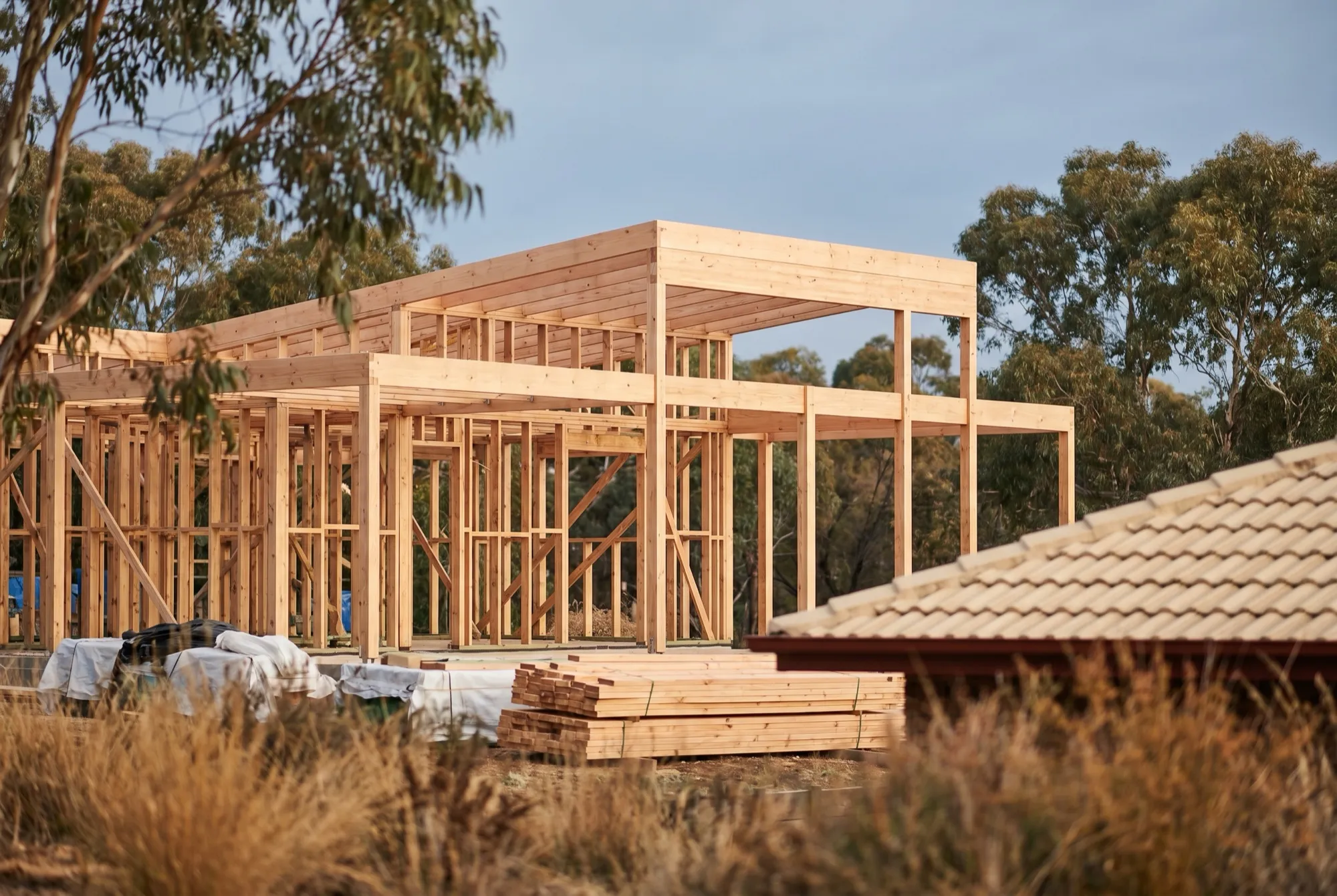
A house extension in Australia commonly costs somewhere between $50,000 and $150,000 or more, with most projects landing in that band depending on size and finish. Priced per square metre, a single-storey ground-floor extension runs roughly $2,000 to $4,000 per square metre, while a second-storey addition is dearer at roughly $3,000 to $5,500 or more per square metre (figures last checked June 2026, and they move around a lot).
Those are honest ranges, not quotes. Extensions are some of the most site-specific work a builder does, so two homes on the same street can come back with wildly different numbers. Below is how the money actually breaks down, where the surprises hide, and why every sensible budget keeps a little powder dry.
How extensions get priced
Most builders quote an extension per square metre of new floor area, then adjust for everything that makes your job harder than the last one. It is a useful shorthand for a ballpark, but treat it as a starting point rather than gospel.
The single biggest lever is whether you are building out or building up. A ground-floor extension sits on a fresh slab on relatively open ground. A second-storey addition has to be carried by the existing structure, which often means new footings, steel, and a great deal of careful work over the top of a house you still want to live in.
| Extension type | Typical rate (per m2) | Why it sits there |
|---|---|---|
| Single-storey, ground floor | $2,000 to $4,000 | New slab, simpler access, fewer structural unknowns |
| Second-storey addition | $3,000 to $5,500+ | Reinforced structure, harder access, temporary weatherproofing |
| Wet areas (kitchen, bathroom, laundry) | Adds significantly | Plumbing, waterproofing, tiling, cabinetry, and trades stacked together |
Rates last checked June 2026. They vary by storey, scope, site, and how busy your local trades happen to be, so use the table to frame a conversation, not to set your budget.
Ground floor versus going up
Building out is usually the cheaper path per square metre, and it is the obvious choice when you have the block for it. You keep the structure simple, the trades can get at the work, and you are not threading materials up and over an occupied home.
Going up costs more for reasons that are entirely physical. The existing house has to be assessed and often strengthened to carry the new floor, which can mean new posts, beams, and footings driven down through the ground floor. Access is slower, the roof usually comes off, and the builder has to keep the place weatherproof while it is open to the sky. None of that is optional, and all of it costs.
The trade-off is land. A second storey adds space without eating your backyard, which in a tight-block city is often the whole point. If you are weighing the two, it helps to also look at the cost of building a house from scratch, because a large extension can quietly creep toward new-build territory.
Build out if you have the land and build up if you do not, then budget for the version that costs more than you hoped.
What wet areas do to the bill
If your extension includes a kitchen, bathroom, or laundry, the price climbs, and not by a little. Wet areas pile several expensive trades into a small footprint: plumbing, waterproofing, tiling, cabinetry, and fitout, often all dependent on each other and all needing to be done properly the first time.
A plain bedroom extension is mostly structure, lining, and finishes. Add a bathroom and you have added waterproofing that has to pass, plumbing that has to be roughed in before the walls close up, and tiling and joinery that carry their own labour and material costs. It is the same reason a kitchen renovation lands where it does on its own.
Where the dollars cluster
- Plumbing and drainage connections to the existing house
- Waterproofing and the sign-off that goes with it
- Tiling, cabinetry, benchtops, and tapware
- The extra coordination of several trades in one small space
If you can keep wet areas out of the new build, or cluster them near existing plumbing, you will feel it in the quote.
Approvals, permits, and paperwork
Almost every extension needs sign-off before a tool comes out. Depending on your state and council, that usually means either council approval through a development application or a building permit, and frequently both. The exact pathway depends on where you live, the size of the works, and how close you are building to boundaries and neighbours.
This is not just a formality to grumble about. Approvals shape what you are allowed to build, set conditions you have to meet, and take time you need to factor into the schedule. Budget for application fees, and budget for the wait, because work cannot lawfully start until the paperwork is in order.
A good builder or building designer will know the local rules and can steer the application. The smartest first move is to compare quotes from extension builders early, so you understand the approval pathway and the likely cost before you commit to anything.
Build a contingency, then leave it alone
Here is the one rule no one regrets following: set aside a contingency, and treat it as spent until proven otherwise. Extensions reliably uncover problems in the existing house once walls come off and floors come up, and you only find out what is behind that wall when you open it.
Common surprises include old footings that are not up to carrying a second storey, wiring or plumbing that has to be brought up to current standards, rot or termite damage hidden behind cladding, and ground conditions that turn a simple slab into a not-so-simple one. None of these are exotic. They are the ordinary realities of working on a building someone put up years ago.
A contingency is what keeps one nasty discovery from derailing the whole project. For a sense of how these numbers stack up across the broader job, it is worth reading up on home renovation costs more generally, because an extension rarely happens in isolation from other work.
Getting a real number for your place
Every figure above is a guide. The only number that means anything is a quote from a builder who has stood in your house, looked at your block, and read your plans. That quote prices your access, your soil, your existing structure, and your finishes, none of which a per-square-metre average can see.
To get there, line up a few builders, give them the same scope so the quotes are comparable, and ask what their price does and does not include. Watch for the things that quietly inflate a job later: structural changes to the existing house, matching old materials that are no longer easy to source, and the wet areas already mentioned. A quote that looks cheap is often a quote that has left something out.
The bottom line
A house extension in Australia typically costs $50,000 to $150,000 or more, built on per-square-metre rates of roughly $2,000 to $4,000 for a single-storey ground-floor addition and roughly $3,000 to $5,500 or more for going up a level (last checked June 2026, and genuinely variable). Wet areas add meaningfully, approvals are almost always required, and a contingency is not optional, it is the difference between a stressful project and a ruinous one. Get several real quotes on the same scope, read the inclusions closely, and budget for the version that costs a bit more than you were hoping. That is the one that usually turns up.