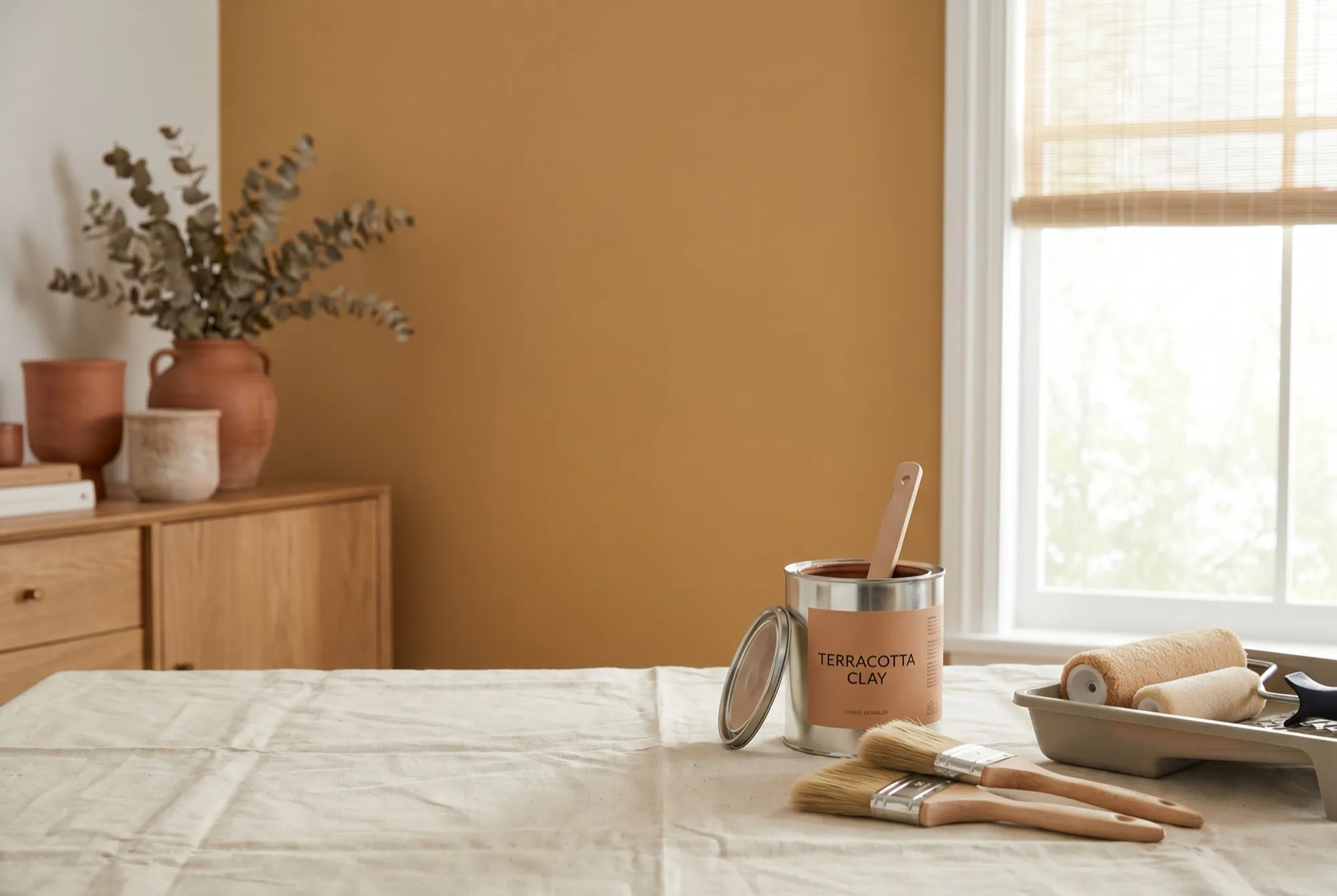
The cost to paint a house in Australia commonly lands somewhere between around $15 and $45 per square metre of floor area for interior work, or roughly $400 to $1,000 plus per room, while painting a whole exterior usually runs around $3,500 to $12,000 plus. Where you sit in those ranges depends on the size of the home, how many storeys it has, how much preparation the surfaces need, and the quality of paint you choose.
Those are useful starting figures (last checked June 2026), but they are not a quote. House painting is one of those jobs where two homes on the same street can come back with wildly different numbers, and both can be fair. Below is what actually moves the price, and how to make sure the quotes you collect are comparing the same job.
How painters price the work
In Australia, house painting is usually priced one of two ways: per square metre, or per room (interior) and per whole exterior (exterior). Some painters quote a flat job price after a site visit, which is really just those rates bundled together with their read on the prep involved.
Per square metre is the more transparent unit, because it scales with the actual area being painted rather than a rough room count. But it can still mislead if the scope underneath it is vague. A square metre rate that assumes one coat over sound, already-painted plaster is a very different beast to one that includes filling, sanding, undercoating, and two top coats. Same unit, different job.
Whichever way it is quoted, labour is the majority of the cost. Paint and materials matter, and good paint is not cheap, but the hours on site are what you are really paying for.
Interior painting costs
Interior painting often runs around $15 to $45 per square metre of floor area, or roughly $400 to $1,000 plus per room. A small bedroom with walls in good nick sits near the bottom. A large living area with high ceilings, detailed trim, and a colour change from dark to light (which can need an extra coat) sits near the top, or beyond it.
What pushes an interior quote up:
- Ceilings and trim. Walls only is cheaper than walls, ceilings, cornices, skirting, architraves, and doors. This is the single biggest reason two interior quotes differ, so check exactly what is included.
- Number of coats. Two coats over a primer or undercoat is the norm for a proper finish. One coat quotes look cheaper and often are not enough.
- Colour and contrast. Going from a dark wall to a pale one, or covering patchy old paint, can mean an extra coat and more paint.
- Condition of the surface. Cracks, holes, water stains, and flaking all need filling, sanding, and sealing before a brush touches the wall.
If you are repainting as part of a wider project, it is worth reading our bathroom renovation cost guide too, because painting is usually one of the smaller lines in a renovation and the sequencing matters.
Exterior painting costs
Exterior painting of a whole house commonly runs around $3,500 to $12,000 plus. That is a wide band on purpose, because the exterior is where the big cost drivers live.
Height is the obvious one. A single-storey brick veneer is straightforward. A double or triple-storey home, or anything on a sloping block, often needs scaffolding or elevated work platforms, and that adds real money plus time before any painting happens. Access is not a detail, it is a line item.
Surface type matters too. Rendered masonry in good condition paints up quickly. Weatherboard, fibro, and older homes with flaking, chalking, or peeling paint need far more preparation, and preparation is the part that quietly inflates exterior quotes more than anything else.
A good paint job is mostly preparation. If a quote looks cheap, it is usually the prep that has gone missing.
Why preparation is the hidden cost
Here is the thing most homeowners underestimate. The paint on the tin is the easy part. Getting the surface ready to receive it is the work, and it is where quotes diverge most.
Preparation can include washing down, scraping and sanding back loose or flaking paint, filling cracks and gaps, treating mould or rust, replacing rotten timber, masking and protecting everything that is not being painted, and applying primer or undercoat to bare or patchy areas. On an old weatherboard home, prep can take longer than the painting itself.
This is why the cheapest quote is so often the riskiest. A painter who skips or skimps on prep can come in low and finish fast, and the job can look fine for a season before it starts peeling. A painter who prices the prep honestly looks dearer on paper and usually lasts years longer. When you compare quotes, the prep is the part to interrogate hardest.
Interior versus exterior, side by side
The table below sketches indicative ranges so you can see roughly where each job sits. Treat these as a starting point, not a price (last checked June 2026), because prep, height, size, and paint quality move them around.
| Job | Typical pricing | Indicative range | Biggest cost driver |
|---|---|---|---|
| Interior, per room | Per room | ~$400 to $1,000+ | Ceilings and trim included or not |
| Interior, whole home | Per square metre | ~$15 to $45 / m² of floor area | Number of coats and surface condition |
| Exterior, single storey | Whole exterior | Lower end of ~$3,500 to $12,000+ | Surface prep |
| Exterior, double storey or more | Whole exterior | Upper end of ~$3,500 to $12,000+ | Height, access, and scaffolding |
The ranges overlap because the variables overlap. A heavily prepped single-storey weatherboard can cost more than a clean double-storey render. There is no shortcut around getting it assessed.
How to get comparable quotes
The only real number is a quote from a painter who has seen your house. Everything above is for budgeting and sanity-checking, not for signing off on. To make the quotes you collect genuinely comparable, get the scope in writing and check each one covers the same thing.
Ask every painter to spell out:
- What is being painted. Walls only, or walls plus ceilings, cornices, skirting, architraves, doors, and eaves. Exterior trim, gutters, and fascias too, if relevant.
- How many coats, and whether primer or undercoat is included.
- What preparation is included, in detail. This is the line that separates a lasting job from a quick one.
- Paint brand and quality. Premium paints cost more and generally last longer.
- Access and scaffolding, for anything above single storey.
Three quotes that all itemise the above can be compared properly. Three quotes that are vague one-liners cannot, and the cheapest of those is rarely the bargain it looks like. It is the same principle that runs through our guide on how to find a good tradie: the detail in the quote tells you most of what you need to know about the work.
When you are ready, it is worth taking a moment to compare quotes from local painters so you have a few itemised numbers to weigh against each other rather than guessing from a single figure.
The bottom line
As a rough guide for 2026, interior painting runs around $15 to $45 per square metre or roughly $400 to $1,000 plus per room, and a whole exterior commonly lands around $3,500 to $12,000 plus. The number you actually pay turns on the size of the home, the number of storeys, the amount of preparation, and the quality of the paint, so treat any single figure with a healthy dose of suspicion.
Get the scope in writing, compare like for like, and pay close attention to the prep, because that is where a good job is won or lost. If painting is one piece of a larger project, our overview of home renovation costs in Australia will help you slot it into the bigger budget. And remember the only number that counts is the one a painter writes down after walking your property.