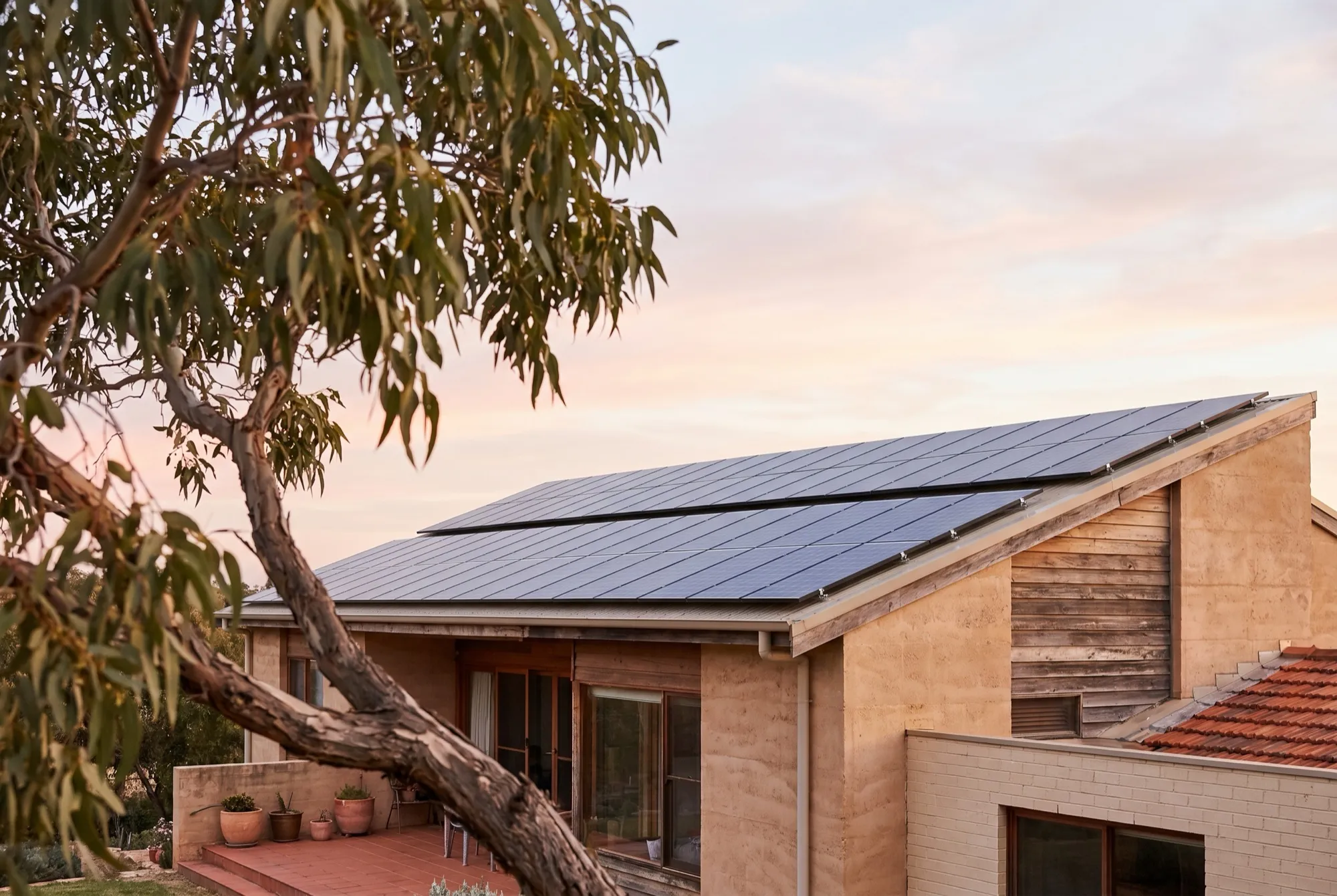
For most Australian homes with a reasonable roof, yes, solar is still worth it in 2026: a typical 6.6kW system costs roughly $5,000 to $9,000 installed after the federal rebate and pays for itself in about three to six years. After that, it runs for years as close to free electricity, a rare thing to say about anything attached to your house.
That is the headline, and for many readers the whole answer. But the case has quietly changed shape, and the old pitch about selling power back to the grid no longer holds. The rest of this is about where the savings come from now, and when solar does not stack up.
The short answer, with the maths
Payback is quick because you stop buying expensive grid power and start making your own. Grid electricity in Australia now runs around 30 cents per kWh or more, and every unit your panels produce that you use yourself is a unit you do not buy at that price.
The numbers are not subtle. A 6.6kW system in a sunny part of the country might generate 25 to 30 kWh on a good day. Even if you use only a chunk of that yourself, the savings on your own consumption tend to land around $1,000 to $1,800 a year for an average household, which gets you to a three to six year payback. It varies with your roof, state, usage and tariff, so treat any single figure as a starting point, not a promise. The honest move is to run your own postcode through a savings calculator before you sign anything, because the spread between a good install and a poor one is wide.
All of this assumes a roof facing somewhere between north, east and west, and not buried in shade half the day. We will get to the homes where that is not true.
The shift nobody mentioned: self-consumption, not export
Here is what has genuinely changed. For years, solar was sold on the idea that you would export your surplus and the feed-in tariff would pad your savings. That era is over.
Feed-in tariffs across the country have fallen to just a few cents per kWh, often in the 3 to 8 cent range, last checked June 2026. Against the 30 cents and up you pay to import, the logic flips entirely: power you send to the grid is now worth a fraction of the power you keep. We dig into the trend in our piece on why feed-in tariffs keep falling, but the upshot is simple.
Every kilowatt-hour you use yourself is worth four to ten times one you export. Solar in 2026 rewards consumption, not generosity to the grid.
In plain terms: use your own solar while the sun is up. Run the dishwasher, washing machine, pool pump and air conditioning during daylight, and charge the EV at lunchtime, not midnight. None of it is glamorous, but it is the difference between a four-year payback and one that limps along on three-cent exports.
If your life happens during the day, or you can shift it there, solar is close to a no-brainer. If your house is empty until dinnertime, the panels alone export cheaply all day while you buy expensive power all evening. That is where a battery comes in.
Where a battery changes the answer
A battery stores your cheap daytime solar so you can use it at night instead of buying grid power at full price. That is the whole pitch.
The catch is cost. Adding a battery extends payback to roughly 7 to 12 years on savings, last checked June 2026, faster for homes with high evening usage and low feed-in tariffs, slower for homes already using most of their solar by day. The federal Cheaper Home Batteries Program, running since 1 July 2025, cuts the installed cost by around 30 per cent and winds down toward 2030, so the subsidy is more generous now than later. We break it down in our guide to what a solar battery actually costs.
So the battery question is really a usage question.
| Your situation | Solar alone | Add a battery? |
|---|---|---|
| Home during the day, low evening use | Strong case, fast payback | Usually not yet |
| Out all day, heavy evening and night use | Cheap exports, costly nights | Worth modelling |
| High grid prices, poor feed-in tariff | Good | Improves the case |
| Plan to move within a few years | Reasonable | Hard to justify |
The figures above are ranges for mid-2026 and depend on your retailer, tariff and how much power you can shift into daylight. None of it is precise to the dollar, and anyone quoting a single magic number is rounding hard.
When solar is not worth it
Solar is not universal. There are genuine cases where the honest answer is to wait or skip it, and a good installer will tell you so.
- A shaded or wrong-facing roof. Heavy shade from trees, buildings or your own roofline cuts output badly, and a roof that faces mostly south does the rest. Panels on the wrong roof are an expensive way to feel virtuous.
- Very low daytime usage with no battery. If nobody is home during the day and you are not adding storage, most of your generation exports for a few cents while you keep buying pricey evening power. The maths gets thin.
- A short tenure, or a plan to move soon. If you are renting or selling within a couple of years, you may not be in the home long enough to capture the payback. Solar can lift a sale price, but not reliably by the full install cost, and a three to six year payback only helps if you are around for it.
Worth a word on rebates, because they tilt every one of these calls. The federal discounts are why the upfront price is as low as it is, and they shrink a little each year. Our rundown of current solar rebates covers what is on offer in 2026 and why waiting tends to cost you.
The risk that is not on the quote: your installer
One more thing, and it matters more than the brand of panel. The biggest avoidable risk in Australian solar is not the hardware, it is the company that fits it.
More than 700 solar retailers have gone under since 2011, and by some estimates around 1 in 6 systems carries a warranty that is effectively orphaned, attached to a business that no longer exists. A ten year workmanship warranty is worth nothing if the firm behind it has folded.
So before you choose on price, check the boring details. Favour installers trading for several years, with a verifiable ASIC company structure you can look up. A dearer quote from a business likely to still be here in five years beats a bargain from one that will not be. The savings are real, but only if someone is left to honour the warranty when a panel fails in year eight.
The bottom line
For most Australian homeowners with a decent roof and an intention to stay put, solar in 2026 is still one of the better-returning things you can spend money on, with panels alone paying back in about three to six years. The catch is that the savings now live in self-consumption, so the system rewards you for using your own power by day rather than selling it back at a few cents. Add a battery if your evenings are heavy and you can stomach a seven to twelve year horizon, lean on the federal rebates while they last, and choose an installer likely to outlive its own warranty. Get those calls right and the answer to is solar worth it is a comfortable yes. Get the roof, usage or installer wrong, and it is the one case where the maths quietly lets you down. All figures here are ranges last checked June 2026 and will shift with your postcode and tariff, so model your own numbers first.