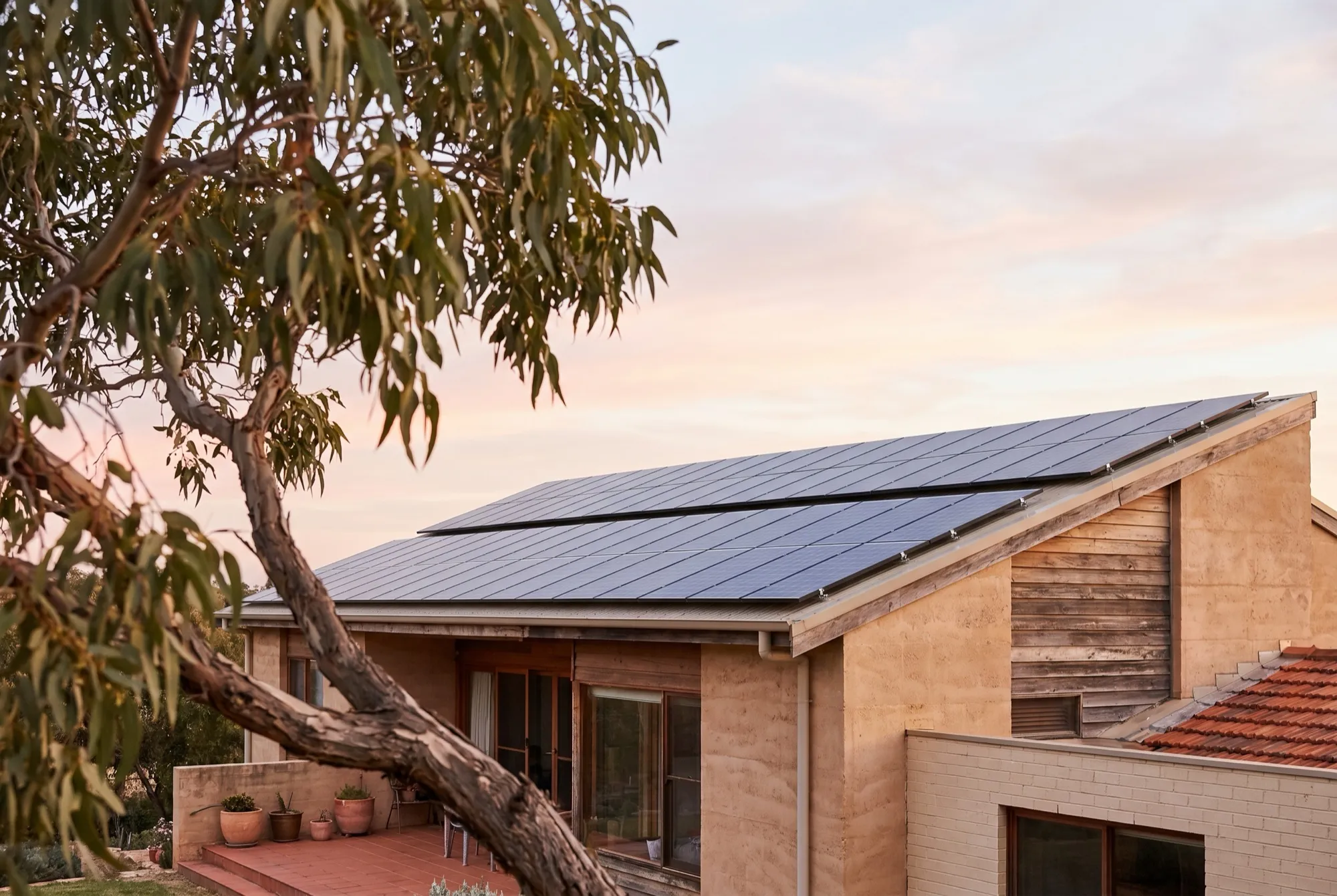
Solar hot water typically costs somewhere between $3,000 and $7,000 installed before incentives, and federal certificates plus some state rebates can knock a useful chunk off that. Whether it is worth it depends on what you already have on your roof, what you are replacing, and how your household uses hot water.
Hot water is one of the biggest single energy users in an Australian home, so getting this decision right matters. Let us walk through the costs, the rebates, and the question everyone actually asks, which is whether a solar hot water system or a heat pump is the smarter buy in 2026.
What “solar hot water” actually means
Solar hot water uses roof-mounted collectors to heat water directly from the sun. Cold water passes through the collectors, warms up, and is stored in a tank ready for your shower. It is a thermal system, which is a fancy way of saying it makes heat, not electricity.
This is the part that trips people up. Solar hot water is not the same as the solar PV panels that generate power for your home. Those are a separate product doing a separate job, and we cover them in more detail in our guide to solar panel cost in Australia. You can absolutely have both on the same roof, and plenty of homes do.
A typical solar hot water setup includes the collector panels, a storage tank, and a booster (electric or gas) for the days when the sun does not cooperate. Melbourne in July, we are looking at you.
What solar hot water costs in Australia
Installed costs commonly land in the range of around $3,000 to $7,000 before any incentives, depending on the system size, the type of collectors, your tank capacity, and how fiddly the install is. Figures here are indicative and were last checked June 2026, so treat them as a starting point rather than a quote.
That range narrows once incentives come in. Two things usually apply:
- Federal Small-scale Technology Certificates (STCs). Eligible solar hot water systems earn STCs, which the installer typically discounts off the upfront price. The number of certificates depends on your zone and the system, and the dollar value moves with the certificate market.
- State and territory rebates. Some states offer additional rebates or interest-free loans for efficient hot water. These come and go, and eligibility rules vary, so this is the bit to confirm before you sign anything.
Because rebates change without much warning, do not budget around a headline figure you saw last year. Check the current offer for your state and confirm the system you want is on the eligible list.
The heat-pump alternative
Here is where the conversation has shifted. Heat-pump hot water has become the common alternative, and for a lot of households it is now the default recommendation rather than the underdog.
A heat pump does not need direct sunshine. It pulls warmth from the surrounding air to heat your water, a bit like a fridge running in reverse. That means it works at night, on overcast days, and in shaded spots where solar collectors would struggle. It runs on electricity, which is the clever part if you already have rooftop PV.
If you have solar panels, or plan to get them, you can set a heat pump to run during the middle of the day on cheap or self-generated solar power. The result is hot water at a very low running cost without dedicating extra roof space to thermal collectors. We dig into the numbers in our heat-pump hot water cost guide.
If you already have rooftop solar, a heat pump running on daytime power is often the simpler and cheaper path than adding separate solar hot water collectors.
That is not a blanket rule. A well-sited solar hot water system in a sunny climate can be excellent and very low-running-cost. The point is that the two options now compete head to head, and the right answer depends on your roof and your habits.
Comparing the two on cost
The honest way to compare is on both the installed cost and the ongoing running cost, not just the sticker price. A cheaper system that costs more to run every year can lose the race over a decade.
| Factor | Solar hot water | Heat-pump hot water |
|---|---|---|
| Typical installed cost (before incentives) | Around $3,000 to $7,000 | Broadly comparable, varies by model |
| Needs direct sun | Yes, for the solar gain | No, works day or night |
| Pairs with rooftop PV | Not directly | Yes, runs on your solar power |
| Booster on cloudy days | Electric or gas booster | Electric element, less often needed |
| Roof space used | Collector panels plus tank | None on the roof |
| Federal STCs available | Yes, if eligible | Yes, if eligible |
Both can attract incentives, and both can deliver low running costs when set up well. The deciding factors are usually your climate, whether you already have or want PV, and how much roof you are willing to give up.
Which one is worth it for you
For homes that already have solar PV, or are planning it, a heat pump running on daytime solar is often the simpler and cheaper path. You skip the extra roof hardware and let the panels you already own do the heavy lifting.
For homes in consistently sunny regions without PV, or where you want hot water that does not lean on the grid at all, traditional solar hot water still earns its place. It is a mature, reliable technology that has heated Australian showers for decades.
Either way, the move is worth lining up with your wider energy picture rather than treating it as a one-off purchase. If you are mapping out panels, batteries and hot water together, it helps to plan your home energy upgrades as a single project so the pieces work with each other. While you are at it, our guide on how to lower your electricity bill covers the smaller habits that compound on top of the big-ticket gear.
One practical note. This article is general information, not personal financial, tax or legal advice. Your circumstances, rebates, and energy prices are specific to you, so get tailored quotes and confirm current rules with the official source, whether that is your installer, your energy retailer, or your state government scheme.
The bottom line
Solar hot water usually costs $3,000 to $7,000 installed before incentives, with federal STCs and possible state rebates bringing that down. It remains a solid choice in sunny climates and homes without rooftop PV. For everyone else, especially homes that already have or plan solar panels, a heat pump running on daytime solar is increasingly the easier and cheaper option. Compare both on installed and running cost, confirm the current rebates for your state, and remember that figures here are indicative and last checked June 2026. Rates, thresholds and rules change, so check with the official source before you commit.