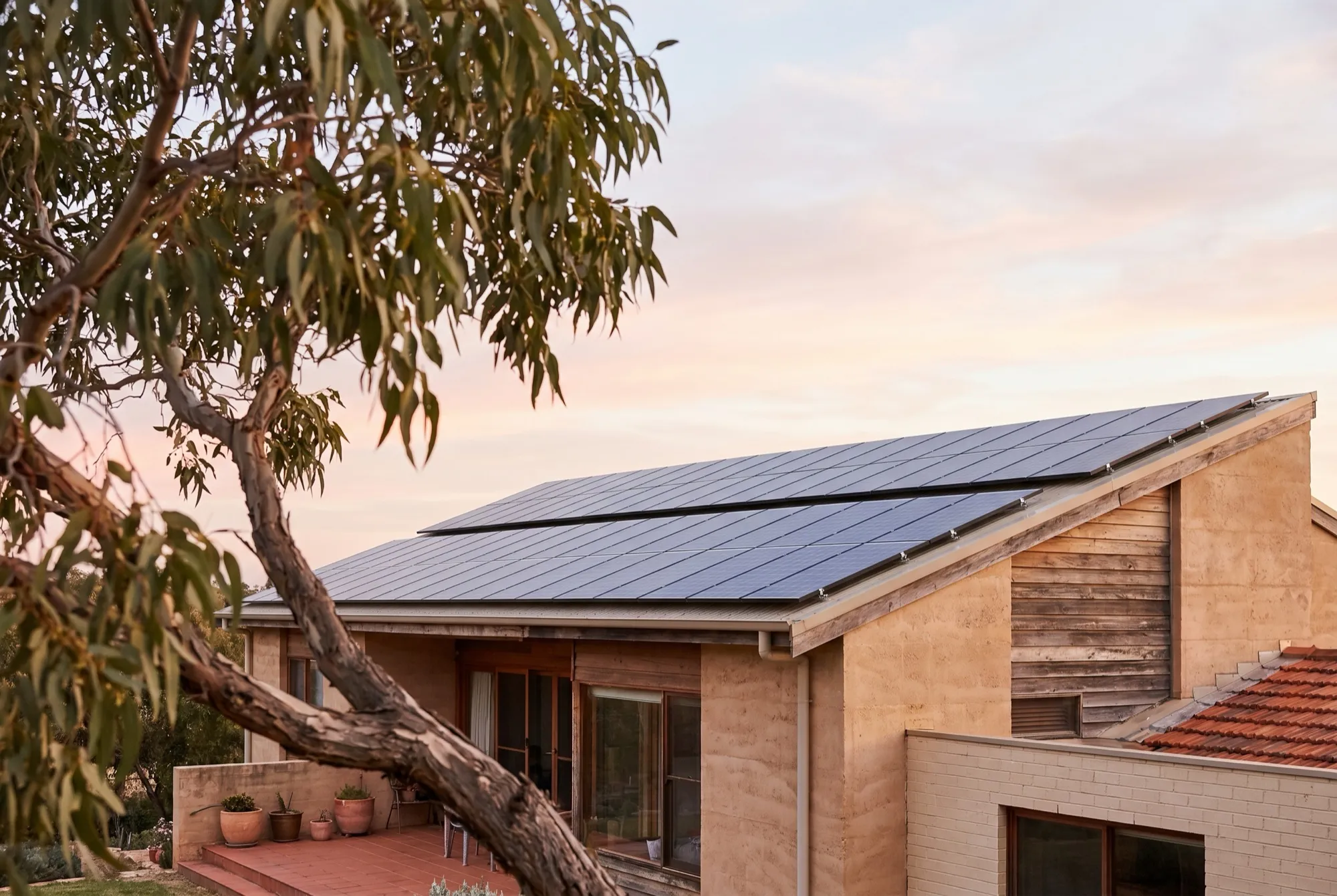
A typical 6.6kW rooftop solar system in Australia costs roughly $5,000 to $9,000 fully installed in 2026, after the STC rebate is taken off at the point of sale. Step up to a 10kW system and you are usually looking at around $8,000 to $13,000, again after the rebate, with the exact figure driven by your state, the panels and inverter you pick, and how awkward your roof is to work on. Those are the headline numbers. The detail is where the money actually moves, so let us walk through it.
What you actually pay, by system size
The single biggest lever on price is how many panels you bolt to the roof. Bigger systems cost more in absolute terms but less per watt, because the fixed costs of a job (the truck, the crew, the paperwork, the inverter) get spread across more panels.
Here is the lay of the land as of last checked June 2026. Treat every figure as a range, not a quote, because a clean single-storey tile roof in a sunny STC zone is a very different job from a steep two-storey job that needs a switchboard upgrade.
| System size | Rough panel count | Typical installed cost (after STC rebate) | Best suited to |
|---|---|---|---|
| 6.6kW | 15 to 17 | ~$5,000 to $9,000 | Smaller homes, modest daytime use |
| 10kW | 22 to 26 | ~$8,000 to $13,000 | Family homes, some daytime load |
| 13kW+ | 30 or more | ~$11,000 to $16,000+ | Big rooftops, pool, EV, future battery |
A couple of things to notice. The 6.6kW size is still the most popular because it pairs neatly with a common 5kW inverter and sits inside the rules many networks use for easy approval. And the jump from 6.6kW to 10kW often costs far less than you would guess per extra watt, which is why a lot of households now size up while the installer is already on the roof.
How the STC rebate cuts the price
When you see an advertised price, it has almost certainly already had the federal rebate baked in. That rebate comes from Small-scale Technology Certificates, or STCs, created under the Small-scale Renewable Energy Scheme. Your installer claims them and discounts your invoice up front, so you rarely handle the certificates yourself.
On a 6.6kW system the STC rebate is worth roughly $2,200 to $2,800 in 2025 figures, depending on which zone you live in. Sunnier zones generate more certificates, so the discount is larger. There is one catch worth planning around: the number of certificates a system earns is “deemed” against the years left until the scheme ends on 31 December 2030, and that deeming drops every year. In plain English, the rebate shrinks a little each January. It is not a cliff, but waiting does cost you something.
The advertised price already includes the STC rebate. If a quote and a rival look wildly different, check they are both quoting after the certificates, not before.
If you want the full mechanics of certificates, zones and deeming, our guide to solar rebates in Australia goes deeper than we can here.
What drives the price up or down
Two identical-sized systems can be thousands of dollars apart, and it is almost never a rort. It usually comes down to a handful of real factors.
Panel and inverter quality
Panels are sold in loose tiers, and the gap between a budget panel and a premium one shows up in efficiency, the warranty length, and how gracefully output fades over 20-odd years. The inverter matters even more. A single string inverter is the cheaper, perfectly sensible default for a simple roof. Microinverters or power optimisers cost more but earn their keep when your roof faces several directions or gets shaded by a tree or chimney, because one shaded panel no longer drags down the rest.
Your roof and your switchboard
Tin is quicker to mount than tile, single-storey is quicker and safer than double, and a simple roofline beats one carved up by hips, valleys and skylights. Then there is the switchboard. Older homes often need an upgrade or a surge protection device before the system can be safely connected, and that can add several hundred dollars to the bill. None of it is glamorous, but it is the difference between two quotes that look identical on the brochure.
Single versus three phase
Most homes are single phase. If yours is three phase, you have more flexibility for larger systems and future loads, but the compatible inverter usually costs a bit more.
Solar on its own versus adding a battery
The numbers above are for panels and an inverter only. A battery is a separate purchase, and a chunky one. Storage runs at roughly $900 to $1,300 per usable kWh before the federal Cheaper Home Batteries Program, which has been live since 1 July 2025 and knocks around 30% off through the small-scale scheme before it winds down toward 2030.
Whether storage pays for itself is a genuinely different question to whether panels do, and the maths is moving as feed-in tariffs fall. We have run the full sums in our solar battery cost guide for Australia if you are weighing it up.
On panels alone, the payback is the easy part of the story. Solar-only payback typically lands somewhere in the 3 to 6 year range, helped far more by the grid power you avoid buying than by anything you export. Feed-in tariffs are now only a few cents per kWh, so the real value is in using your own sunshine during the day rather than selling it cheaply to the grid.
How to get a quote you can actually trust
Price is only half the decision. The other half is whether the company that installs your system will still be around if something goes wrong in year seven.
This is not a hypothetical. More than 700 Australian solar retailers have folded since 2011, and by some estimates roughly 1 in 6 systems now carries a workmanship warranty against a business that no longer trades. A warranty is only as good as the company behind it. So when you compare quotes, weigh up a few things alongside the dollar figure:
- Trading history. Favour installers with several years of continuous trading rather than a brand-new outfit chasing the rebate before it shrinks.
- A verifiable structure. Check the company has a real, traceable ASIC registration, not just a slick website and a phone number.
- Like-for-like quotes. Make sure every quote lists the same system size, names the actual panel and inverter models, and states the price after the STC rebate. Otherwise you are comparing apples with oranges.
- The full scope. Confirm whether a switchboard upgrade, extra rail or longer cable run is included or lurking as a variation.
The simplest way to line up several offers on the same terms is to compare quotes from vetted installers rather than chasing one salesperson at a time. Three comparable quotes tell you far more about a fair price than any single brochure.
So is it worth it?
For most owner-occupiers with a decent north, east or west-facing roof and some daytime electricity use, the answer in 2026 is still a fairly comfortable yes. The upfront cost has held steady or eased, the rebate is still meaningful even as it tapers, and grid power is not getting any cheaper. If you want to pressure-test that against your own bills and roof, our piece on whether solar is worth it in Australia walks through the break-even sums.
The bottom line
In 2026 a 6.6kW system typically costs around $5,000 to $9,000 fully installed after the STC rebate, a 10kW system roughly $8,000 to $13,000, and larger 13kW-plus systems from about $11,000 upward, all figures last checked June 2026 and best treated as ranges. The price you land on depends on your state, the quality of the panels and inverter, your roof, and whether your switchboard needs work. The rebate is already in most advertised prices and shrinks a little each year to the scheme’s end in 2030, so there is a mild cost to waiting. Get three like-for-like quotes, check the installer has a real trading history and an ASIC structure you can verify, and you will pay a fair price for a system that is still standing, and still warranted, long after the crew has packed up the truck.