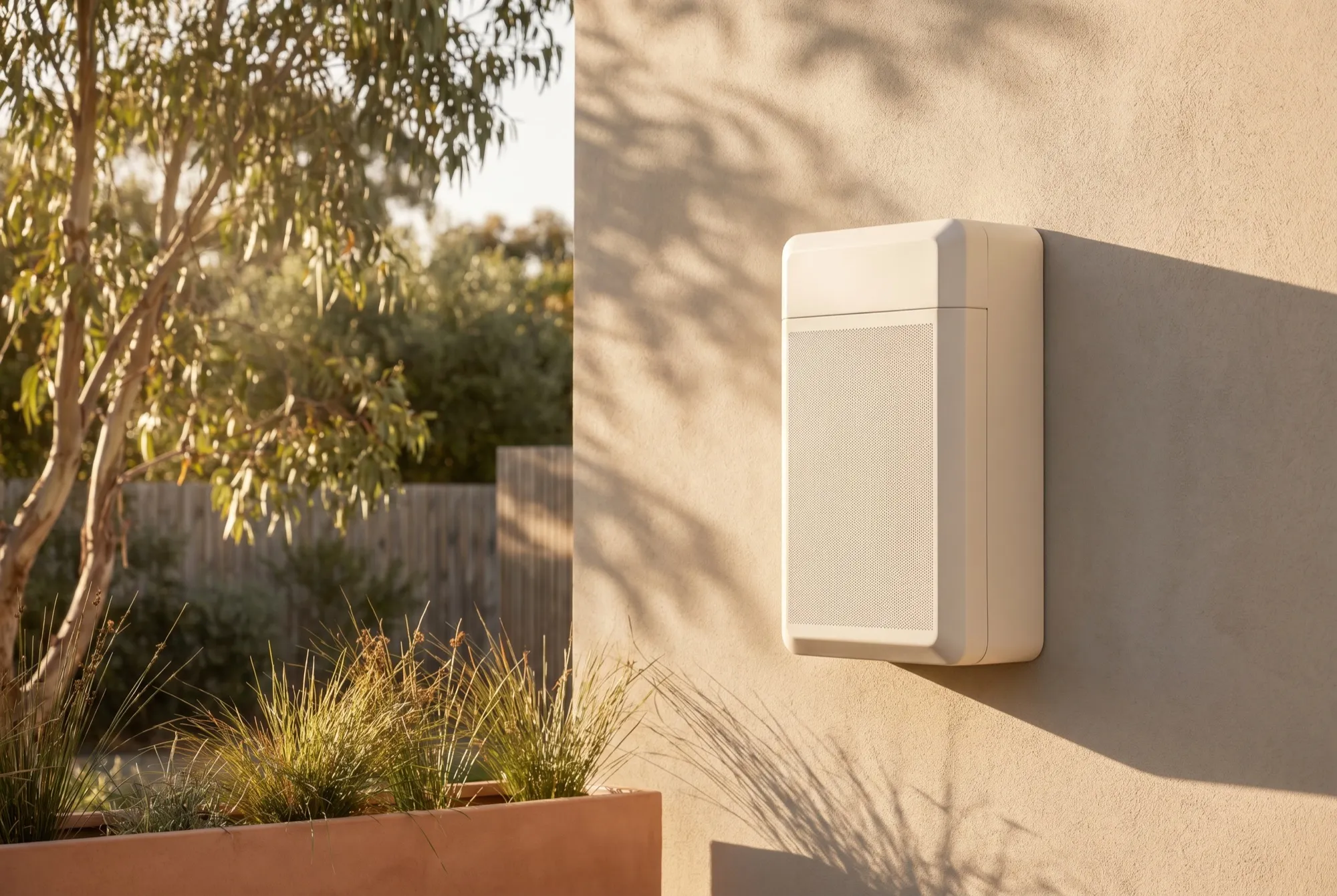
The federal Cheaper Home Batteries Program is still running in June 2026, and it still knocks roughly 30 per cent off the installed cost of a home battery, applied as a discount at the point of sale rather than a cheque you chase later. The catch worth knowing before you sign anything: the per-kilowatt-hour value steps down every year on the way to a 2030 wind-up, so the discount is largest the sooner you install.
This is general information, not personal financial advice, and the figures here were last checked June 2026. Program settings change, so confirm the current numbers before you commit. With that said, here is where things stand and what to actually do about it.
What the program is, in plain English
The Cheaper Home Batteries Program went live on 1 July 2025. It works by extending the same mechanism that has subsidised rooftop solar for years, the Small-scale Renewable Energy Scheme, to cover home batteries. In practice that means the discount is baked into the quote your installer gives you. You do not lodge a separate claim with Canberra. The accredited installer handles the certificates and passes the value through as a lower up-front price.
In its first year the subsidy was worth around $330 per usable kilowatt-hour of battery capacity. On a mid-sized battery, that adds up to thousands of dollars off the sticker price. The exact dollar figure depends on the battery you choose and the certificate price at the time, which is why no two quotes look identical.
A few conditions are non-negotiable. The battery must be paired with solar, either existing panels or a new system installed at the same time. The work must be done by an accredited installer, the same accreditation that has long applied to subsidised solar. And the battery has to sit within the eligible capacity range the scheme sets. If a salesperson tells you the rebate applies to a battery with no solar attached, treat that as a reason to get a second quote.
The part that catches people out: it shrinks every year
Here is the detail that turns this from a static rebate into a timing decision. The per-kilowatt-hour value does not hold steady. It is scheduled to decline each year until the program winds up around 2030. The mechanism mirrors how the solar subsidy has tapered over the past decade, where the certificate count drops annually as the scheme approaches its end date.
The subsidy is worth the most the day it launches and a little less every year after. If a battery already stacks up for your household, waiting rarely makes it cheaper.
What that means for you is straightforward. If a battery makes sense for your home this year, delaying to next year does not get you a bigger discount. It gets you a smaller one, assuming the rest of the cost stays flat. That is the opposite of how most people instinctively treat government incentives, where the assumption is that there is always time. With this one, the clock is running down rather than up.
None of this is a reason to rush into a battery that does not suit your usage. A subsidy on something you do not need is still money spent. But if you have already worked through the cost of a solar battery in Australia and concluded the numbers work, the annual taper is a genuine nudge to get on with it rather than circle back in a year.
State schemes can stack on top
The federal program is not the only money on the table. Several states and territories run their own battery incentives, and in many cases these can stack on top of the federal discount rather than cancelling it out. That can meaningfully change the final figure, sometimes by thousands more.
Because these schemes are state-run, the rules, the dollar values, and even whether a program is open at all vary by where you live and can change at short notice. The cleanest way to see what applies to your address is to check your battery rebate by postcode, then confirm the detail with your installer and the official state government source before you rely on any number.
How to actually claim it
The good news is that the federal discount is close to effortless from your side, because the installer does the paperwork. Your job is mostly to choose well and check the maths. Here is the order of play.
- Confirm you have eligible solar, or plan to install panels at the same time as the battery.
- Pick an accredited installer. Accreditation is the gatekeeper for the subsidy, so an unaccredited installer means no discount, full stop.
- Get at least two or three quotes and check that the federal discount is itemised, not just baked into a vague headline price you cannot verify.
- Ask whether any state scheme applies and whether it has been included in the quote.
- Check the final figure against an independent estimate of what a battery should cost installed in your state.
- Confirm the current per-kilowatt-hour value and program settings on the day, since this article’s figures were last checked June 2026 and can move.
The single most useful habit is comparing itemised quotes. The subsidy should appear as a clear line that reduces the price, and the post-discount total should be in the ballpark of what you would expect for the capacity you are buying. If one quote is dramatically cheaper, find out why before you celebrate.
Is it worth it for your household?
The subsidy improves the economics of a battery. It does not, on its own, decide whether one is right for you. That still comes down to your solar generation, your usage pattern, your electricity tariff, and how much of your daytime solar you are currently exporting for very little. A household that exports a lot of cheap solar by day and buys it back at peak rates by night is the classic candidate. A household with modest solar and low evening use may find the payback period long even with the discount applied.
If you are weighing up brands and sizes, our rundown of the best home battery in Australia is a sensible next read, because the right battery for your roof and your bills matters at least as much as the rebate stapled to it. The subsidy makes a good decision better. It does not rescue a poor one.
The bottom line
The Cheaper Home Batteries Program still offers a worthwhile discount in June 2026, around 30 per cent off the installed cost, handled at the point of sale by an accredited installer and only on batteries paired with solar. The wrinkle is that the per-kilowatt-hour value shrinks each year toward a 2030 wind-up, so if a battery already suits your household, the case for acting sooner rather than later is real. Confirm the current settings, check whether a state scheme stacks on top, compare itemised quotes, and remember this is general information rather than personal financial advice. Figures here were last checked June 2026 and can change, so verify the detail against the official program source before you sign.