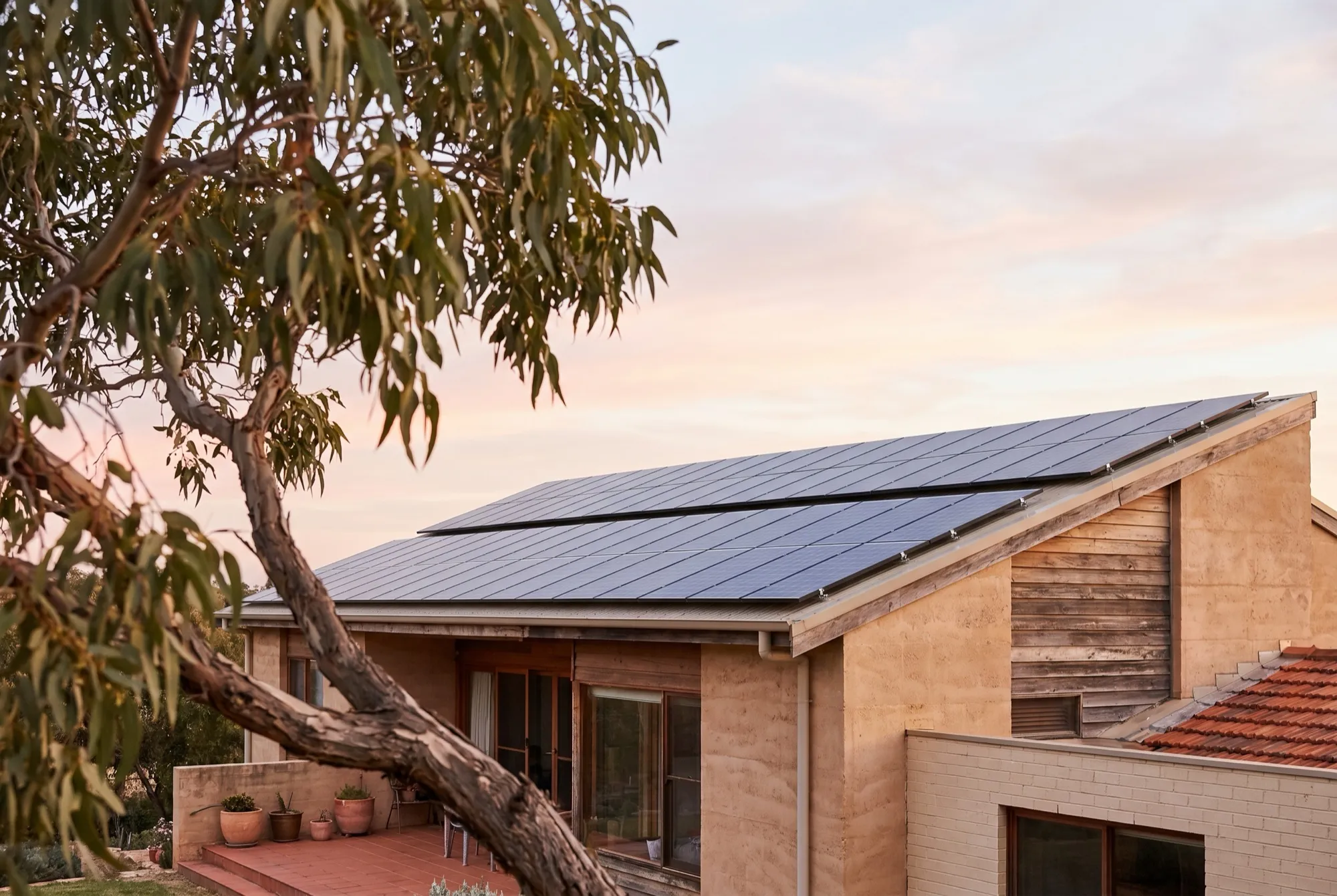
Australia has the highest rate of rooftop solar of any country on earth. As at late 2025, more than 4 million small-scale rooftop solar systems had been installed, meaning roughly one in three free-standing Australian homes now has panels on the roof. The figures below pull the picture together, with the source behind each one, last checked June 2026.
These numbers move every quarter as installs continue, so treat them as the latest available rather than live, and follow the linked sources for current data.
How much solar is installed
| Measure | Approximate figure | Source |
|---|---|---|
| Rooftop solar systems installed | More than 4 million | Clean Energy Regulator |
| Total small-scale solar capacity | Around 30 gigawatts and rising | Australian PV Institute (APVI) |
| Share of detached homes with solar | Roughly one in three | APVI / industry estimates |
| New systems installed each year | Around 300,000 | Clean Energy Regulator |
Australia passed the four-million-system mark on the back of more than a decade of falling hardware prices and the federal Small-scale Technology Certificate rebate. The detail on what a system costs today is in our guide to what solar panels cost.
Penetration by state
Penetration (the share of dwellings with solar) is highest in the sunny, detached-housing states. South Australia and Queensland lead, with well over a third of homes carrying panels, while the apartment-heavy inner cities lag.
- South Australia and Queensland: among the highest household solar penetration in the world.
- Western Australia and New South Wales (especially regional): high and climbing.
- Victoria and Tasmania: strong despite lower winter sun.
- Apartments and inner-city areas: the main gap, where rooftop access is limited.
Australia did not get to four million solar roofs through one big policy. It got there because the maths quietly made sense for households, one roof at a time.
Batteries are the next wave
Home battery uptake lagged solar for years because the economics were marginal. That has changed: collapsing feed-in tariffs and the federal Cheaper Home Batteries Program (live since 1 July 2025) have pushed battery attachment on new solar installs sharply higher. Industry figures put battery attachment on new residential solar above one in five and climbing through 2026. The context is in our home battery cost guide.
Sources and notes
The figures here draw on the Clean Energy Regulator (the body that administers the rooftop solar rebate and counts installs), the Australian PV Institute (which tracks installed capacity and penetration), and industry reporting. They are approximate and updated regularly by those bodies, so check the source for the current number. This is general information, not advice.
The bottom line
The headline is simple: Australia leads the world on rooftop solar, and batteries are now following the same curve. If you are weighing it up for your own home, the fastest way to a real number is to compare accredited installer quotes through Why Solar, then read our complete solar guide.