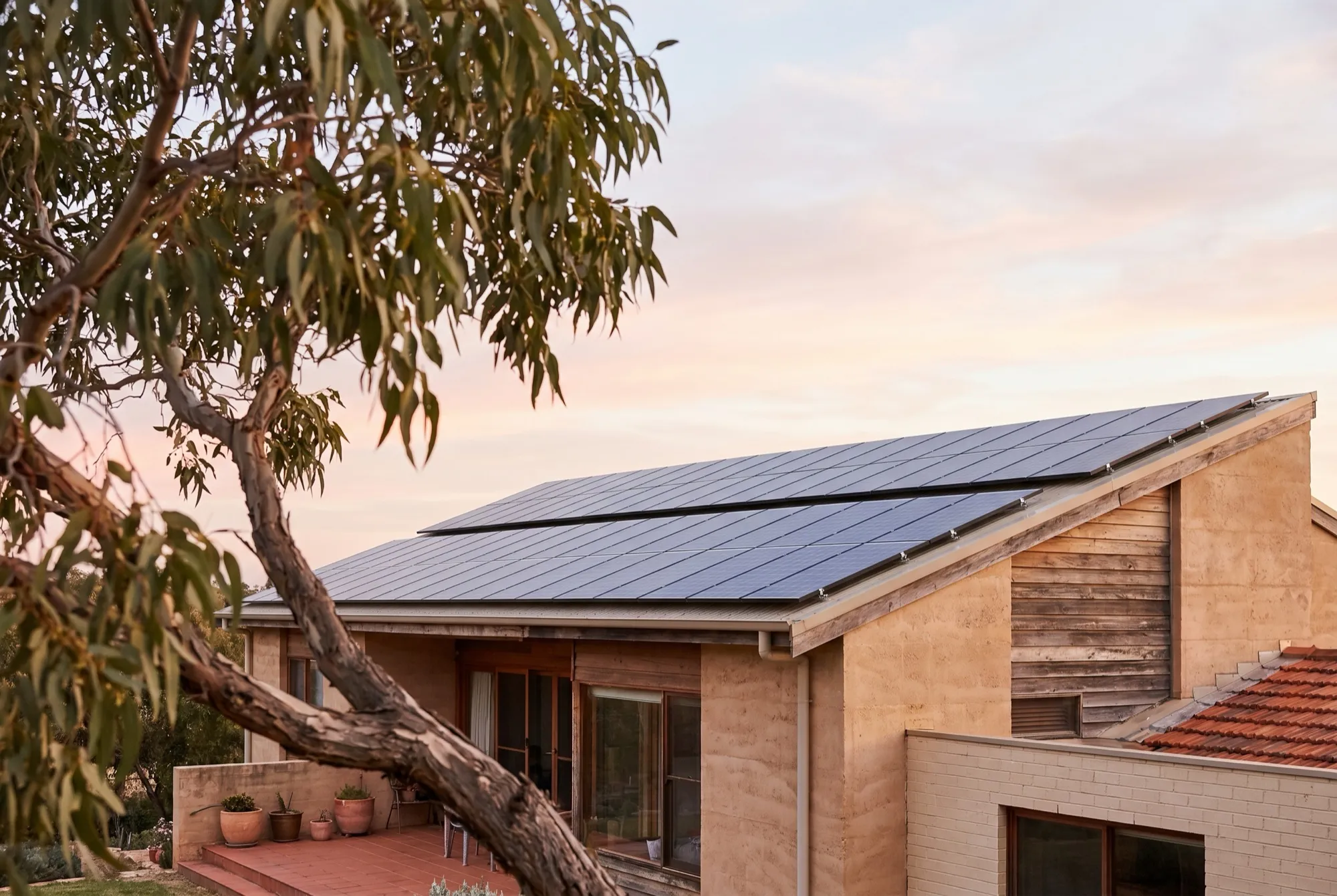
Australia has the highest rate of rooftop solar in the world, and 2026 is the cheapest and most heavily subsidised year yet to add panels, a battery, or both. The hardware has never been cheaper, the federal rebates are the largest they will be for the rest of the decade, and the maths now favours using your own power rather than exporting it.
This guide is the map. Each section gives you the short version and links to a full breakdown with real Australian numbers, last checked June 2026.
How solar works in Australia now
Panels generate DC power, an inverter converts it to AC your home can use, and anything you do not use is exported to the grid. The big shift in 2026 is that exporting barely pays: feed-in tariffs have collapsed to a few cents, while grid power costs around 30 cents or more. The value is now in using your own solar during the day, and in storing the rest.
What it costs
A typical 6.6kW rooftop system runs roughly $5,000 to $9,000 installed after the federal rebate, and a home battery adds around $6,500 to $9,500 for 10kWh after its rebate. The full breakdowns: what solar panels cost in 2026 and how much a solar battery costs.
The rebates, in 2026
Two federal schemes do the heavy lifting. The Small-scale Technology Certificate (STC) rebate discounts panels at the point of sale, and the Cheaper Home Batteries Program, live since 1 July 2025, takes around 30 per cent off a battery. Both are applied by your installer, and both shrink each year until 2030, so the value of acting earlier is real. The detail: solar rebates by state and the Cheaper Home Batteries Program explained.
Is it worth it?
For most Australian homes with meaningful daytime or evening usage, yes, with solar alone often paying back in three to six years. A battery extends that to roughly seven to twelve years on savings, faster if you use a lot of power after dark. The honest version, including when it does not pay: is solar worth it in Australia in 2026.
Batteries
Battery attachment has surged on the back of the federal rebate and collapsing feed-in tariffs. The right battery depends on your evening usage, whether you want blackout backup, and the installer behind it more than the badge on the box. See how to actually choose a home battery.
Feed-in tariffs
The number that used to make solar pay is now the least important. Most retailers pay only a few cents per kWh for exports, and a high headline feed-in tariff is usually paired with a worse usage rate. How to read them: solar feed-in tariffs by state.
Solar by state
Rebates, feed-in rules, and network conditions vary a lot by state. The state guides:
- Solar and battery rebates in NSW
- Solar in Victoria and Solar Victoria
- Solar in Perth and WA
- Solar in Queensland
- Solar in South Australia
Sizing and hardware
Two questions decide your system: how big, and what inverter. Panels are cheap enough that most installers now fit the largest array your roof and network allow. Work out your number in how many solar panels do I need, and choose the right converter in solar inverters explained.
The one thing that matters most
Not the panel brand. The installer. More than 700 Australian solar retailers have gone out of business since 2011, and roughly one in six installed systems now carries a warranty against a company that no longer trades.
The cheapest quote from a one-year-old company is not a saving if the warranty outlives the company. Buy the installer, then the system.
The fix is boring and effective: choose an installer with several years of continuous trading and a verifiable company structure. The full checklist is in how to choose a solar installer, and matching services such as Why Solar pre-screen installers on exactly that basis.
The bottom line
In 2026 the hardware is cheap, the rebates are the largest they will be this decade, and the payback works for most homes with real evening usage. Get the rebate itemised on the quote, check the installer’s trading history before the price, and start by running your postcode through a rebate calculator like the one at Solar Power Savings so you know the real number before anyone calls you.