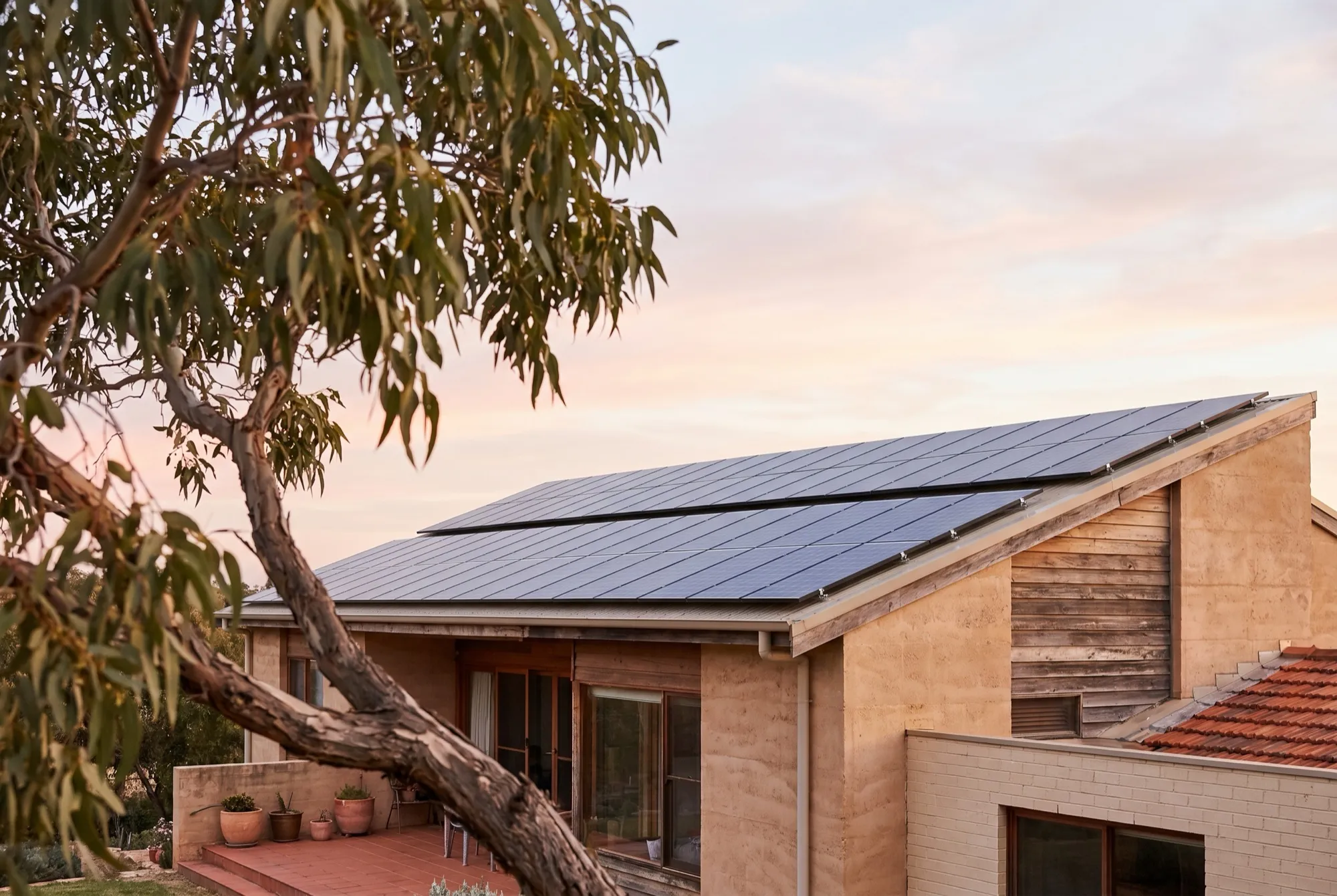
The short version for 2026: a standard 6.6kW rooftop system on the Gold Coast costs roughly $5,000 to $9,000 installed once the federal STC discount is removed, and because the local sun is among the best in the country, the system pays for itself faster here than almost anywhere else in Australia. The rebates you can rely on are federal, not state, since Queensland has no broad cash rebate on panels.
That is the headline. The detail matters, because the Gold Coast combines cheap panels, big sunny roofs and excellent solar conditions, which together push payback toward the short end of the national range.
What solar costs on the Gold Coast in 2026
Hardware prices on the Gold Coast track the national market, so the ranges below match what is quoted across the eastern states. They were last checked June 2026 and, like every figure here, they move.
The federal STC rebate is what makes any of this affordable. It is a point-of-sale discount: your accredited installer creates the certificates the system earns and knocks the value off the invoice, so the quoted price should already include it. No form, no waiting for a cheque. South-east Queensland sits in a sunny certificate zone, so the same panels earn a slightly larger STC discount here than in cooler southern cities.
| System or item | Indicative cost after rebate (Gold Coast, 2026) | Notes |
|---|---|---|
| 6.6kW panel system | $5,000 to $9,000 | After the federal STC discount, applied at point of sale |
| 10kW-plus panel system | $8,000 to $14,000 | Common here given cheap panels and large roofs |
| 10kWh home battery | $6,500 to $9,500 | After the federal Cheaper Home Batteries discount |
| STC discount on 6.6kW | around $2,200 to $2,800 | Built into the panel price above, not paid separately |
The wide bands are not hedging for its own sake. The gap between $5,000 and $9,000 on the same nominal system size is real: panel and inverter brand, roof complexity, whether you need switchboard or meter work, and how hungry your installer is that month all move the number. Treat any single advertised price with suspicion and get three quotes. The fastest way to do that is to compare Gold Coast installer quotes side by side rather than taking the first door-knocker who turns up. For the national context, see our guide to solar panel costs in Australia.
Why payback is so fast here
Payback is the number that actually matters, and the Gold Coast wins on it for one simple reason: the sun. The region gets long, bright days and strong year-round irradiance, so each kilowatt of panels produces more energy than the same panels would in Melbourne or Hobart. More generation against the same upfront cost means the system clears its price tag sooner.
In practice, a well-sized Gold Coast system that you mostly self-consume tends to land in the low-to-mid single digits of years for payback, often quicker than the national average. We are deliberately not quoting a single magic figure, because your result depends on how much power you use during daylight, your electricity tariff, and what your exports earn. But the direction is clear: strong sun plus cheap hardware is the best combination going.
On the Gold Coast the sun is generous and the panels are subsidised. The faster you use your own daytime power, the faster the system pays for itself.
The other lever is system size. Because panels are cheap and Gold Coast roofs are often generous, 10kW-plus systems are increasingly common. A larger array costs more upfront but captures more of those sunny days, and if you can shift loads like the dishwasher, pool pump or air conditioning into daylight hours, more of that generation offsets power you would otherwise buy at retail rates. That self-consumption is worth far more than the feed-in tariff, which brings us to the catch.
The rebates that actually apply
Two federal programs do the heavy lifting on the Gold Coast, and there is one state question mark.
The STC rebate on panels has run since 2011 and is the discount described above. The wrinkle is that it shrinks a little every year and is legislated to phase out by 2030, so the discount you get in 2026 is larger than the one you will get in 2028. Waiting does not make this cheaper.
The Cheaper Home Batteries Program is the newer one, live nationally since 1 July 2025. It takes roughly 30 per cent off the installed price of an eligible home battery through the same certificate plumbing as the panel rebate, and it is what turns a 10kWh battery into something closer to the $6,500 to $9,500 band above. Like the STC scheme, it is designed to wind down toward 2030.
As things stand, Queensland does not run a broad state cash rebate on solar panels, so Gold Coast households rely on the federal programs above. The state ran a limited Battery Booster battery pilot in 2024 that was heavily subscribed and did not stay open indefinitely. So the honest position for 2026 is this: do not assume a state rebate is open, and do not let a salesperson claim one without proof. Check with the Queensland Government and your installer before you sign, and treat any open state support as a bonus on top of the federal rebate rather than the thing that makes the deal work. For the wider state picture, see our rundown of solar in Queensland.
Feed-in tariffs, Energex and the export catch
Your Gold Coast home connects to the Energex network, and in south-east Queensland feed-in tariffs are market-based, set by your retailer rather than guaranteed by the government. That means the rate you are paid for exported power is a competitive offer, it varies between retailers, and it has trended down over the years as more rooftops feed the grid in the middle of the day.
The practical upshot is the same advice you will hear for any sunny, solar-heavy region: build your savings around self-consumption, not export. Every kilowatt-hour you use yourself avoids the full retail price you would otherwise pay. Every kilowatt-hour you export earns only the feed-in rate, which is usually a fraction of that. Compare retailer feed-in offers when you sign up, but do not let a headline feed-in number drive the decision.
Choosing an installer
The hardware market is competitive and the rebates are generous, which unfortunately attracts some short-lived operators. Warranties are only worth anything if the company is still trading when you need to claim, so favour a long-established, accredited installer over the cheapest quote from a name you have never heard of. Get three quotes, check accreditation, and read the workmanship warranty as carefully as the panel warranty.
- Get three written quotes so you can see the real spread on the same system size.
- Confirm accreditation for both the installer and the panels and inverter brands.
- Favour a long-trading local business so warranties outlive the install.
- Size for self-consumption so your savings come from the power you use, not the power you export.
A quick note: this is general information, not personal financial advice. Prices, rebate values and feed-in rates change, so confirm the current numbers with the official sources and a licensed installer before you commit. For more on regional installs, our piece on solar panels in Brisbane covers the same Energex network nearby.
The bottom line
Solar on the Gold Coast is one of the better deals in Australian energy. A 6.6kW system runs roughly $5,000 to $9,000 installed after the federal STC discount, 10kW-plus systems are common thanks to cheap panels and big roofs, and the strong local sun pushes payback toward the fast end of the national range. The rebates you can bank on are federal, the state picture is uncertain, and your real return comes from using your own daytime power rather than chasing a feed-in tariff. Get three quotes from a long-trading, accredited installer, and check the live figures before you sign, because they were last checked June 2026 and they keep moving.