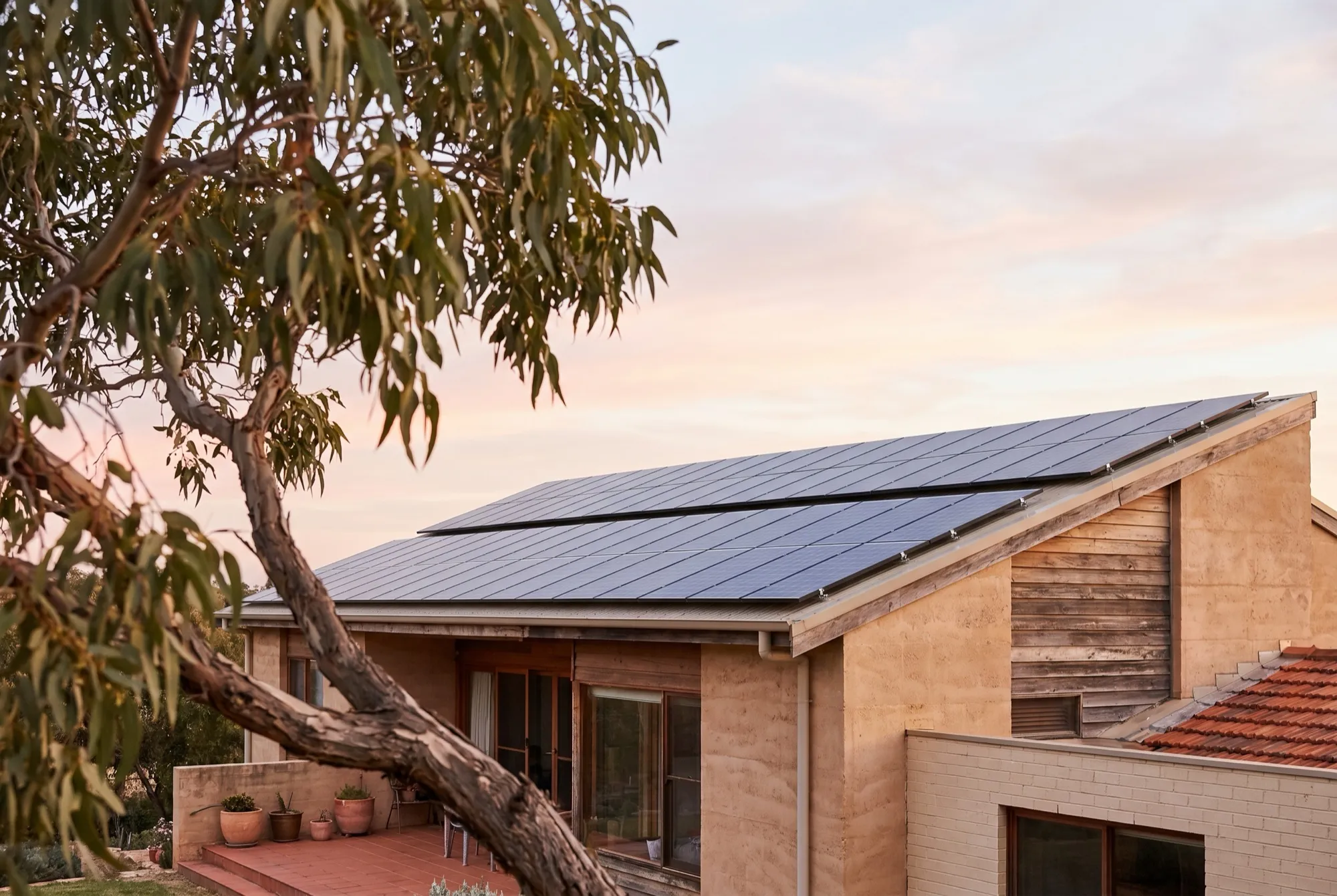
The short version for Melbourne in 2026: a quality 6.6kW rooftop system typically lands around $5,000 to $9,000 installed after the federal panel rebate, and Victorians can layer Solar Victoria support on top. Melbourne gets less winter sun than Brisbane or Perth, but the panels still pay themselves back well within a sensible timeframe, because the federal discount does the heavy lifting and Victoria adds its own.
That is the headline. The detail is where it matters, because Melbourne’s payback hinges less on how much sun the city gets and more on how much of your own generation you actually use. These figures were last checked June 2026, and both the rebates and the feed-in rules change, so confirm the current status with Solar Victoria, your retailer and the Essential Services Commission before you sign anything.
What a system costs in Melbourne in 2026
Start with the panels. The federal Small-scale Technology Certificate (STC) rebate is the discount that makes rooftop solar cheap across Australia, and your installer applies it at the point of sale rather than you claiming it later. On a 6.6kW system it was worth roughly $2,200 to $2,800 in 2025, and it steps down a little each year until the scheme ends in 2030. Melbourne sits in a slightly weaker solar zone than the northern capitals, so the same panels earn a touch less certificate value here, but the difference is modest.
After that discount comes off, a quality 6.6kW system runs about $5,000 to $9,000 installed in 2026. The spread is wide because it spans entry-level gear through to premium panels and inverters, plus the cost of a tricky roof or a switchboard upgrade. If a quote lands dramatically under that range, ask what is being left out.
Solar Victoria: the state top-up
Here is the Victorian-specific part. On top of the federal STC discount, the Victorian Government runs Solar Victoria, which has historically offered a panel rebate plus an interest-free loan of a similar value to spread the upfront cost. That combination has, in past years, taken a meaningful slice off the price for eligible households, on top of the federal rebate already baked into the quote.
The catch is that Solar Victoria’s offerings, eligibility rules and funding rounds change regularly, and the program has been reshaped more than once. Income tests, property value caps and whether you are an owner-occupier all affect what you can claim, and rebate rounds can run out for the year. Treat any figure you read as a starting point and confirm the live terms directly with Solar Victoria. Our guide to Solar Victoria walks through how the state program has worked and what to check before you apply.
The feed-in tariff: low single digits
Now the part that surprises people. Victoria has a regulated minimum feed-in tariff set by the Essential Services Commission, the state’s energy regulator. That puts a floor under what retailers must pay for the power you export. The catch in 2026 is that the floor sits in the low single-digit cents per kilowatt-hour, a long way below the generous rates of a decade ago.
The reason is simple oversupply. So much rooftop solar now floods the grid in the middle of the day that exported midday power is worth very little to retailers, which reshapes the whole payback case: the money is no longer in selling your sunshine to the grid.
With feed-in rates down to a few cents, the value of solar in Melbourne is in the power you use yourself, not the power you sell.
Why self-consumption is the whole game
If the grid only pays a few cents for an exported kilowatt-hour, but you pay your retailer perhaps 30 cents or more for one you import, the maths is blunt. Every unit of your own solar that you use in the home is worth several times more than a unit you export, which is why two households with identical systems can see very different payback timelines. The levers that matter most in Melbourne are, in rough order:
- North-facing panels. A north orientation captures the most generation across the day and especially through Melbourne’s weaker winter sun, which is when output is most precious.
- Self-consumption. Running the dishwasher, washing machine, pool pump or hot water during daylight hours converts cheap solar into avoided grid imports.
- Right-sizing the system. Oversizing purely to export more midday power earns you very little at a few cents per unit, so size the array to your actual daytime use.
For more on how orientation, shading and household usage move the payback, our breakdown of solar panel cost in Australia runs through the numbers behind a typical system.
How the Melbourne numbers stack up
Here is the rough shape of it for 2026, last checked June 2026. Every figure is a guide, not a quote, and Victorian schemes change.
| Item | Indicative figure (2026) | Notes |
|---|---|---|
| 6.6kW system, installed | ~$5,000 to $9,000 | After the federal STC rebate, applied at sale |
| Federal STC rebate (6.6kW) | ~$2,200 to $2,800 | Steps down yearly until 2030 |
| Solar Victoria support | Panel rebate plus interest-free loan | Eligibility tested; confirm current round status |
| Feed-in tariff (Victoria) | Low single-digit cents | ESC sets a regulated minimum; retailers may offer more |
| Best payback lever | Self-consumption | Each unit used at home beats each unit exported |
The single biggest mistake is to budget around the feed-in tariff. In 2026 the value is in offsetting the power you would otherwise buy, not in selling exports, so the household that shifts its big appliance use into daylight hours sees the fastest return.
Why the installer matters more than the brochure
A reality check that applies everywhere, Melbourne included. More than 700 solar retailers have gone under in Australia since 2011, and roughly one in six systems is now effectively orphaned, meaning the installer no longer exists to honour the warranty. A ten-year workmanship warranty is only as good as the business behind it.
So choose an accredited, long-trading installer rather than the cheapest quote from a name you have never heard of. In Victoria there is an added reason: a Solar Victoria rebate generally has to be installed by an authorised retailer, so a fly-by-night operator can cost you the state discount entirely. It pays to compare accredited Victorian installers properly, and a comparison service can help you compare Melbourne installer quotes from businesses that work the local market rather than a call centre interstate.
A quick note
This is general information, not personal financial, legal or procurement advice. Rebate amounts, eligibility rules, feed-in rates and prices all change, and your own roof, usage and retailer will shift the numbers. Confirm the current details with Solar Victoria, the Essential Services Commission and your retailer, and get written quotes before you commit.
The bottom line
Melbourne is a solid place to put solar on a roof, even with weaker winter sun than the northern capitals. A quality 6.6kW system around $5,000 to $9,000 after the federal STC rebate, with Solar Victoria support potentially layered on top, pays itself back well over a normal system life.
The trap is the feed-in tariff. With the regulated minimum down in the low single-digit cents, there is no money in selling your sunshine, so the whole payback case rests on using your own generation. North-facing panels, daytime self-consumption and a sensibly sized array beat any export strategy. Get a couple of quotes from accredited Victorian installers, confirm the current Solar Victoria round before you bank on it, and size the system to how you actually live.