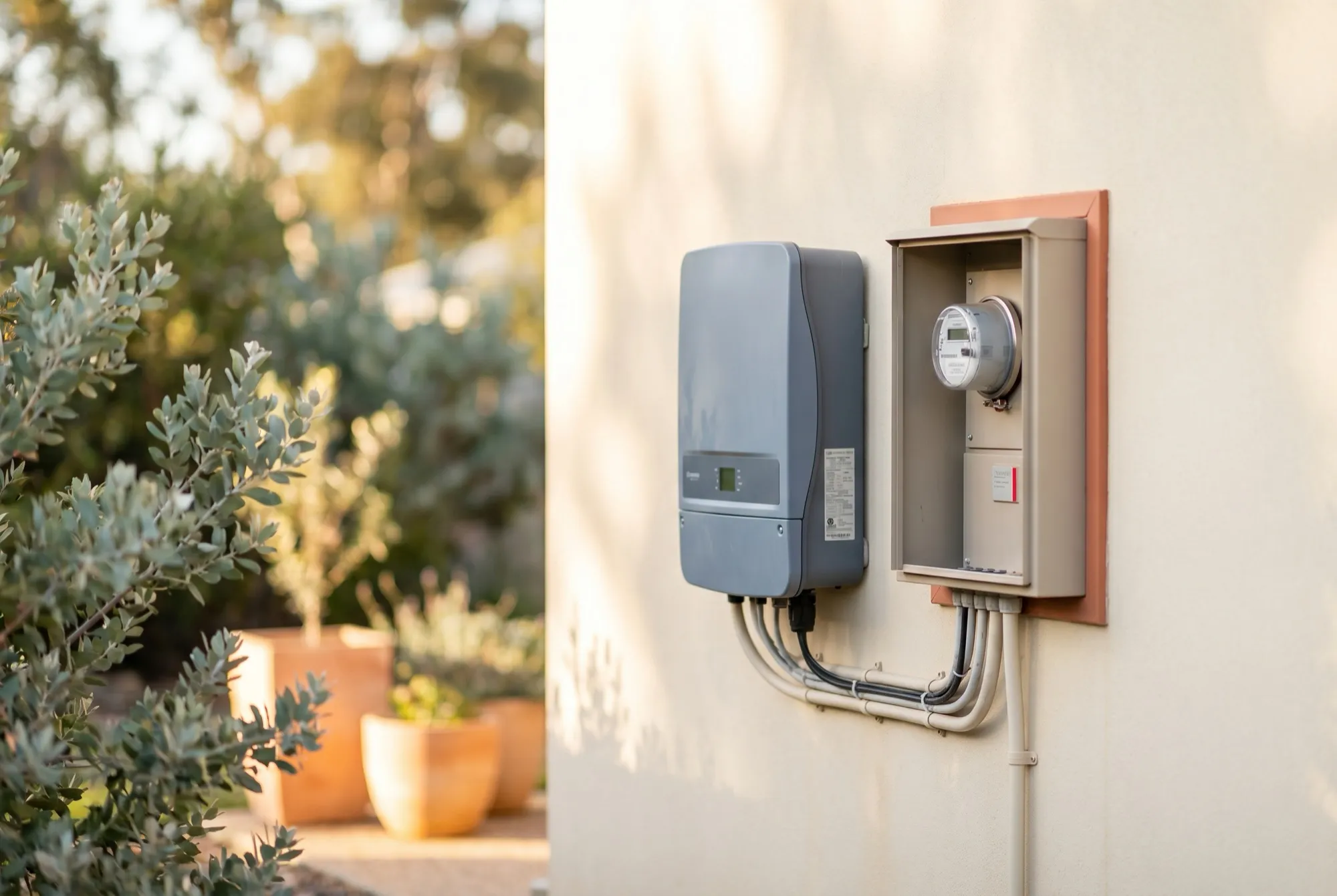
A NSW household in 2026 does not get a broad state cash rebate on solar panels, but it can still stack two federal discounts and one state battery incentive. The headline number: a standard 6.6kW system attracts a federal panel discount worth roughly $2,200 to $2,800 this year, applied straight off your quote, with a separate federal battery rebate and a NSW battery scheme on top.
That is the shape of it. All ranges below were last checked June 2026, and these schemes change often, so confirm the current status with the relevant body before you sign anything.
The headline: there is no NSW panel rebate, and that is fine
People search for a “solar rebate NSW” expecting a state cheque for the panels. That cheque does not exist, because New South Wales has never run a broad state cash rebate on rooftop panels. What does the heavy lifting here is federal, so the missing state rebate is not the bad news it sounds like. The big discount is real, it is just badged federal rather than state.
Layer one: the federal STC discount on panels
The federal lever on panels is the Small-scale Technology Certificate, or STC, scheme, which has run since 2011. Every eligible system generates a batch of certificates based on its size, your postcode, and the years left until the scheme ends in 2030. Your installer sells those certificates and knocks the proceeds straight off your invoice, so you never fill in a form or wait for a refund.
For a standard 6.6kW system, that support is worth roughly $2,200 to $2,800 in 2026. Sydney and most of NSW sit in strong solar zones, so a NSW system generally earns a healthy batch. The catch is the timer: the certificate count steps down each year toward 2030, so the same panels installed in 2027 will carry a slightly smaller discount than today. After the discount, a 6.6kW system in NSW typically lands around $5,000 to $9,000 installed, depending on panel quality, inverter, and how fiddly your roof is.
Layer two: the federal Cheaper Home Batteries Program
Batteries are where the bigger 2026 story sits. Since 1 July 2025 the federal Cheaper Home Batteries Program has knocked roughly 30 per cent off the installed cost of an eligible home battery, worth around $330 per usable kWh in 2025. Like the panel rebate it runs through the Small-scale Renewable Energy Scheme and lands as an upfront discount, not a cheque in the post.
This rebate is also on a timer, tapering toward 2030, so the per-kilowatt-hour value falls over the program’s life. After it, a 10kWh battery in NSW commonly comes out around $6,500 to $9,500 installed, again subject to brand and install complexity.
Layer three: the NSW battery incentive and the VPP angle
Here is where NSW does add something of its own. The state’s main solar-side lever in 2026 is not a panel rebate but a battery incentive delivered through the Peak Demand Reduction Scheme, or PDRS. In broad terms it can discount an eligible battery and, separately, reward you for connecting that battery to a virtual power plant, or VPP.
A VPP is simply a network of home batteries that an operator can call on during peak demand, paying you for the energy or the availability. The NSW incentive nudges households into joining one, on the logic that thousands of small batteries acting together take pressure off the grid on the hottest evenings. Crucially, the PDRS incentive can sit alongside the federal battery rebate rather than instead of it, so the two can stack. Treat the dollar figures as live and confirm them with the scheme administrator first.
One older NSW program worth naming so you can stop looking for it: the Empowering Homes interest-free loan has closed to new applicants. If a salesperson dangles it, that is a red flag they are working from an out-of-date script.
Feed-in tariffs: the quiet disappointment
If your mental model of solar still rests on a fat feed-in tariff, update it. NSW does not mandate a high feed-in rate. The pricing regulator, IPART, publishes a benchmark range that now sits at only a few cents per kWh, and retailer offers vary around that. The upshot: exporting surplus solar earns very little in 2026, so the value is in using your own generation. That is exactly why batteries, and the rebates attached to them, have become the centre of gravity.
Self-consumption is where the money is now. Exporting to the grid is a rounding error, so the battery, not the feed-in tariff, is what makes the sums work.
What a NSW household can actually claim in 2026
Here is the stack in one view. Figures are mid 2026 ranges and will drift, so confirm before relying on them.
| Incentive | Who runs it | Roughly worth (2026) | How you get it |
|---|---|---|---|
| STC discount on panels | Federal (SRES) | $2,200 to $2,800 on a 6.6kW system | Applied off your quote at point of sale |
| Cheaper Home Batteries Program | Federal (SRES) | ~30%, around $330 per usable kWh | Applied off your quote, tapering to 2030 |
| NSW PDRS battery incentive | NSW (PDRS) | Varies, confirm current value | Through an accredited provider, can stack with federal |
| VPP connection reward | NSW scheme plus VPP operator | Varies by operator and plan | Sign up to an eligible VPP |
| Feed-in tariff | Retailers, IPART benchmark | A few cents per kWh | Credited on your power bill |
Why the installer matters more than the rebate
A rebate is only as good as the business that applies it and, later, honours the warranty. More than 700 solar retailers have left the Australian market since 2011, and by some counts around one in six systems now carries an orphaned warranty, meaning the company that sold it is gone. The federal incentives are claimed by your installer, so an operator who handles the certificates incorrectly, or vanishes before your inverter fails in 2032, can cost you far more than the discount was worth.
This is the unglamorous part that decides whether the whole exercise pays off. Choose a long-trading, accredited installer who applies the NSW and federal incentives correctly, and you are far less likely to be the one chasing a warranty into a void. The team at Why Solar is one example of that installer-first approach, but the principle holds whoever you pick: trading history and accreditation beat the lowest headline price almost every time.
For the numbers behind each figure, our breakdown of every solar rebate available across Australia sets the NSW picture in national context, and if you are weighing storage specifically, the full cost of a solar battery in Australia walks through what you actually pay after the rebate.
The bottom line
A NSW household in 2026 will not find a state cheque for putting panels on the roof, and chasing one is a waste of an afternoon. What you will find is a genuinely useful stack: a federal STC discount of roughly $2,200 to $2,800 on a 6.6kW system, a federal battery rebate worth about 30 per cent, and a NSW PDRS battery incentive with a virtual-power-plant angle on top. Feed-in tariffs are now a rounding error, which is precisely why storage has become the main event.
Every figure here is on a timer counting down to 2030, and these schemes change often, so confirm the current status with the relevant body and get your quote from an installer who will still be around when the warranty matters. Do that, and the NSW rebate picture, missing state cheque and all, is still one of the better deals going.