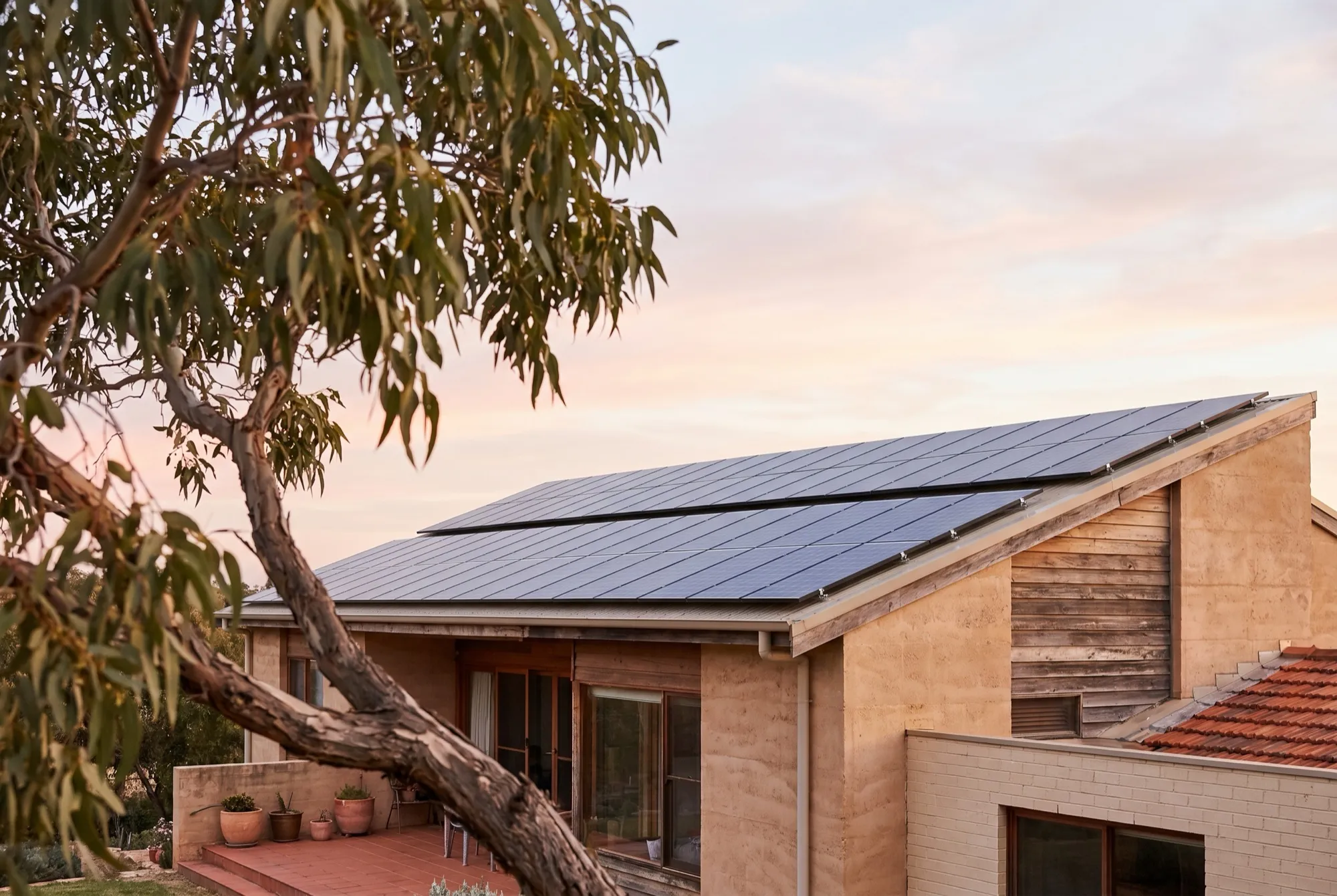
The short version for Adelaide in 2026: a 6.6kW rooftop system costs roughly $5,000 to $9,000 installed after the federal STC discount, and the support is now almost entirely federal because the old SA Home Battery Scheme has wound down. The catch that makes Adelaide different is what happens after the panels are on the roof. This city sits on the most solar-saturated grid of any Australian capital, so exports can be capped at midday, daytime power is deliberately cheap, and the money has shifted toward using your own electricity rather than selling it.
That is the headline. The detail is where Adelaide stops behaving like the rest of the country.
What solar costs in Adelaide right now
Pricing tracks the national picture closely. A quality 6.6kW system, the most popular size, lands in the $5,000 to $9,000 range installed, with the spread driven by panel and inverter brand, roof complexity, switchboard upgrades and how many storeys the crew has to work around. Cheaper quotes exist, but a price near the bottom usually means budget hardware or a thin warranty, and Adelaide’s heat is unkind to corner-cutting.
That figure is already net of the federal STC discount, which is folded into the quote rather than refunded later. For a wider read on what drives the number, our breakdown of solar panel cost in Australia covers the line items worth questioning before you sign. Figures last checked June 2026; your postcode, roof and retailer all move the dial.
The rebates that actually apply in 2026
South Australia once ran one of the country’s most generous battery subsidies through the Home Battery Scheme. That chapter has closed: the scheme has wound down and is not taking new applications, so if an Adelaide quote dangles it as a discount, treat that as a warning sign rather than a saving.
What remains is the federal stack, identical across the country:
- The STC discount on panels. A standard 6.6kW system attracts roughly $2,200 to $2,800 in certificate value in 2026, declining slightly each year as the scheme counts down to 2030.
- The Cheaper Home Batteries Program. Running since 1 July 2025, it takes around 30 per cent off the installed cost of a battery, also tapering toward 2030.
Both flow through the same Small-scale Renewable Energy Scheme plumbing, so an accredited installer claims the value and shows it as a smaller number on your quote. No forms, no cheque to chase. Status last checked June 2026; SA arrangements shift, so confirm the current position with the federal scheme and your retailer before committing.
Why Adelaide’s grid plays by different rules
Adelaide leads the nation on rooftop solar, and that success creates a genuine engineering headache: on a mild, sunny day, so much power floods in from suburban roofs around noon that the grid can tip toward oversupply. South Australia manages this with two tools you will meet directly.
The first is smart export limits. New systems must use an inverter the network can see and, when needed, signal. On the sunniest days your exports to the grid can be dialled back or briefly paused so the local network stays stable. Your panels keep powering your own home regardless; it is only the surplus you sell that gets managed.
The second is time-varying tariffs, including the so-called solar sponge tariff that makes electricity unusually cheap in the middle of the day, precisely when rooftop output peaks. The idea is to nudge demand, think pool pumps, dishwashers, hot water and EV charging, into the sunny hours to soak up the excess.
In the most solar-saturated grid in the country, the question is no longer how much you can sell, but how much of your own sunshine you can actually use.
Feed-in tariffs are low, so self-consumption wins
Here is the part that reframes the whole calculation. Because so much Adelaide solar hits the grid at once, the wholesale value of midday power is low, and feed-in tariffs have followed it down. Retailer feed-in rates that once looked like a tidy little income now sit at a few cents per kilowatt-hour, sometimes less, and some plans pair a higher headline feed-in with a worse usage rate. The export cheque is no longer the main event.
What does pay is avoiding the grid in the first place. Every kilowatt-hour you consume from your own roof offsets a retail rate that may be ten times what you would earn exporting it. So the smart move in Adelaide is to shift heavy loads into daylight, take advantage of the cheap solar sponge window where your plan offers it, and treat exports as a modest bonus rather than the business case.
That logic is what makes storage attractive here. A battery lets you bank cheap or self-generated daytime power and spend it across the evening peak, when grid prices are highest and your panels have clocked off. With feed-in low and penetration high, the maths increasingly favours keeping your electrons at home. Our guide to the best home battery in Australia walks through whether the numbers stack up for your usage before you add several thousand dollars to the project.
Getting a quote that holds up
Adelaide has a deep, competitive installer market, which is good for price and bad for clarity, since quotes vary wildly in what they include. A few things worth checking:
- Accreditation. The installer should hold current accreditation so the STC value is legitimate and the workmanship is covered.
- Inverter compliance. Confirm the inverter meets South Australia’s smart-export and remote-control requirements; a non-compliant unit can hold up your connection.
- Warranties in writing. Separate product, performance and workmanship warranties, and check who honours each if a brand exits the market.
- Self-consumption design. A good Adelaide installer will size the system around your daytime usage and tariff, not just the biggest array your roof can hold.
It pays to line up several offers and read past the headline price. You can compare Adelaide installer quotes to see how local pricing and inclusions stack up before you commit.
A quick note: this is general information, not personal financial, legal or procurement advice. Rebate values, tariffs and export rules change, sometimes mid-year, so check the official federal scheme pages and your own retailer and network for the current position before making a decision.
The bottom line
Solar still makes strong sense in Adelaide, just not for the reason it did a decade ago. The sun is excellent, a 6.6kW system runs roughly $5,000 to $9,000 after the federal STC discount, and panels remain one of the better returns going. But in the country’s most solar-saturated grid, the value has moved. Exports are capped on the sunniest days, feed-in tariffs are low, and daytime power is deliberately cheap. The households that win are the ones that use their own sunshine, shift heavy loads into daylight, and seriously weigh a battery to carry that energy into the evening peak. Get quotes, read the fine print, and design for self-consumption, not for selling.