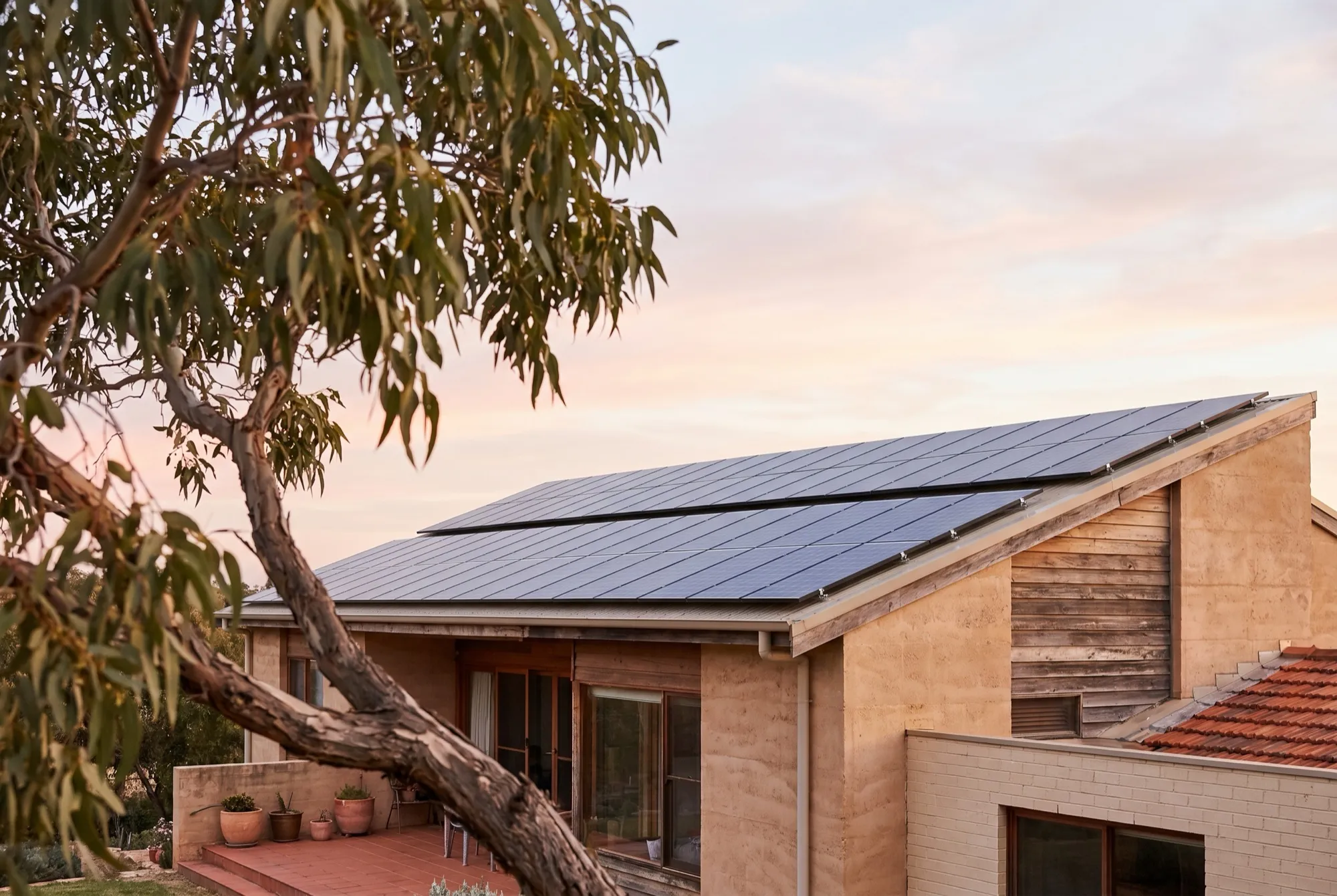
The short answer for South Australia in 2026: a 6.6kW rooftop system costs roughly $5,000 to $9,000 installed after the federal STC discount, and the main support is now federal, because the state’s old Home Battery Scheme has wound down and stopped taking new applications. The twist unique to SA is what happens after the panels go up. This is the most solar-saturated grid on earth, so new systems must be remotely controllable, exports can be capped on sunny days, and the value has shifted decisively toward using your own power rather than selling it.
That is the lay of the land. The detail is where SA stops looking like the rest of the country.
What rebates actually apply in SA now
South Australia once ran one of the most generous battery subsidies in the country. That era is over. The state Home Battery Scheme has wound down and is not accepting new applications, so if a quote waves it at you in 2026, treat that as a red flag rather than a discount. Status last checked June 2026; because SA arrangements change, confirm the current position before you sign.
What remains is the federal stack, the same everywhere in the country:
- The STC discount on panels. A standard 6.6kW system attracts roughly $2,200 to $2,800 in certificate value in 2026, and it declines a little each year as the scheme counts down to 2030.
- The Cheaper Home Batteries Program. Live since 1 July 2025, it takes about 30 per cent off the installed cost of a battery, worth around $330 per usable kilowatt-hour in 2025, also winding down toward 2030.
Both run through the same Small-scale Renewable Energy Scheme plumbing, so an accredited installer claims them and passes the value through as a smaller number on your quote, at the point of sale. No form, no cheque to chase. Our guide to every solar rebate in Australia has the state-by-state comparison.
Why SA has rules nobody else does
South Australia has the highest rooftop solar penetration in the world. On a mild, sunny spring day, rooftop solar can supply most or even all of the state’s demand: a remarkable achievement, and an enormous headache for whoever keeps the grid stable. That pressure has produced three requirements you will not meet in most states.
Smart inverters and remote curtailment
New systems in SA generally must use a smart inverter, sometimes called a relevant agent inverter, that lets the network remotely curtail or switch off your solar exports when the grid is awash with midday power. It is not a daily event and it does not stop your own home using its solar; it simply means the network can throttle what you push back when supply runs hot. Your installer sets it up.
Dynamic export limits
Rather than a single fixed cap, SA has moved toward dynamic export limits: the allowable export flexes with how stressed the local network is at that moment. On a quiet day you might export freely; on a saturated one, the ceiling drops. So you cannot bank on selling every surplus kilowatt-hour, which quietly strengthens the case for storing it instead.
Solar sponge tariffs
To soak up all that midday generation, SA pioneered “solar sponge” tariffs: cheap daytime prices that nudge you to run the dishwasher, charge the car or heat the water tank at noon rather than the evening. Used deliberately, the window is a genuine saving, and also a tell: there is so much solar at lunchtime that the system is paying you to use more of it.
In South Australia the question is no longer how much solar you can sell. It is how much of your own solar you can keep. The grid is full at lunchtime, so the value lives in self-consumption.
What it all costs in 2026
Strip away the SA rules and the hardware pricing tracks the national market. A 6.6kW system lands at roughly $5,000 to $9,000 installed after the STC discount. A 10kWh battery added to it generally comes in around $6,500 to $9,500 after the federal battery rebate. These ranges, last checked June 2026, are deliberately wide: anyone quoting one exact figure sight-unseen is guessing.
| Item | Typical SA price in 2026 | Notes |
|---|---|---|
| 6.6kW solar system | $5,000 to $9,000 after STC | Smart inverter required; price varies by roof and brand |
| 10kWh battery added later | $6,500 to $9,500 after battery rebate | Roughly 30 per cent off via the federal program |
| Feed-in tariff | Low single digits per kWh | Not mandated high; treat export income as a bonus, not a plan |
One figure deserves a flag. SA feed-in tariffs are low single digits in cents per kilowatt-hour and are not mandated high, so the few cents you earn exporting sits well below the 30-something cents you pay to import after dark. That gap is the whole argument for a battery. Our solar battery cost guide breaks the storage pricing down size by size.
Why a battery makes unusual sense in SA
In most of the country a battery is a reasonable upgrade. In South Australia it is closer to the centre of the system, for the same high-penetration reason that produced all those rules. Your midday exports can be curtailed or capped and earn only a few cents anyway, while your evening power costs full retail to import. A battery stores the cheap, possibly-unsellable solar you make at noon and spends it at 7pm when grid power is dear. Our piece on whether solar is worth it in Australia runs the payback maths.
None of this means you must buy a battery on day one; a panels-only system still saves through self-consumption and the solar sponge window. It does mean that in SA, more than anywhere else, the battery does the heavy lifting on your bill.
The risk that survives every rebate
One catch never appears on the quote. More than 700 Australian solar retailers have left the market since 2011, and by some estimates roughly one system in six carries a warranty against a company that no longer trades. A rebate makes the upfront price look great, but it does nothing if the installer has vanished when an inverter fails in year six.
This matters more in SA because the systems here are more complex. Smart inverters, dynamic export configuration and battery integration are not jobs for a fly-by-night operator. Favour an installer with several years of continuous trading, a verifiable ASIC-registered business, and accreditation to claim the rebates and configure the network requirements correctly. As a starting point you can get matched with an accredited SA installer who handles the smart-inverter and export setup properly. The cheapest quote and the safest quote are rarely the same document.
The bottom line
Solar in South Australia in 2026 runs on federal support now that the state Home Battery Scheme has closed: roughly $5,000 to $9,000 for a 6.6kW system after the STC discount, and about 30 per cent off a battery through the federal program. What sets SA apart is everything after install. As the most solar-saturated grid on earth, it requires smart inverters that allow remote curtailment, applies dynamic export limits, and runs solar sponge tariffs to absorb midday generation, while paying only a few cents to export. It all points one way: the money is in using your own solar, a battery captures the widest day-to-night spread in the country, and an installer still trading in ten years protects more than any single rebate. Confirm the current scheme status for your postcode, get the discounts itemised on the quote, and check the trading history before the price.