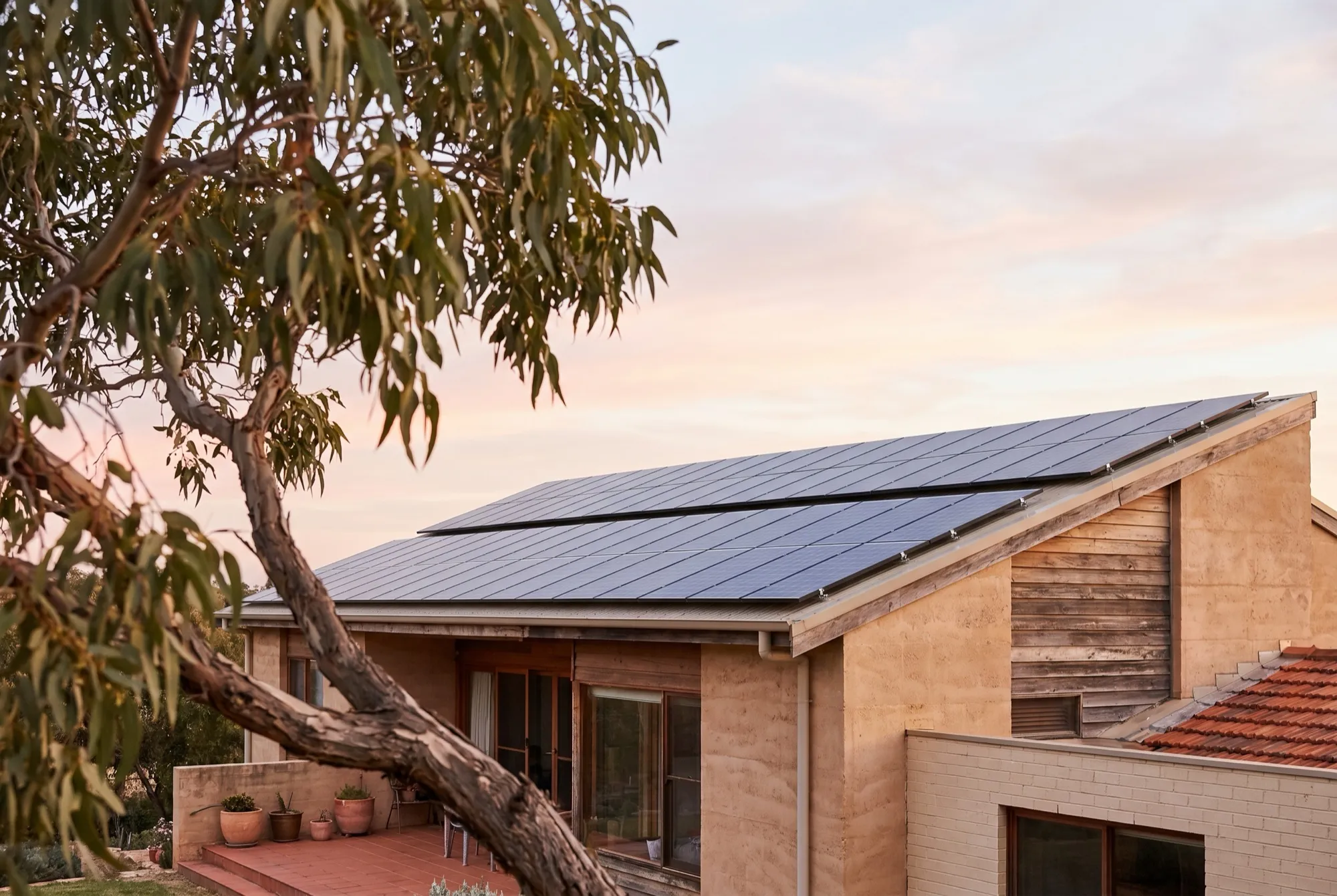
The short version for Canberra in 2026: a quality 6.6kW rooftop system typically lands around $5,000 to $9,000 installed after the federal panel rebate, and the ACT sits among the more generous jurisdictions in the country thanks to its Sustainable Household Scheme, which offers interest-free loans for solar, batteries and efficient electric upgrades. Add some of the clearest skies in Australia, and the case for going solar in the capital is stronger than the chilly winters might suggest.
That is the headline. The detail matters, because the ACT runs its own network and its own finance scheme, and both change the maths in ways a quote written for Sydney or Melbourne will not flag. These figures were last checked June 2026, and government schemes move, so confirm the current status and eligibility with the ACT Government and Evoenergy before you sign anything.
Why Canberra is better for solar than it looks
Canberra has a reputation for brutal winters, and the frosty mornings are real. But cold is not the enemy of solar panels. Heat is. Panels actually run slightly more efficiently in cooler air, and Canberra pairs its cold snaps with a lot of clear, sunny days. The result is very good annual solar output, comfortably ahead of cloudier coastal cities and not far behind the sun-soaked north.
The one seasonal catch is winter daylight. Shorter days and a low sun angle mean your panels produce less in June and July, exactly when heating demand peaks. That is part of why pairing solar with a battery, or at least sizing the system generously, tends to pay off in the ACT. You are smoothing out a genuinely uneven year rather than chasing a flat one.
What a system costs in Canberra in 2026
Start with the panels. The federal Small-scale Technology Certificate (STC) rebate is the discount that makes rooftop solar affordable across Australia, and your installer applies it at the point of sale rather than you claiming it later. On a 6.6kW system it was worth roughly $2,200 to $2,800 in 2025, and it steps down a little each year until the scheme ends in 2030. The sooner you install, the more that upfront discount is worth.
After that discount comes off, a quality 6.6kW system runs about $5,000 to $9,000 installed in 2026. The range is wide because it covers everything from entry-level gear to premium panels and inverters, plus the cost of a steep roof, extra storeys or a switchboard upgrade. If a quote lands dramatically under that range, ask what is being left out. Our national breakdown of solar panel cost in Australia walks through what actually drives the price, so you can read a Canberra quote with clearer eyes.
The ACT’s edge: the Sustainable Household Scheme
Here is where the ACT pulls ahead of most states. The territory runs the Sustainable Household Scheme, which offers eligible households interest-free loans to spread the cost of solar panels, batteries, efficient electric heating and cooling, hot water systems and other upgrades over a number of years. Confirm the current status, loan limits and eligibility, because these terms are exactly the sort of thing the ACT Government reviews and adjusts.
The practical effect is significant. In most of Australia, a battery is a large upfront cost that many households simply cannot stomach, even when the long-run numbers stack up. Interest-free finance changes that calculation. It lets you spread the cost without a bank loan eating into the savings, which makes pairing solar with storage far more accessible in the ACT than in states where you pay the full sum on day one.
Interest-free finance does not make a battery cheaper, but it turns a single daunting cheque into manageable payments, and that is often the difference between a battery and no battery.
That said, a loan is still a loan. Interest-free is not the same as free, and you do repay the full amount over the term. Run the repayments against your expected bill savings before you commit, rather than assuming the two will neatly cancel out.
Adding a battery in the ACT
Batteries are the other half of the conversation, and they have their own federal rebate on top of the ACT finance. Since 1 July 2025 the federal Cheaper Home Batteries Program has knocked roughly 30 per cent off the installed price of a home battery, worth around $330 per usable kWh in 2025 and winding down each year to 2030. Like the panel rebate, it runs through the Small-scale Renewable Energy Scheme and is applied upfront, so look for it itemised on your quote.
As a rough national benchmark, a 10kWh battery sits around $6,500 to $9,500 after that federal rebate. In the ACT you can then spread that cost through the Sustainable Household Scheme, which is why storage is a more realistic proposition here than in most jurisdictions. If you are weighing up which unit to buy, our guide to the best home battery in Australia compares the leading options on price, capacity and warranty.
Evoenergy, exports and the network
Canberra’s distribution network is run by Evoenergy, and it sets the rules for connecting your system and exporting surplus power to the grid. As with networks elsewhere, there are technical requirements and, in some cases, export limits that cap how much you can push back. A good local installer will know Evoenergy’s current connection rules and handle the paperwork, which is one more reason to choose someone who works in the ACT regularly rather than a call centre interstate.
Feed-in tariffs in the ACT, as everywhere in Australia, have fallen a long way from their early highs. Exporting midday surplus is no longer the windfall it once was, which again tilts the value towards using your own power, through self-consumption and storage, rather than selling it cheaply to the grid.
How the Canberra numbers stack up
Here is the rough shape of it for 2026, last checked June 2026. Every figure is a guide, not a quote, and the schemes change.
| Item | Indicative figure (2026) | Notes |
|---|---|---|
| 6.6kW system, installed | ~$5,000 to $9,000 | After the federal STC rebate, applied at sale |
| Federal STC rebate (6.6kW) | ~$2,200 to $2,800 | Steps down yearly to 2030 |
| 10kWh battery, installed | ~$6,500 to $9,500 | After the federal battery rebate |
| Federal battery rebate | ~30%, about $330/kWh | Cheaper Home Batteries Program, winding down to 2030 |
| ACT Sustainable Household Scheme | Interest-free loan | Spreads the cost of solar, batteries and electric upgrades |
| Network | Evoenergy | Sets connection and export rules in the ACT |
Why the installer matters more than the brochure
A quick reality check that applies in Canberra as much as anywhere. More than 700 solar retailers have gone under in Australia since 2011, and roughly one in six systems is now effectively orphaned, meaning the company that installed it no longer exists to honour the warranty. A ten-year workmanship warranty is only worth as much as the business standing behind it.
So choose a Clean Energy Council accredited installer who works in the ACT, knows Evoenergy’s rules and can advise on the Sustainable Household Scheme application. It is worth getting a few quotes rather than signing the first one. Comparison services such as compare Canberra installer quotes can help you line up accredited local installers side by side rather than picking on price alone and hoping for the best.
The bottom line
Canberra is a quietly excellent place to put solar on a roof. The cold winters come with clear skies and strong annual output, the federal panel and battery rebates apply just as they do everywhere, and the ACT’s Sustainable Household Scheme adds interest-free finance that makes pairing solar with a battery genuinely realistic rather than aspirational. A 6.6kW system around $5,000 to $9,000 after the panel rebate, with storage you can spread over time, is a solid deal in 2026.
The catches are local and manageable. Winter output dips when you need heat most, Evoenergy sets the connection and export rules, and feed-in tariffs are modest, all of which reward using your own power over exporting it. This is general information rather than personal financial advice, so get a couple of quotes from accredited ACT installers, run the loan repayments against your expected savings, and confirm the current rebate and scheme details with the ACT Government and Evoenergy before you commit, because these schemes do not stand still.