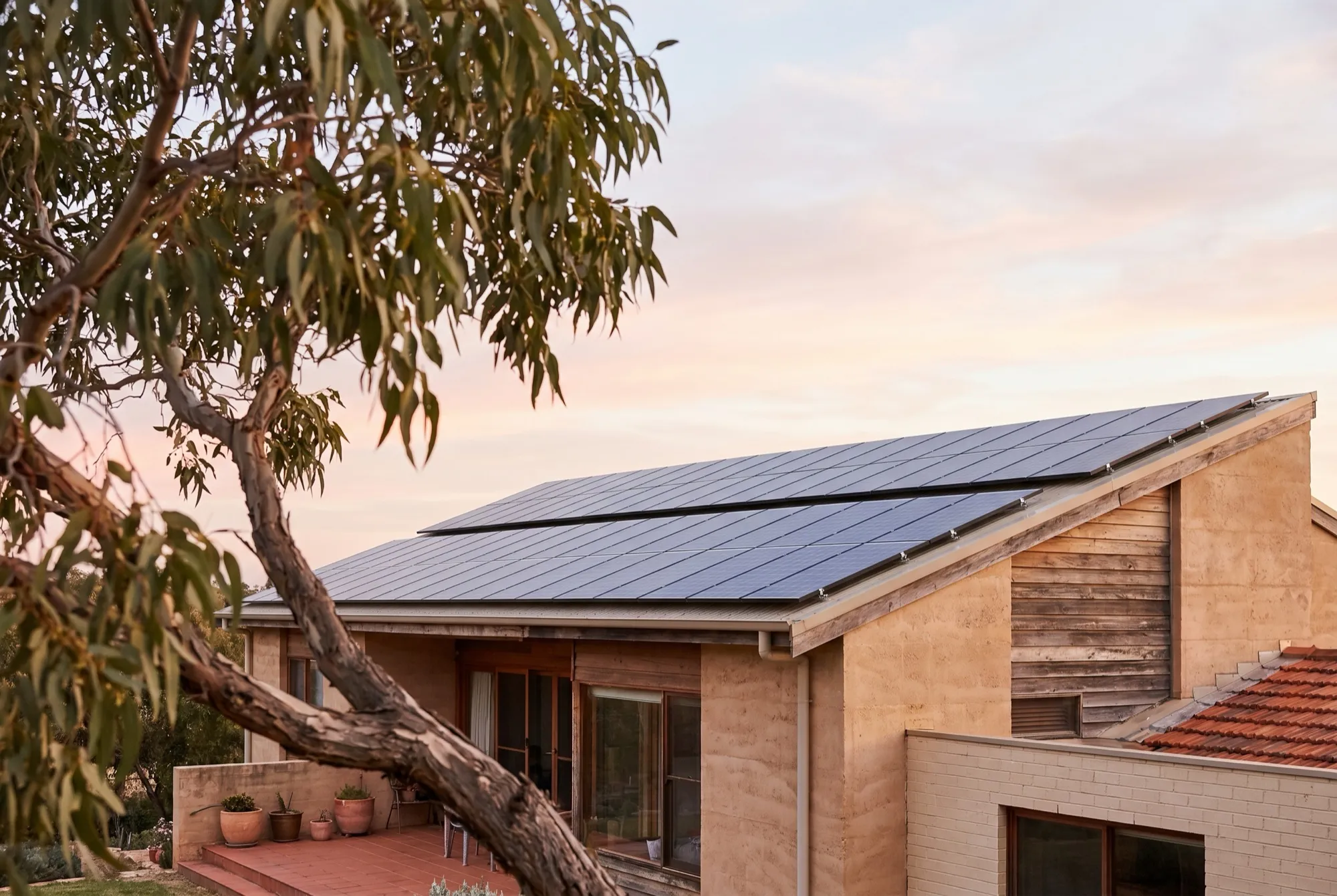
Yes, solar in Hobart still pays off. Tasmania gets less sunshine than Brisbane or Perth, but cooler temperatures help panels run more efficiently, and the federal rebate plus a regulated feed-in tariff keep the payback period sensible for most homes. A typical 6.6kW system runs roughly $5,000 to $9,000 installed after the rebate, last checked June 2026.
Does Hobart get enough sun for solar?
This is the question every Tasmanian asks, usually with a raised eyebrow at the sky. Hobart averages fewer peak sun hours than the mainland capitals, so a panel here will generate less over a year than the identical panel in Townsville. That part is true and there is no use pretending otherwise.
What gets left out is the temperature story. Solar panels lose efficiency as they heat up, and their rated output is measured at 25C. On a 40C rooftop in Western Sydney, panels can shed a meaningful chunk of their performance. Hobart’s cooler, clearer days mean panels often run closer to their rated capacity, which claws back some of the lost sunshine hours. It does not fully cancel the gap, but it narrows it more than people expect.
The other factor is your roof. A north-facing pitch with little shading is the gold standard anywhere in Australia, and it matters even more where every sun hour counts. East and west facing arrays still work, they just spread generation across the morning and afternoon rather than peaking at midday.
What does solar cost in Tasmania?
Installed prices in Tasmania sit broadly in line with the rest of the country, with a small premium in some regional areas for travel and logistics. The headline numbers below are indicative ranges after the federal Small-scale Technology Certificate (STC) discount is applied at the point of sale. For a fuller national picture, our guide to solar panel cost in Australia breaks down the components.
| System size | Typical home | Indicative installed price (after rebate) |
|---|---|---|
| 6.6kW | Smaller household | $5,000 to $7,500 |
| 8kW to 10kW | Average to larger household | $7,000 to $11,000 |
| 13kW+ | Large home or high daytime use | $10,000 to $16,000 |
Prices swing with panel and inverter brand, roof complexity, and whether you need switchboard upgrades. Two storeys, a steep tin roof, or a tricky meter board will all nudge the quote up. Ranges are indicative and last checked June 2026.
The rebates and feed-in tariff explained
Here is where Tasmania differs from some mainland states. There is no broad Tasmanian state cash rebate for rooftop solar beyond the federal scheme. The big saving is the national STC program, which functions as an upfront discount calculated from your system size and the years left in the scheme. It is not a cheque you chase later, it is baked into the quoted price, which is why “after rebate” figures look so much friendlier than the sticker cost.
For exported electricity, Tasmania offers a regulated feed-in tariff. The credit you earn per exported kilowatt-hour is set by the regulator and tends to be modest compared with the rate you pay to buy power back. That gap is the single most important fact for sizing your system, and we will come to why in a moment. Our broader rundown of solar rebates across Australia covers how the federal scheme phases down over time.
The money in solar is in the power you use yourself, not the power you sell back to the grid.
How to make the payback work
Because the feed-in tariff is lower than your buying rate, every unit you consume directly is worth far more than a unit you export. This is the lever that decides whether your payback lands in five years or ten.
- Size for daytime use, not for bragging rights. A system that produces far more than you use during daylight just dumps cheap exports onto the grid.
- Shift heavy loads to the middle of the day. Dishwashers, washing machines, pool pumps and hot water timers running at noon turn generation into genuine savings.
- Face panels north where the roof allows, and avoid shading from trees, chimneys and the neighbour’s gum tree that will inevitably grow taller.
- Consider a battery only after the basics stack up. Tasmanian power prices and the export gap can make storage attractive, but run the numbers first.
For households weighing whether the whole exercise is worth it, our piece on whether solar is worth it in Australia walks through the break-even maths in more detail.
Choosing an installer in Hobart
The cheapest quote is rarely the best value, and solar is a long game where the install outlives the salesperson. Look for an accredited installer with a genuine local track record, ideally one that has been trading for several years and will still be around when a panel needs attention. Ask who handles warranty claims, what the inverter warranty actually covers, and whether the quote includes any switchboard work.
It pays to get a few options side by side rather than signing on the first doorknock. You can compare Tasmanian installer quotes to see how local pricing and product choices stack up before you commit. A spread of quotes also flushes out the outliers, both the suspiciously cheap and the needlessly gold-plated.
The bottom line
Hobart and Tasmania get less sun than the mainland, but cooler air, a strong federal rebate and good daytime self-consumption keep solar firmly worthwhile for most homes. Size the system around the power you actually use, lean on north-facing panels, treat the feed-in tariff as a bonus rather than the main event, and choose an accredited, long-trading installer. Do that and a Tasmanian roof can pay for itself comfortably within a decade.
This is general information, not personal financial advice. Figures are indicative and last checked June 2026. For the current rules on Small-scale Technology Certificates, check the Clean Energy Regulator at cleanenergyregulator.gov.au, and confirm feed-in rates with your retailer.